Waterproof Boat Upholstery: What Really Works in Florida
What waterproof boat upholstery means in Florida: marine vinyl, closed-cell foam, UV thread, Sunbrella, seat pedestals and care, from our shop in Venice, FL.
· Updated · 7 min read · Venice, FL
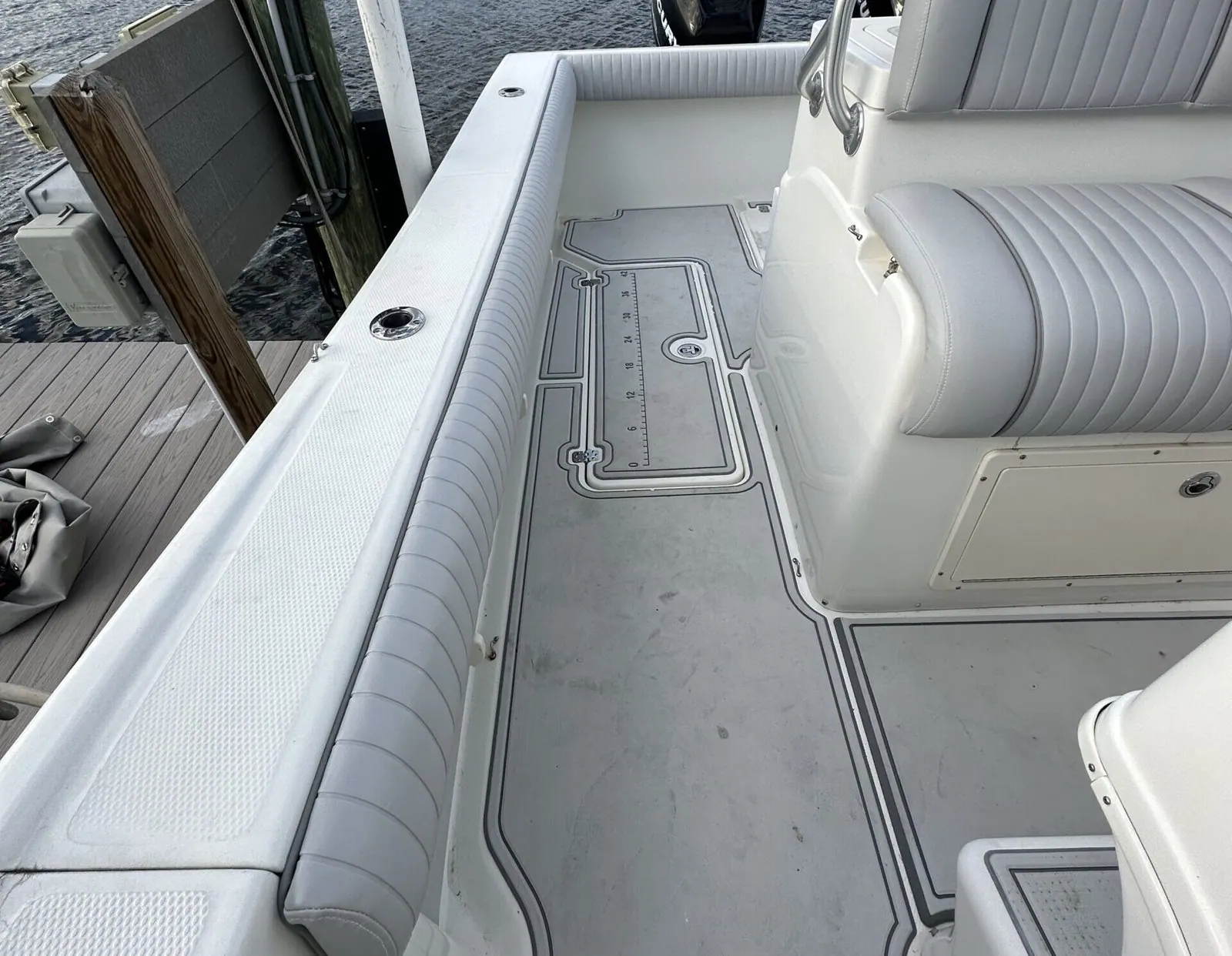
Florida boats live in an environment unlike anywhere else in the country: intense sun almost every day, salt spray, afternoon storms that soak everything on board, and humidity that never really lets up. Upholstery that would last a decade on a lake up north can fail here in two or three seasons. When that happens, owners start searching for waterproof boat upholstery, and they find a lot of marketing and not much straight talk.
Here is the straight talk from our shop in Venice, FL. "Waterproof" is less about one magic material and more about building the seat as a system that sheds water, refuses to absorb it, and dries fast when it does get wet. Get the system right and your seats will outlast the boat's next two sets of batteries.
Why standard boat upholstery fails in Florida
The failures we see on boats from Sarasota to Port Charlotte are remarkably consistent:
- Cracked vinyl. UV breaks down the vinyl's topcoat and the plasticizers that keep it flexible. It chalks, stiffens and splits, first along the seams and the front edges.
- Mold and mildew in the foam. Open-cell furniture foam soaks up water through the needle holes and holds it. Mildew grows inside the cushion where you cannot clean it.
- Fast-fading fabrics. Fabric that is printed or surface-dyed loses its color to the sun in a season or two.
- Water pooling in seams. Seams that run across a flat surface hold water, and every stitch hole in that seam is a path into the cushion.
- Rotten bases and rusted hardware. Water that gets through the cover reaches the plywood base and the staples. Once the base goes soft, nothing above it stays tight.
A lot of upholstery sold as "marine" is really built for milder climates. It is not that the material is bad; it is that Southwest Florida is harder on it than anywhere it was tested.
What actually works: the materials
Marine-grade vinyl
Real marine vinyl is a heavier material with a UV-stable topcoat, mildew inhibitors in the compound, and a polyester backing that will not rot. It is rated for salt water and for the cold-crack and heat-aging tests that cheaper vinyl skips. The difference between marine vinyl and automotive or furniture vinyl is not visible on the roll, but it is obvious after one summer at the dock. We explain the distinction in detail in our guide to marine-grade vs automotive vinyl.
Solution-dyed acrylic fabric
Sunbrella and similar solution-dyed acrylics have the color locked into the fiber itself, not applied to the surface. That is why they resist fading, salt and mildew for years. They are the right choice for covers, bimini tops, T-top canvas and cushions where a softer, fabric feel is wanted. They are breathable and dry quickly, which is exactly what you want in a cover.
Foam that does not hold water
The foam is where most "waterproof" upholstery quietly fails. Three types earn their place in a Florida boat:
- Closed-cell marine foam does not absorb water at all, which makes it the choice for cushions that get soaked regularly and for anything that doubles as flotation.
- High-density foam gives a more comfortable, longer-lasting seat under daily use. With a moisture barrier around it, it stays dry.
- Quick-dry reticulated foam is an open structure that lets water drain straight through and air flow back in, so it dries in hours instead of days. It is a good fit for open cockpit cushions.
We often combine these in one seat: a high-density core for comfort, closed-cell or quick-dry layers where water reaches, and a barrier between them.
UV-resistant thread
Thread is the cheapest part of a seat and the first thing to fail. Ordinary polyester or nylon thread rots in the sun, and a seat with perfect vinyl and dead thread falls apart at the seams. We sew with UV-resistant thread, either a PTFE thread of the Tenara type that is essentially immune to sun, or a UV-treated bonded polyester, depending on the job.
Stainless hardware and sealed bases
Stainless staples, snaps and fasteners do not rust-streak the vinyl or let go. Seat bases should be composite or plastic, or marine plywood sealed on every face and in every hole.
What materials are best for boat seat pedestals and bases?
This is one of the most common questions we get, and it matters because a seat is only as waterproof as what it sits on. The vinyl and foam can be perfect, and the seat will still fail if water reaches an untreated base.
- Pedestals and posts: stainless steel or anodized aluminum. Plain steel rusts from the inside, and the rust works its way into the seat base and the deck.
- Seat bases: a molded plastic or composite base is the most durable option, because there is nothing in it to rot. Marine-grade plywood works well when every face, edge and drilled hole is sealed, since bare plywood wicks water through the screw holes.
- Swivels and hinges: stainless or heavy anodized aluminum, mounted with stainless fasteners.
- Drainage: whatever the base, water that reaches it needs a way out. A base that holds a puddle under the foam will rot or corrode no matter what it is made of.
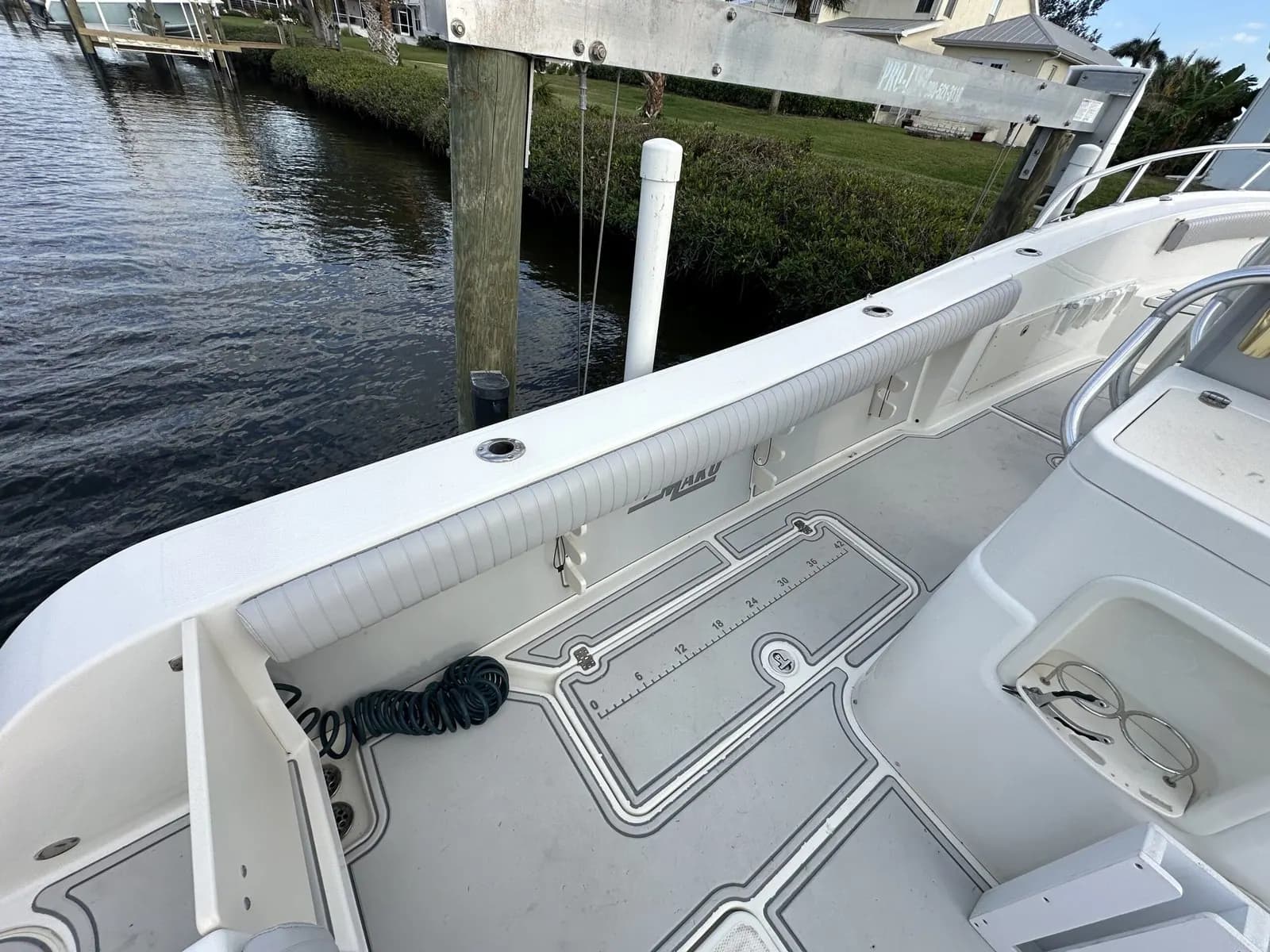
How we build weatherproof upholstery, step by step
- Inspection and measurement. Before any work starts we inspect the seat frames, the bases, the drainage and the points where water is getting in. A seat that has been wet for a season usually has problems below the foam.
- Foam upgrade. We replace standard water-trapping foam with closed-cell marine foam, high-density foam with a moisture barrier, or quick-dry foam with a drainage layer, depending on where the cushion lives and how it is used.
- Material selection and fabrication. You choose between marine vinyl and solution-dyed acrylic, and the colors and stitching you want, and we pattern and sew the new covers to the seat.
- Seam reinforcement and drainage. Seams are sewn with UV-stable thread, placed where they shed water rather than collect it, and finished with a tape edge or welt where the edge takes abrasion. Hardware is stainless and protected.
- Finish and care instructions. After installation we treat the vinyl with a marine UV protectant and walk you through the maintenance that keeps it looking new.
The same thinking applies to canvas. A fitted custom boat cover in breathable, water-resistant fabric is the single biggest thing you can do to extend the life of the upholstery under it.
Maintenance that makes it last
Even the best materials benefit from a little routine care:
- Rinse the seats with fresh water after every trip in salt water. Dried salt crystals abrade vinyl and thread every time someone sits down.
- Clean with a marine vinyl or fabric cleaner and a soft brush. Skip the pressure washer, which forces water through the seams and into the foam.
- Keep sunscreen, insect repellent and bleach off the vinyl. They attack the topcoat.
- Cover the boat when it is parked. UV does more damage in the driveway than on the water.
- Inspect the stitching once a season and have loose seams restitched early, before water gets into the cushion.
- Lift cushions and let them air out after a soaking rather than leaving them face-down on a wet deck.
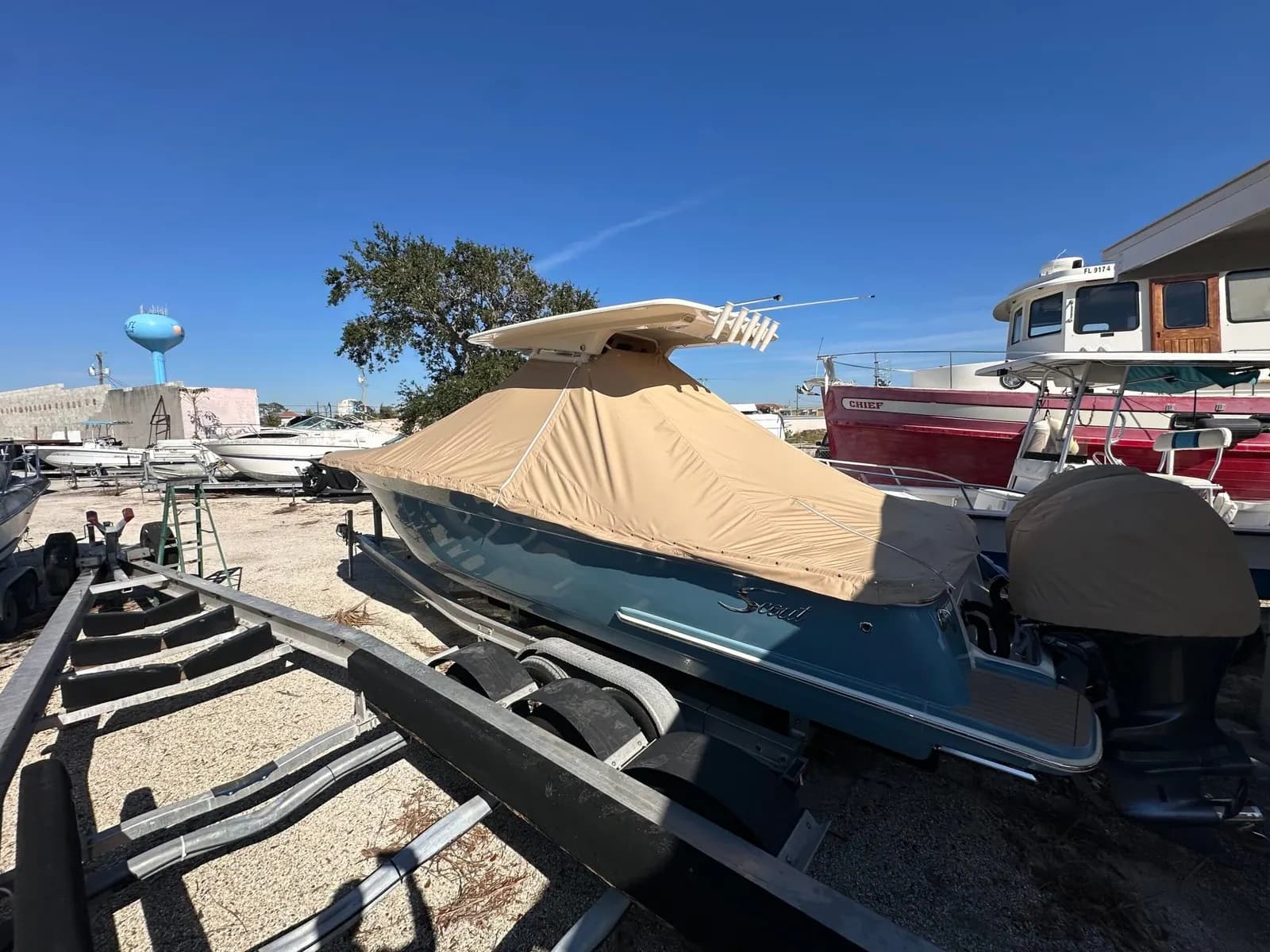
Is it time to upgrade your boat upholstery?
If the vinyl is faded or peeling, the foam feels mushy, or water stays in a cushion long after the rest of the boat is dry, the upholstery is telling you something. Sometimes the fix is a repair or a recover; our guide to restoring versus replacing boat seats walks through that decision. Sometimes the cushion needs a full rebuild with new foam before mildew reaches the base.
Either way, we evaluate the seats and give you a realistic recommendation. Our boat upholstery services cover everything from a single helm seat to a complete interior for boats in Venice, Nokomis, Englewood, North Port, Port Charlotte and the rest of the Gulf Coast.
Get a free quote in Venice, FL
Call (941) 786-4100 or use the contact page for a free consultation. Drop the boat at our shop at 420 E Venice Ave, where there is trailer parking and a fenced storage lot, or send photos of the seats and we will tell you what we would do and what it will involve.
- waterproof boat upholstery
- marine vinyl
- closed-cell foam
- sunbrella
- boat upholstery florida