Marine-Grade vs Automotive Vinyl: What Florida Owners Need to Know
The difference between marine vinyl and automotive vinyl, and which to use on boats, golf carts, RVs and cars in Florida. Straight answers from Venice, FL.
· Updated · 6 min read · Venice, FL
Living on Florida's Gulf Coast is good for a lot of things. It is not good for vinyl. Constant sun, high humidity and salt air take a toll on every seat that sits outside, and choosing the wrong material is the most common reason a fresh upholstery job looks tired after a single summer. Whether you are restoring a boat, refreshing a golf cart, or upgrading an RV or a car, the first decision is the vinyl, and the key question is marine-grade or automotive.
We get this question every week at our shop in Venice, FL, and the answer depends on where the seat lives. Here is the difference between marine vinyl and regular automotive vinyl, and what we recommend for each kind of vehicle.
What makes vinyl "marine-grade"
Marine vinyl is engineered to survive outdoors. The differences from automotive or furniture vinyl are built into the material rather than visible on the surface:
- UV-stable topcoat. The surface layer carries UV inhibitors that slow the chalking, fading and cracking that direct sun causes.
- Mildew inhibitors. Antimicrobial additives in the compound resist the black spotting that humidity produces on untreated vinyl.
- Rot-proof backing. Marine vinyl is laminated to a polyester knit backing that does not absorb water or rot, instead of the cotton-blend backings common in interior vinyl.
- Weight and durability. It is a heavier, denser material rated for abrasion, cold-cracking and heat aging, so it holds up to feet, coolers and salt.
- Waterproof surface. Water beads and wipes off rather than soaking in, as long as the seams are properly finished.
It is worth knowing that "marine-grade" is a description, not a regulated standard. The vinyl we use is from manufacturers who publish their UV, mildew and abrasion ratings, and we choose it by those numbers, not by the label.
What automotive vinyl does well
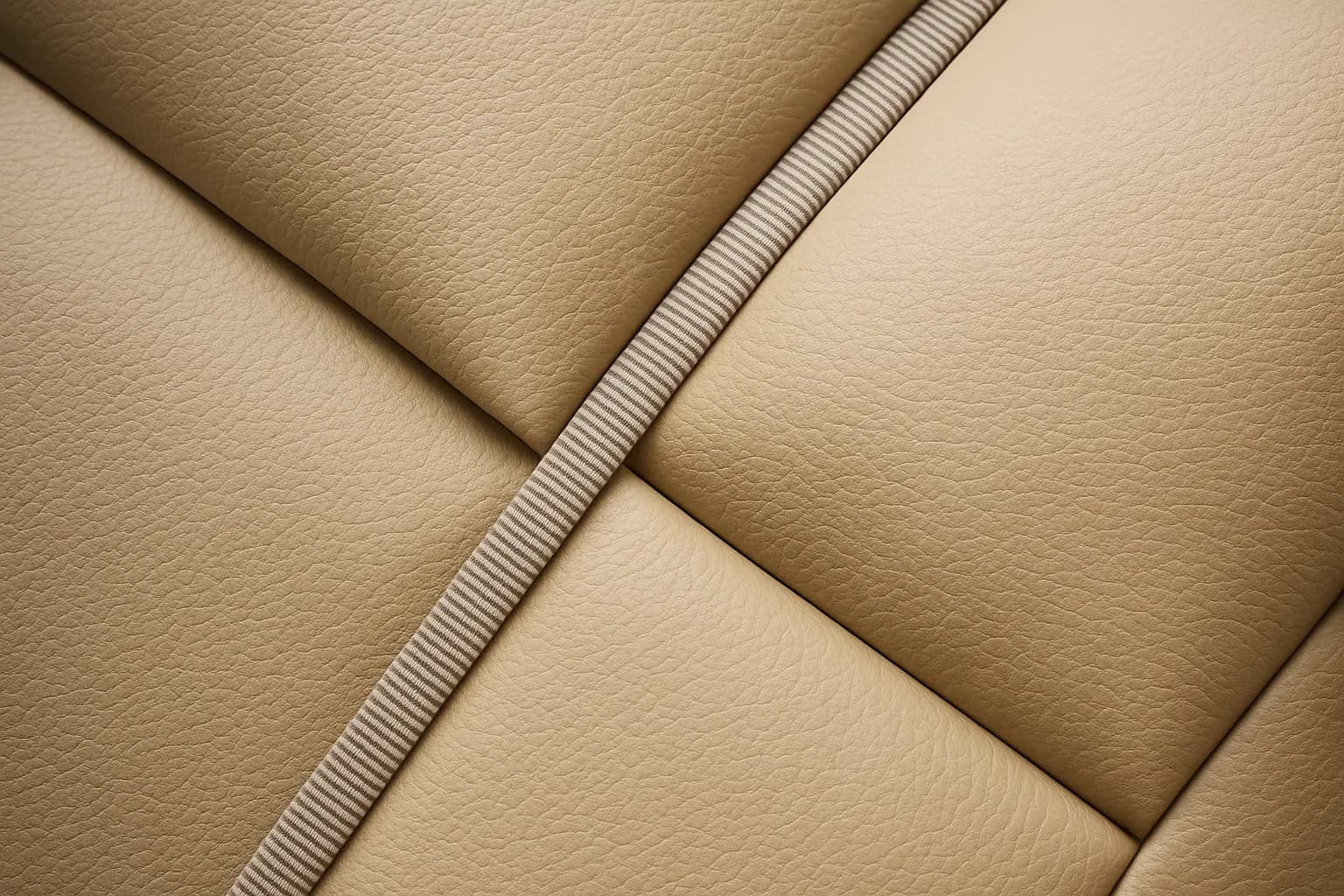
Automotive vinyl is softer and more flexible, with a finish designed for a vehicle interior. It stretches more easily over the deep contours of a bucket seat, comes in grains and sheens that match factory interiors, and has a more supple hand under your legs on a long drive. It is UV-protected, because dashboards and seats bake behind glass, but it is not designed for prolonged moisture, standing water or the open air.
Inside a cabin that stays closed and mostly dry, automotive vinyl is the right choice. Put it on an open boat and it will fade, stiffen and crack long before marine vinyl would.
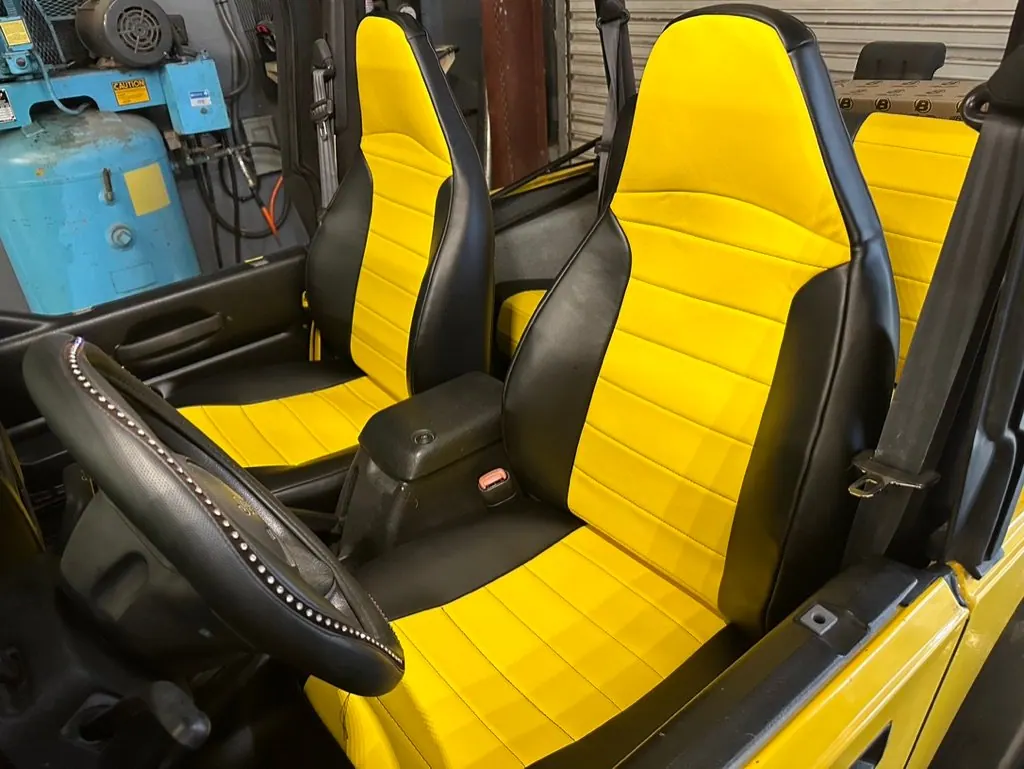
Marine vinyl vs automotive vinyl at a glance
| Marine-grade vinyl | Automotive vinyl | |
|---|---|---|
| Designed for | Open boats, outdoor seating, anything that gets wet | Enclosed vehicle interiors |
| UV resistance | High; UV-stable topcoat for full sun | Moderate; protected for sun through glass |
| Moisture and mildew | Waterproof surface, mildew inhibitors, rot-proof backing | Not built for standing water; backing can hold moisture |
| Feel and stretch | Heavier, firmer, less stretch | Softer, more supple, stretches over contours |
| Finish options | Marine colors and textures, fewer OEM-match grains | Wide range of factory-match grains and sheens |
| Best uses | Boats, jet skis, golf carts, exterior RV seating, exposed car seats | Car and truck cabins, interior RV seating |
Why it matters in Venice, FL
With over 230 sunny days a year and humidity to match, vehicles in Venice, Sarasota and Port Charlotte face conditions that most upholstery was never tested for. UV exposure here is relentless, afternoon storms soak anything left open, and salt air reaches well inland from the Gulf. Marine vinyl resists the fading, cracking and mildew that follow. Automotive vinyl is at its best in a cabin that is protected from all of that.
The practical consequence: a seat recovered in the wrong vinyl does not fail gradually. It looks fine for a few months, then chalks and splits in its first full summer, and you are paying to do the job again.
What to choose for your vehicle
Boats and jet skis
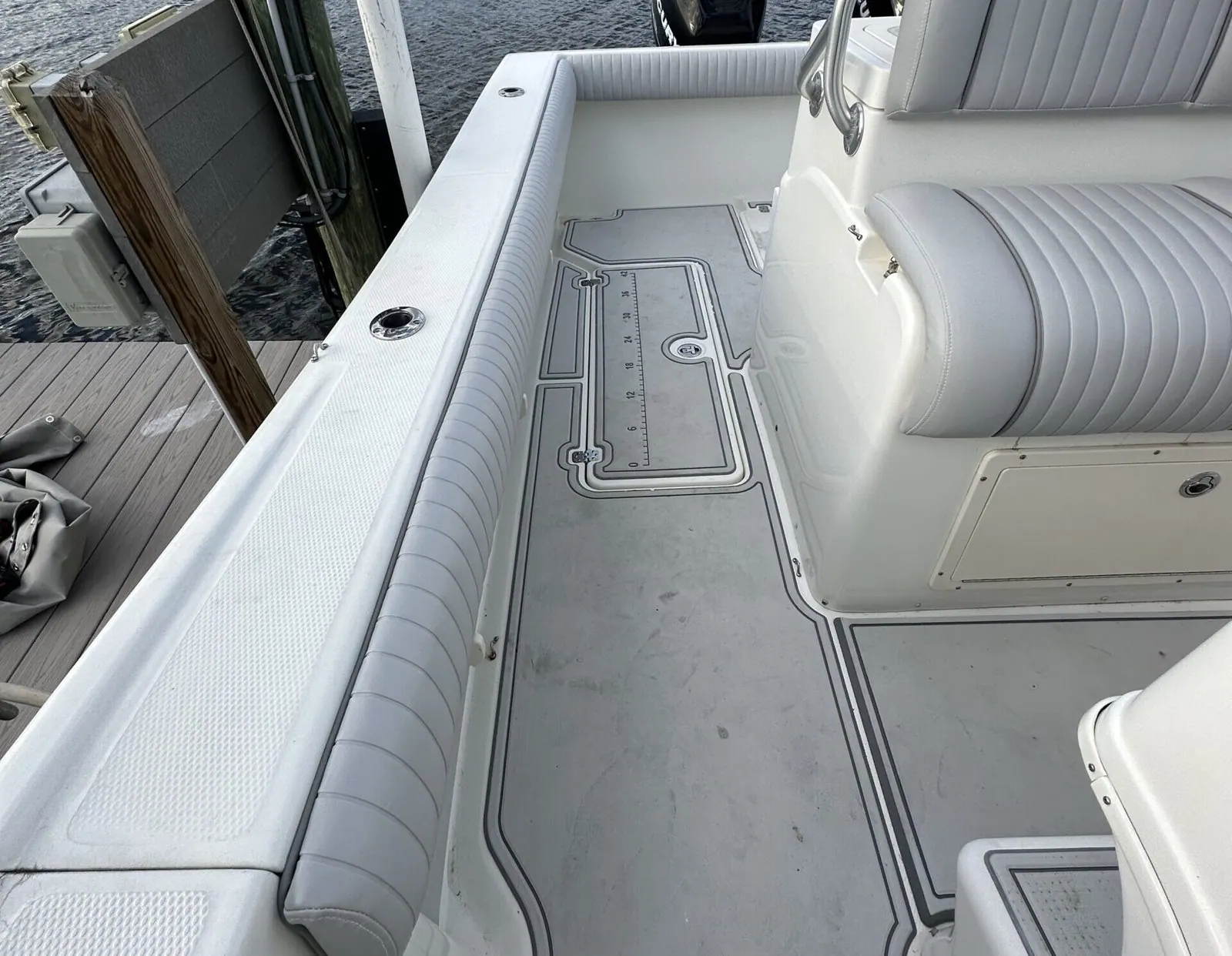
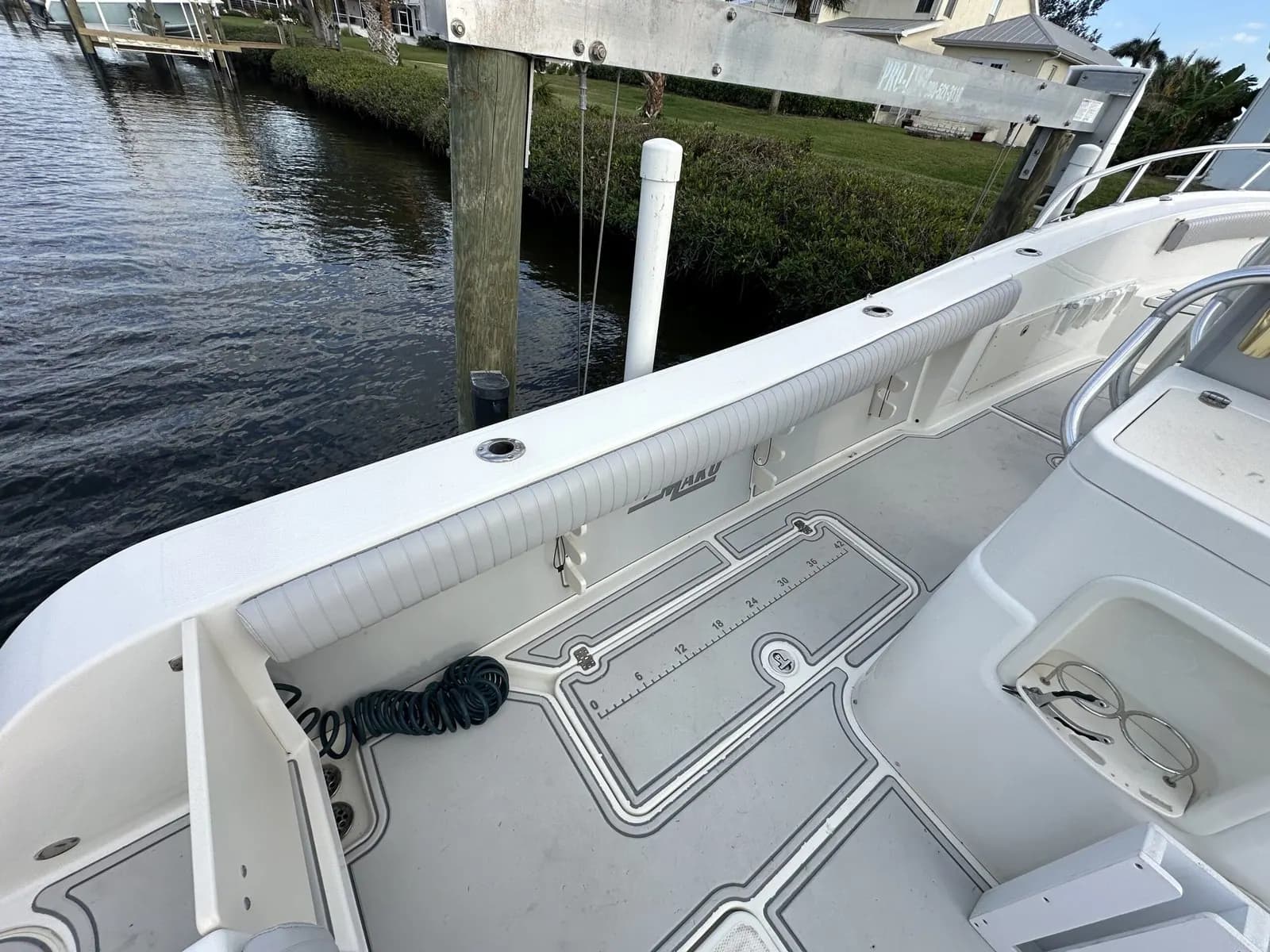
Marine vinyl, with no exceptions. Every cushion, bolster, helm seat and cooler pad on a boat gets rained on, splashed, sat on wet and baked in the sun. Marine vinyl prevents fading and resists salt damage, and paired with closed-cell or quick-dry foam, UV-resistant thread and stainless staples, it is the foundation of a seat that lasts. Our boat upholstery services use marine vinyl on every seat, and our guide to waterproof boat upholstery explains the rest of the system.
Golf carts
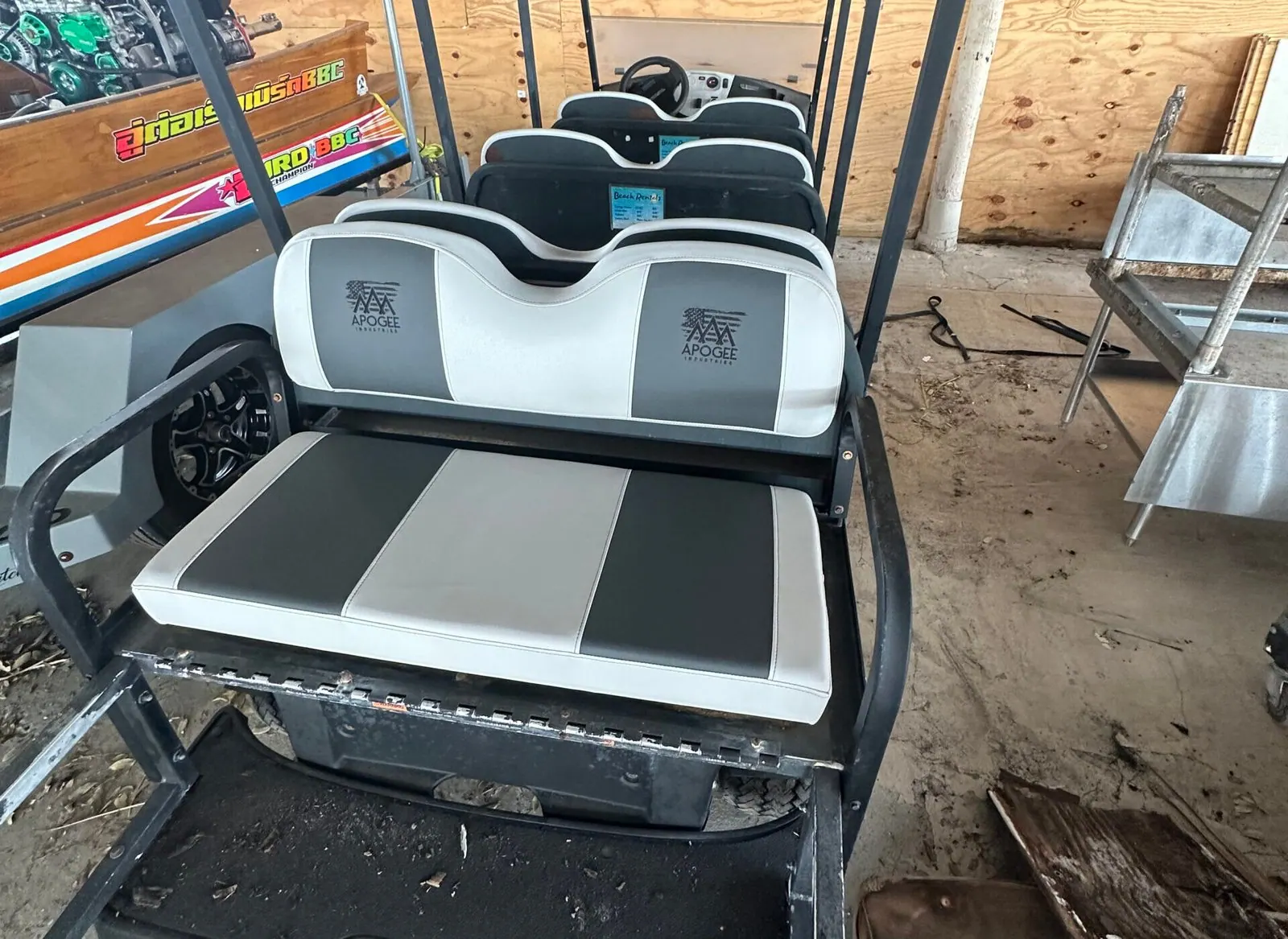
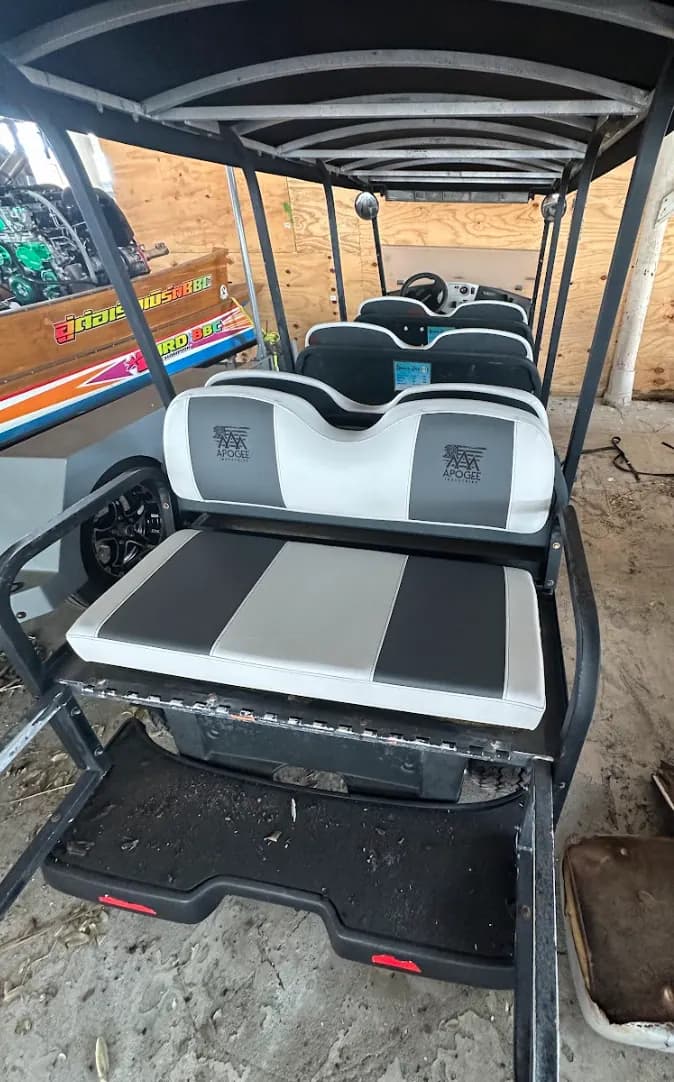
Marine vinyl is the right call for almost every cart in Southwest Florida. Carts are parked outside, driven through rain and kept near the coast, and the seats see as much sun as a boat does. Marine vinyl on golf cart seats resists fading and mildew and wipes clean after a wet ride. Our 8-seater golf cart project is a typical example of how a cart comes out in two-tone marine vinyl.
RVs, campers and trailers
Use marine vinyl on exterior benches, fold-out seating, anything near a door that gets wet, and anything stored outside between trips. Automotive vinyl or upholstery fabric works well for indoor seating in a climate-controlled coach, where comfort and finish matter more than weatherproofing. Dinette cushions can go either way depending on how the RV is used. Mattresses and cushions themselves are a separate conversation about foam, which we cover under our RV and camper services.
Cars and trucks
Automotive vinyl is the best choice for a cabin. It is softer, it stretches over bolsters and headrests, and it matches factory grains. For a convertible, a Jeep that runs with the top off, or a classic that sits uncovered, marine-grade vinyl is worth considering on the seats because of the extra sun and water resistance. Headliners are a different material again, usually a foam-backed cloth or vinyl made for ceilings, so do not assume one vinyl covers every surface in a vehicle. Our car upholstery services page covers seats, headliners, door panels and Katzkin leather.
Beyond the vinyl: thread, foam and edges
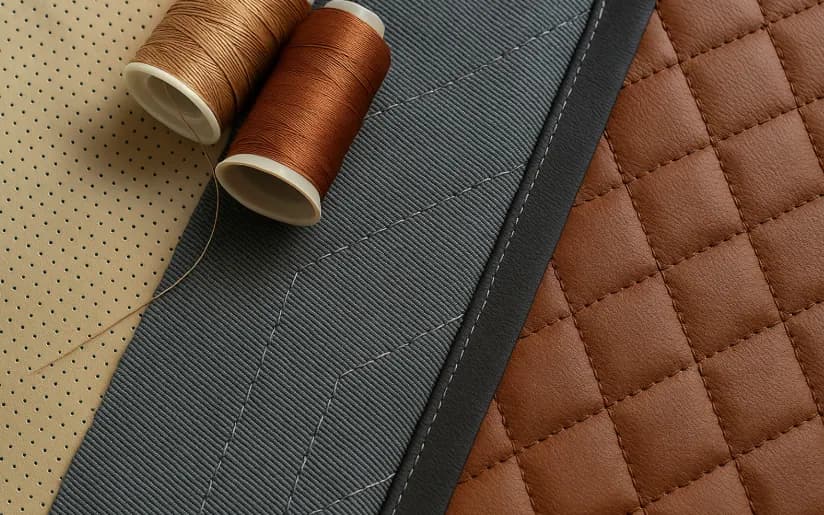
The vinyl is the most visible decision, but the seat only lasts if the rest of the materials match it. Marine vinyl sewn with ordinary thread fails at the seams in the sun. Marine vinyl over open-cell furniture foam holds water and grows mildew from the inside. And an unbound edge frays no matter how good the cover is. We pair marine vinyl with UV-resistant thread, closed-cell or high-density marine foam, stainless hardware and a tape edge finish so every part of the seat ages at the same rate.
How to tell what vinyl is on your seat now
If you are not sure what you have, a few clues help. Flip a cushion and look at the backing: a polyester knit backing points to marine vinyl, while a cotton-blend or paper-like backing is interior grade. Press a wet thumb against the surface and watch whether water beads or darkens the material. Check the underside of the seat for black spotting, which means the backing is holding moisture. And look at the sun-facing edges: fine cracks within a year or two of installation usually mean the vinyl was never meant for the outdoors.
Get a free quote in Venice, FL
We do not just do seats; we help you choose the right materials for your environment and your budget, then build the seat to last. Call (941) 786-4100 or use the contact page for a free estimate on boat, golf cart, RV or car upholstery. Our shop is at 420 E Venice Ave in Venice, FL, and we serve Sarasota, Nokomis, Englewood, North Port and Port Charlotte.
- marine vinyl
- automotive vinyl
- golf cart seats
- rv upholstery
- car upholstery