Which Marine Vinyl We Use (and Where to Buy It in Venice, FL)
What makes vinyl marine grade, how it differs from regular vinyl, Sunbrella canvas, colors for Florida heat and where to see samples in Venice, FL.
· 6 min read · Venice, FL
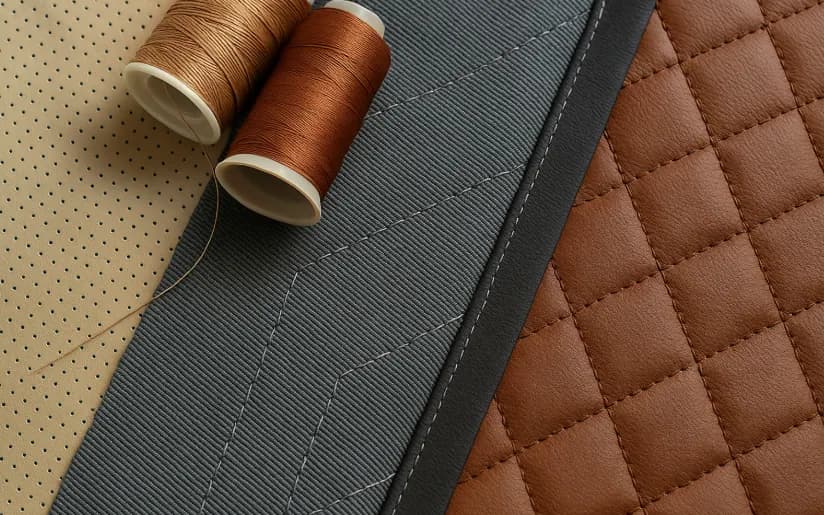
"Who sells marine grade upholstery vinyl near me?" is one of the most common searches that brings people to our site, usually from an owner with a torn seat and a sewing machine, or from someone who has just been quoted a job and wants to know what they are paying for. This guide answers both: what makes vinyl marine grade, how it differs from fabric-store vinyl, the finishes we use, and how to choose a color that survives a Venice, FL summer.
It also answers the practical question of where you can see and touch the real material: our shop at 420 E Venice Ave.
What makes vinyl marine grade
Marine vinyl and regular vinyl can look identical on the roll. The difference is in the compound, the backing and the testing, and it shows up after one summer at the dock. Real marine-grade vinyl has five things going for it.
UV inhibitors
Sunlight breaks down the plasticizers that keep vinyl flexible. Marine vinyl is compounded with UV inhibitors that slow that breakdown, so the surface stays supple instead of chalking, stiffening and cracking along the seams. Regular vinyl has less UV protection or none, and in Florida that shows within a season.
A protective topcoat
The topcoat is a clear layer over the color. It resists abrasion, stains, sunscreen and the salt crystals that grind into a seat every time someone sits down wet. When it wears through, the vinyl underneath fades and picks up dirt fast; marine vinyl carries a heavier, more durable topcoat than furniture or automotive grades.
Mildew-resistant backing
Vinyl is bonded to a fabric backing, and on regular vinyl that backing is often cotton or a cotton blend that rots and grows mildew when it stays wet. Marine vinyl uses a polyester backing treated with mildew inhibitors, so the cloth side of the seat does not become the problem. This is the part you never see and the part that fails first on cheap material.
Cold-crack rating
Marine vinyl is tested to stay flexible at low temperatures without cracking. That sounds irrelevant in Southwest Florida, but the cold-crack rating is a good proxy for how well the plasticizers are locked into the compound, and vinyl that passes it holds up better to heat aging too.
Weight
Marine vinyl is heavier than the vinyl sold for crafts or light furniture. The extra weight is thicker vinyl and a stronger backing, which means it resists tearing at the staples and seams, and it takes a tape edge or a welt without puckering.
Marine vinyl vs regular vinyl in practice
The question we hear most is whether regular vinyl is "good enough" for a boat that is covered most of the time. In our experience on the Gulf Coast, no. Regular vinyl cracks, the backing mildews and the seat has to be redone, usually with the foam underneath ruined by water that got in through the cracks. Our guide to marine-grade vs automotive vinyl goes deeper into where each belongs. The short version: boats, golf carts and anything that lives outside get marine vinyl, every time.
The finishes we use
Marine vinyl comes in several finishes, and we pick them by where the piece lives on the boat.
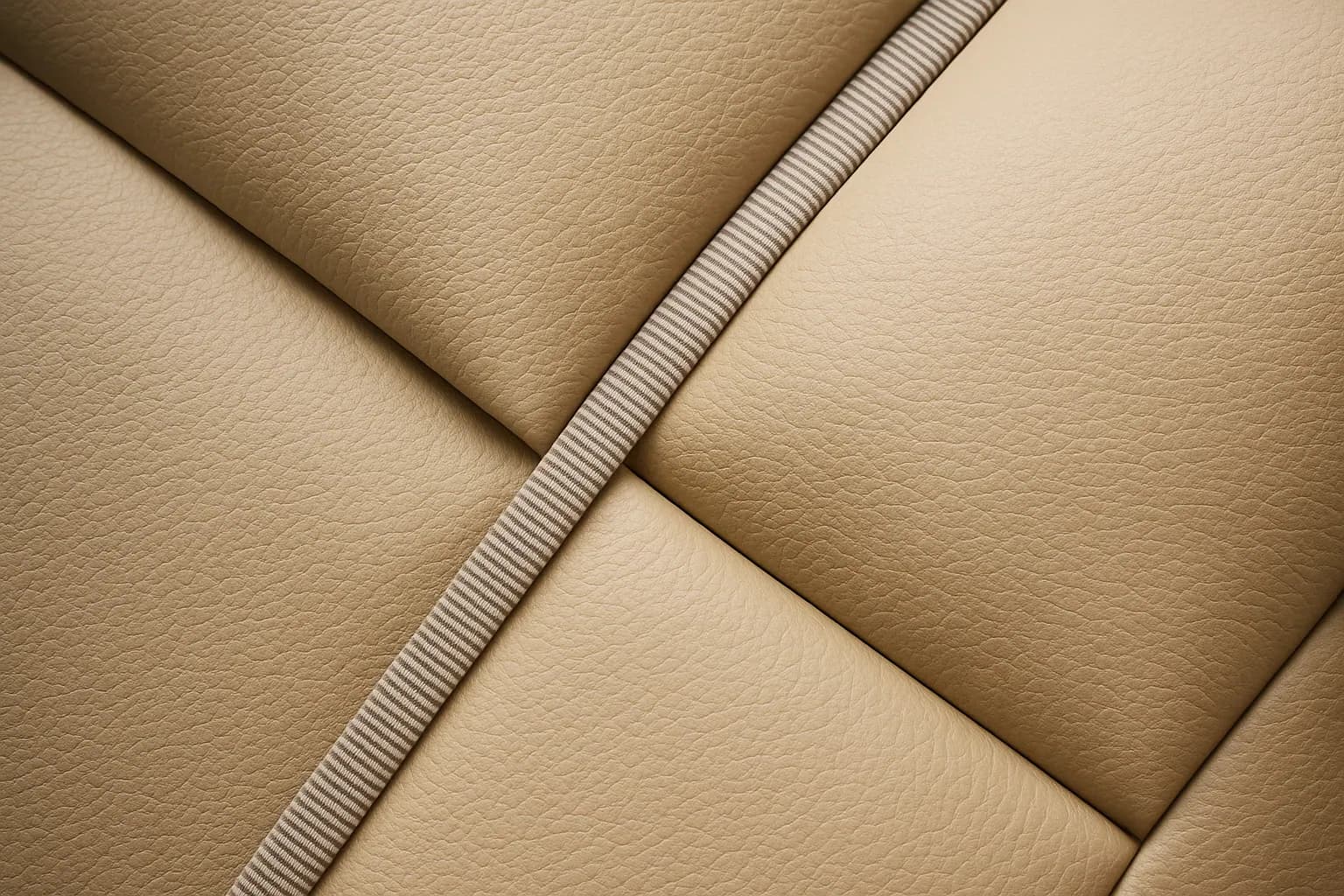
- Smooth. The classic finish, easy to clean and the best surface for diamond stitching, two-tone panels and tape edges. Most helm seats, bow cushions and benches are smooth vinyl.
- Textured. A light grain hides scuffs and gives a little grip on a wet seat. It is a good choice for high-traffic benches and pontoon lounges.
- Perforated. Small holes let air and water move through the panel, so the seat dries faster and feels cooler. We use it for inserts on helm seats and leaning posts, backed by foam that can drain.
- Pressed-polished clear vinyl. The clear material for windshields, side curtains and enclosure windows, pressed and polished for optical clarity and treated to resist UV yellowing and scratching. It is a different product from seat vinyl, covered in detail on our clear vinyl marine windows page.
Sunbrella and marine acrylics for canvas
Vinyl is for seating. Covers, bimini tops, T-top canvas and enclosure panels are built from Sunbrella or another solution-dyed marine acrylic. The color is in the fiber rather than printed on the surface, which is why these fabrics resist fading, salt and mildew for years and dry quickly after a storm. They breathe, so a cover does not trap moisture against the seats beneath it. Many boats use both: marine vinyl on the seats, Sunbrella on everything that covers them.
How to choose colors in Florida heat
Color is where most owners spend the longest at the sample board, and the choice matters more here than in a milder climate.
- Light colors stay cooler. White, off-white and light grey reflect sun and are comfortable to sit on at midday. Navy, black and charcoal get hot enough to be unpleasant and show fading sooner.
- Use dark colors as accents. A charcoal diamond stitch insert, a navy welt or a two-tone side panel gives the boat a modern look without a seat that burns.
- Match the boat, not the catalog. Hold samples against the hull, deck and canvas in direct sun; vinyl that looks right indoors can read differently on the water.
- Think about the topcoat. Very light colors show sunscreen and swimsuit dye transfer sooner; light grey or sand hides both better than pure white.
- Pick thread to match or contrast. We sew with UV-resistant thread in a matching or contrasting color, so stitching becomes a design choice rather than a weak point.
The rest of the system
Marine vinyl only lasts if what is around it is up to the same standard. We sew with UV-resistant thread, either a PTFE thread that is essentially immune to sun or a UV-treated bonded polyester. Foam is closed-cell marine foam or high-density foam that does not hold water. Staples, snaps and hardware are stainless. Our guide to waterproof boat upholstery explains how those pieces work together to keep a seat dry.
See and touch samples at the shop in Venice, FL
The best way to choose marine vinyl is to handle it. We keep sample books of the marine vinyls, finishes and colors we use, along with Sunbrella swatches, thread and clear vinyl, at the shop at 420 E Venice Ave, Venice, FL 34285, Monday through Friday, 9 AM to 5 PM. Take samples out into the parking lot sun, where the colors tell the truth, and bring a photo of the boat or a piece of the existing vinyl so we can match it.
Material for a DIY repair
We are an upholstery shop rather than a fabric store, so we do not keep a retail counter of vinyl by the yard. If you need a small piece of marine vinyl or a bit of Sunbrella for a DIY patch or cover repair, ask us. Tell us the color and roughly how much you need, and we will tell you what we can do. Often the better answer is to let us sew the piece, since a properly patterned cover in the right material outlasts a patch. Our boat upholstery services page lists what we do, from a single cushion to a full interior.
Get a free quote in Venice, FL
Call (941) 786-4100 or use the contact page to set up a free estimate, or stop by the shop to see the samples. We serve boat owners across Venice, Nokomis, Englewood, North Port, Sarasota and Port Charlotte, and we are happy to talk material before you commit to a job.
- marine grade vinyl
- marine vinyl vs regular vinyl
- sunbrella
- upholstery fabric
- venice fl