
How Diamond Stitch Upholstery Is Sewn: Layout, Foam and Thread
How diamond stitch upholstery is sewn in our Venice, FL shop: diamond size, center-line layout, sew foam, UV thread, and where it belongs on a boat.
· 6 min read · Venice, FL
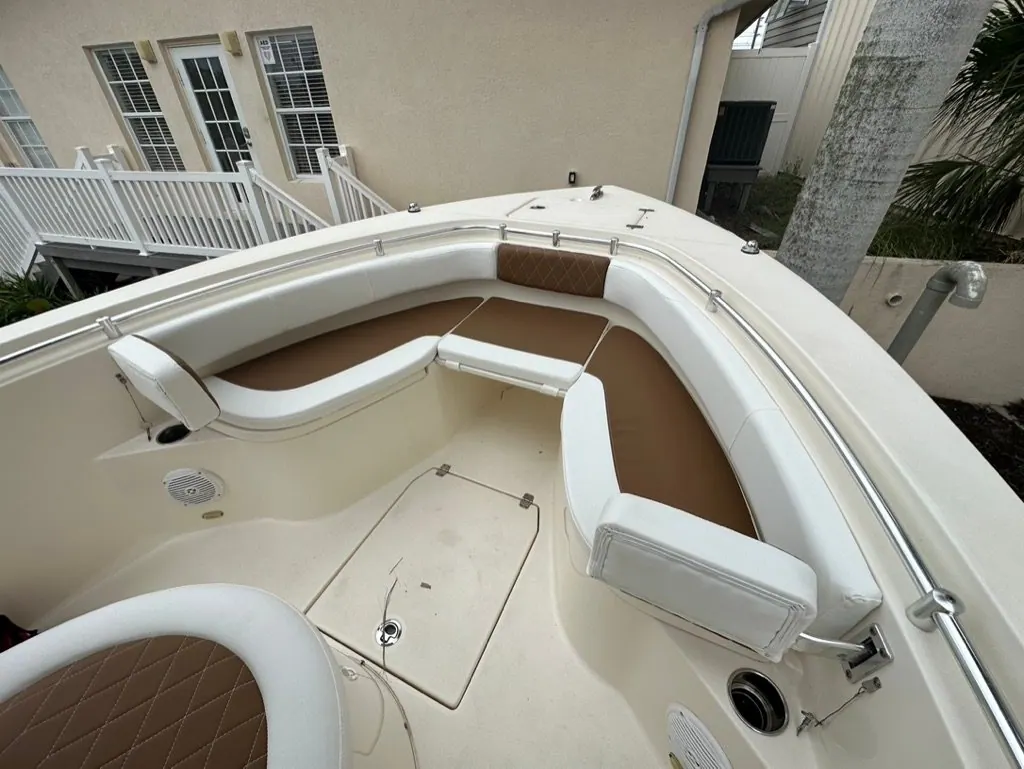
Diamond stitch is the pattern people point to when they want a boat seat to look custom. Rows of stitching cross at an angle over a padded panel, and the vinyl between them puffs into a grid of diamonds that catches the light. It looks simple from the dock; on the bench it is one of the more exacting jobs in marine upholstery, because every diamond is visible.
Here is how we sew diamond stitch upholstery at our shop in Venice, FL, and where on a boat the pattern earns its place.
What diamond stitch is
Diamond stitching is quilting. A face layer of marine-grade vinyl is laid over soft sew foam with a thin fabric scrim on the back, and the three layers are sewn together along straight lines. Along each line the foam is pinched flat; between lines it stays full. Sew the lines in two directions at an angle to each other and the raised sections become diamonds. That quilted panel becomes the insert in a cushion, bolster or backrest, usually framed by plain vinyl.
Choosing diamond size and angle
Size is set by the spacing between stitch lines: tight spacing gives a small, dense pattern that suits small panels like a jet ski seat, while wide spacing gives bold diamonds that suit a wide bow cushion or leaning post but look clumsy on a narrow bolster.
Angle is the second half. A diamond taller than it is wide reads differently from one wider than it is tall, and both differ from a square turned on its point. We lay the options out on scrap against the actual seat before anything is cut.
Marking the layout from a center line
Diamonds have to be centered. Start from one edge and the pattern runs out unevenly on the other side, so every panel is laid out from the middle.
We mark the center line, then the first pair of stitch lines at the chosen angle through that center. The remaining lines are stepped off from those at the chosen spacing, working outward in both directions, so the pattern is symmetrical and the partial diamonds at each edge match side to side. On a cushion with a center seam or a two-tone split, both halves are laid out together so the diamonds continue through the seam.
Sew foam, scrim and why the panel is cut oversize
The loft that makes a diamond look like a diamond comes from sew foam: a soft, thin foam bonded to a lightweight scrim fabric. The scrim keeps the foam from tearing as the panel is handled, and vinyl, foam and scrim are sewn as one sandwich.
Every line of stitching compresses the foam and gathers a little vinyl into the pucker on either side. Across dozens of lines that adds up: a quilted panel comes off the machine noticeably smaller than the flat panel that went on. So the panel is always cut oversize and quilted first, and only then is the finished shape marked and cut. That is also why we quilt the insert as a separate piece before joining it to its borders.
The machine and the thread
Diamond stitch is sewn on a walking-foot industrial machine. On a standard machine the feed dogs pull the bottom layer while the presser foot drags on the top, so over a long seam through foam the layers shift and the vinyl ripples. A walking foot moves top and bottom together, so the stitch line stays straight and the diamonds stay the same size end to end.
Thread is the part that fails first on a boat. We sew marine work with UV-resistant thread, either a PTFE-type thread or a bonded polyester, so the stitching does not rot in the sun before the vinyl does. That matters even more on diamond stitch, which carries many more feet of exposed thread than a plain panel, and a contrast thread that fades or breaks is obvious at once.
Aligning diamonds across adjacent panels
A single quilted insert is only half the job. Most seating has several panels side by side: a seat bottom and backrest, a row of bow cushions, or a bench with inserts split by a plain center panel. If the diamonds do not line up from one to the next, the eye picks it up instantly.
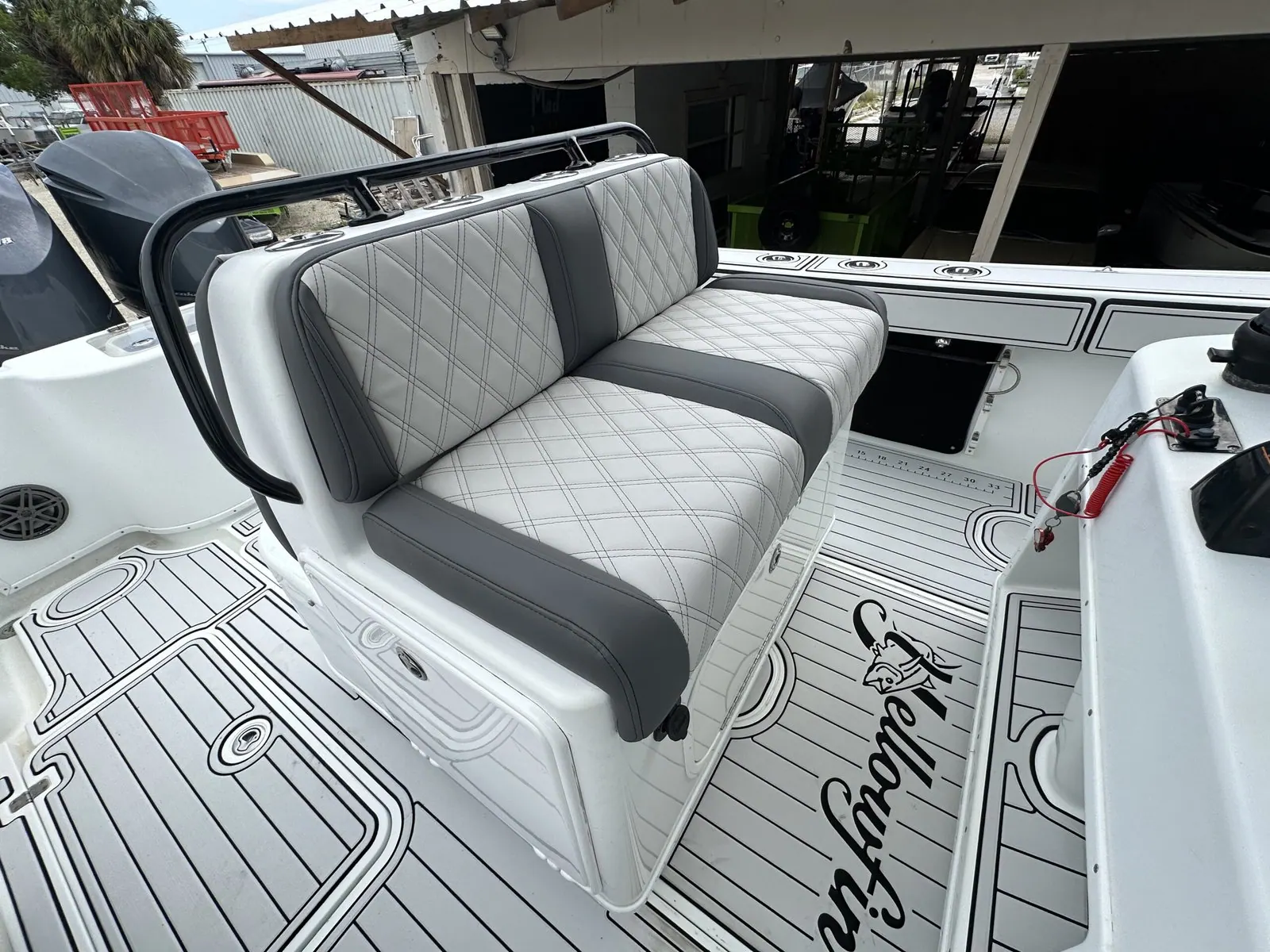
We lay out adjacent panels together so stitch lines carry straight across the seam and diamond points meet at the same height. On the Yellowfin helm seat above, the grey diamond-stitched side panels frame a charcoal center panel, and the rows are set so they read as one pattern rather than two separate pieces.
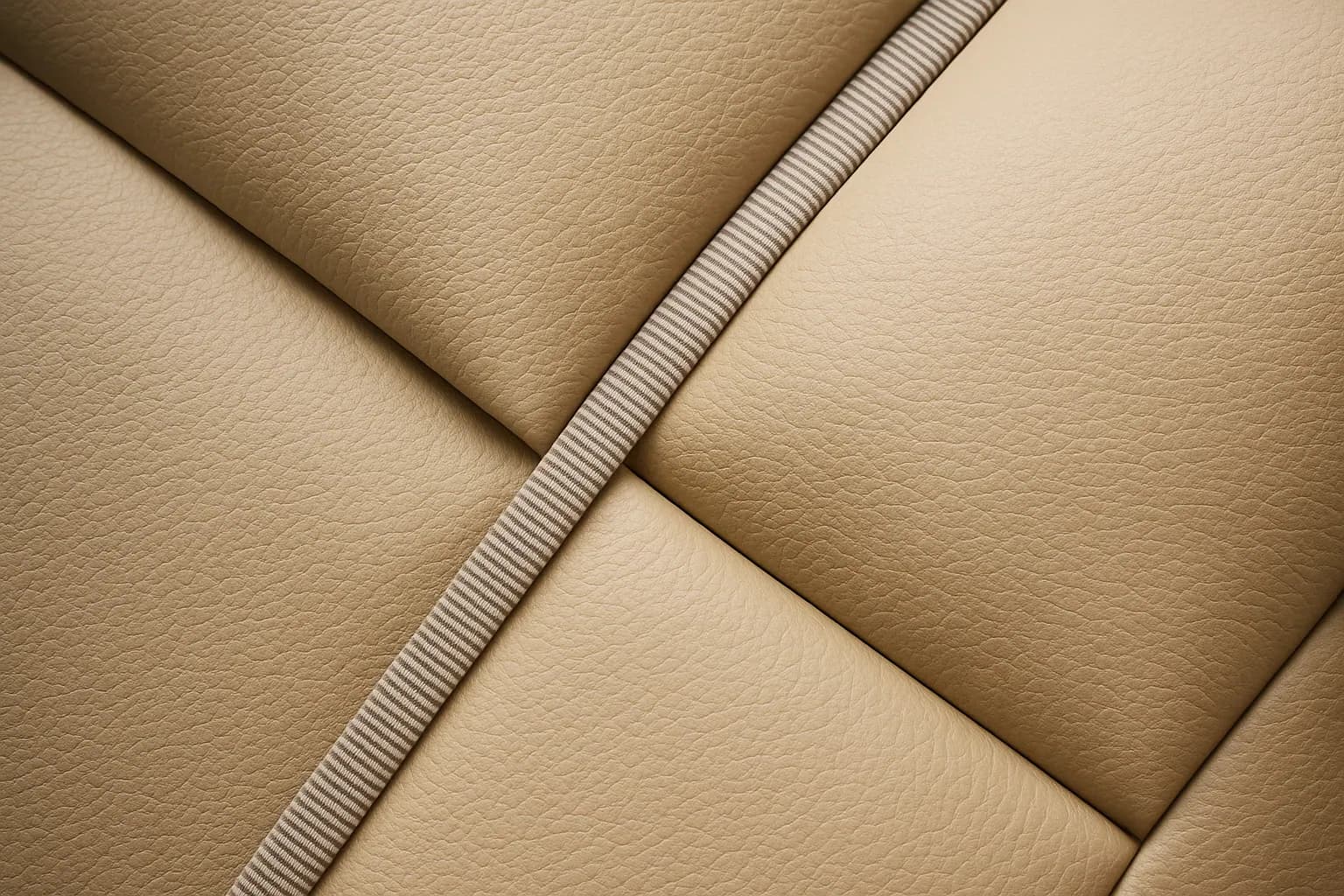
Where a tape edge or welt separates two inserts, the seam is planned to fall on a stitch line or exactly between two, never partway through a diamond. We go into that detail in our post on the tape edge seam.
Where diamond stitch belongs on a boat
Diamond stitch is at its best where it is seen and not scrubbed every weekend:
- Seat and backrest inserts framed by plain vinyl, the classic application.
- Coaming and gunwale bolsters, at eye level and taking little abuse.
- Helm seats and leaning posts, the focal point of a center console.
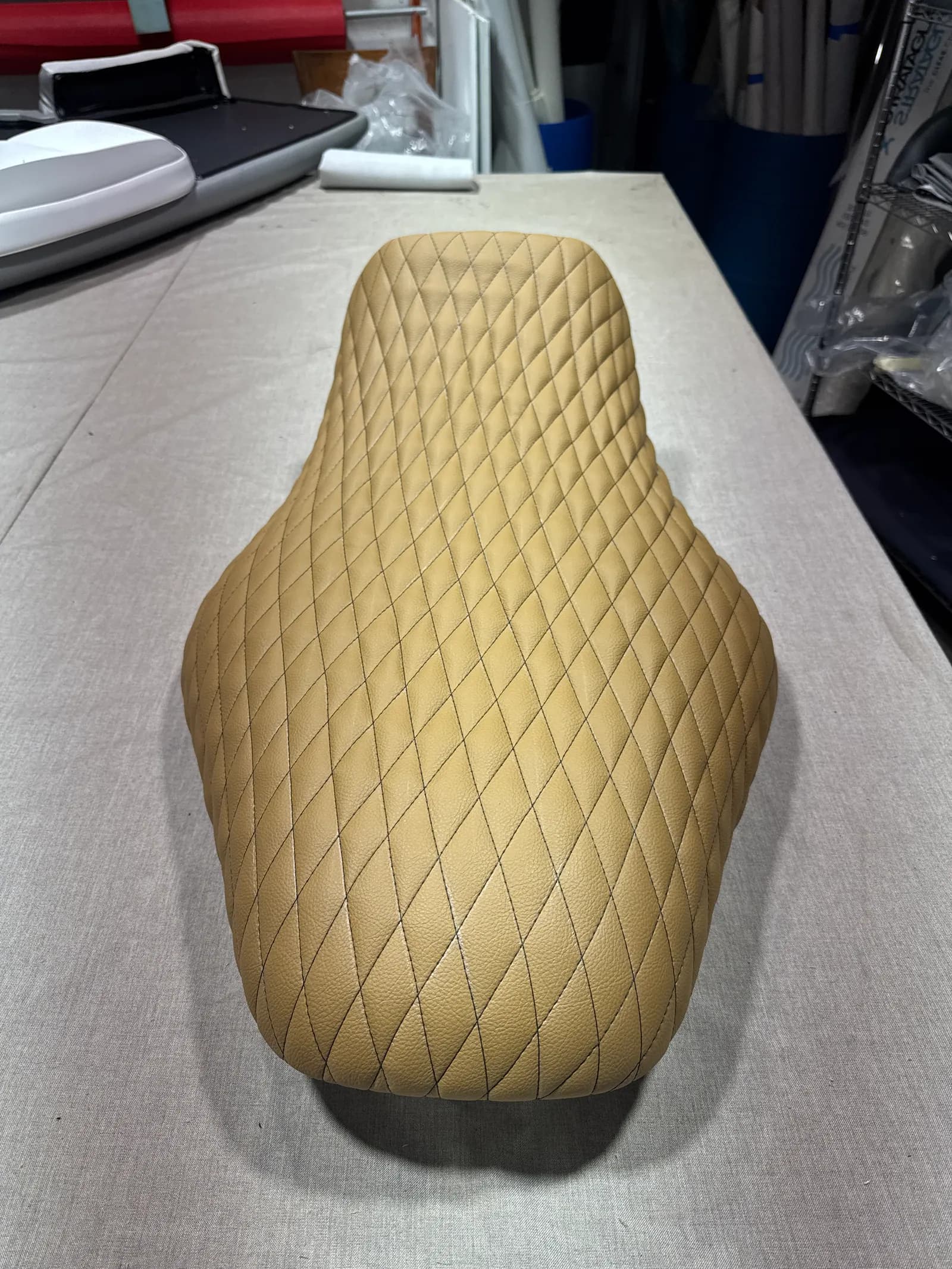
- Jet ski seats, where a small-scale diamond covers a seat that is almost all insert; see our tan diamond-stitch jet ski seat.
- Bow and aft bench inserts where the owner wants a matched look throughout.
Where it does not belong
Every pucker is a place for sunscreen, salt and fish blood to settle, and every seam is a place for mildew to start. On a flat seat that gets stood on, scrubbed with a brush or used as a bait board, plain vinyl is the better choice: it cleans in one pass and has far less exposed thread to break down.
The usual answer is a mix: diamond stitch on the inserts and bolsters where it shows, plain marine vinyl on the wear surfaces.
What drives the cost
Diamond stitch costs more than plain upholstery because it takes more vinyl, since panels are cut oversize, more sew foam, scrim and thread, and far more time at the layout table and the machine. Within a diamond stitch job, the factors that move the number are:
- How many panels are quilted, and how large they are.
- Diamond size, since small diamonds mean more stitch lines per panel.
- How many adjacent panels must align.
- Two-tone or contrast work, which adds seams and layout time.
- Whether the foam underneath is being replaced with new closed-cell marine foam, which we recommend when the old foam is waterlogged.
We quote by looking at the seating, not from a formula, and we will tell you where the pattern is worth it and where plain vinyl serves you better. See more finished examples in our custom diamond stitch boat seating post and the full range on the boat upholstery services page.
Get a free quote in Venice, FL
Send us a few photos of your seating and tell us which panels you picture in diamond stitch. We will show you the diamond size on your actual cushion and give you a free quote. Call (941) 786-4100, email davidk@apogeeupholstery.com, or use the contact page. Our shop is at 420 E Venice Ave in Venice, FL, open Monday through Friday, 9 AM to 5 PM, with trailer parking for drop-offs from Nokomis, Englewood, North Port and Sarasota.
- diamond stitch
- marine vinyl
- boat seats
- how-to