Diamond Stitch Boat Upholstery: Custom Two-Tone Center Console Seating
Diamond stitch boat upholstery explained by a Venice, FL marine shop: how it is sewn, foam, thread, two-tone design, cost factors and durability in Florida sun.
· Updated · 7 min read · Venice, FL

Diamond stitch boat upholstery is the detail owners ask us about more than any other. It is the quilted, pillowed pattern you see on custom boat seats, leaning posts and bolsters, and it turns a plain cushion into something that looks and feels tailored. It is also more involved to build than it looks, and the way it is built decides whether it lasts in Florida sun.
This post walks through a recent project, a full set of two-tone tan and white diamond-stitched seating for a center console, and then gets into the details: how diamond stitching is sewn, what foam and thread go into it, how two-tone layouts are planned, what drives the cost and how it holds up on the Gulf Coast.
The project: custom two-tone seating for a center console
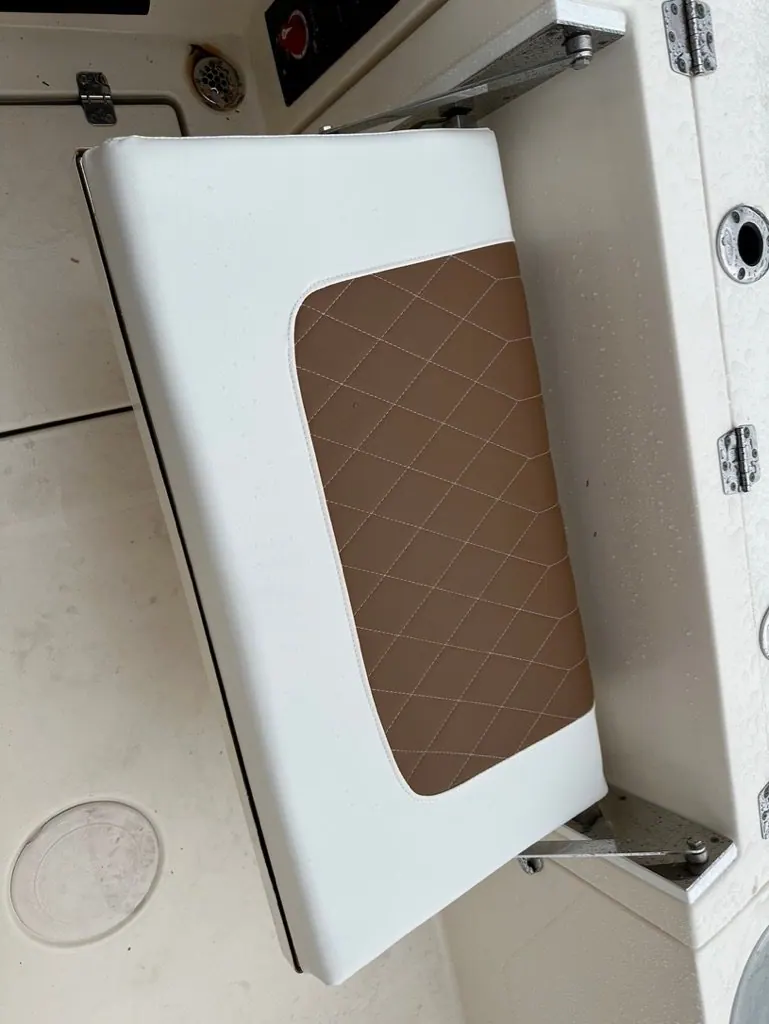
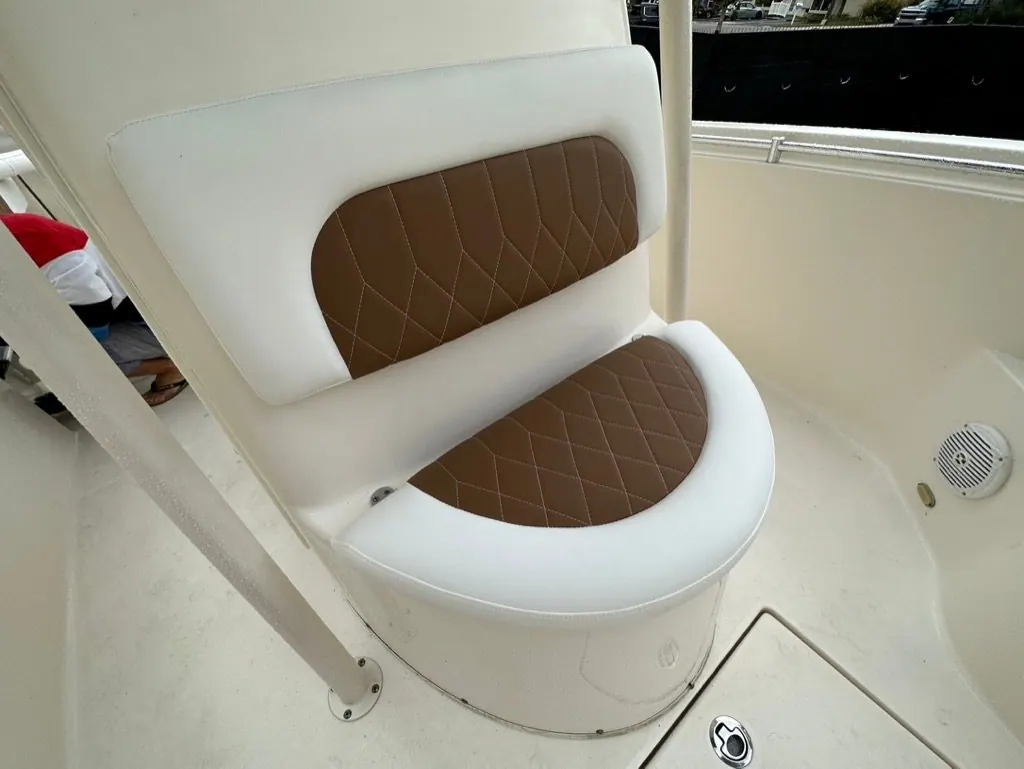
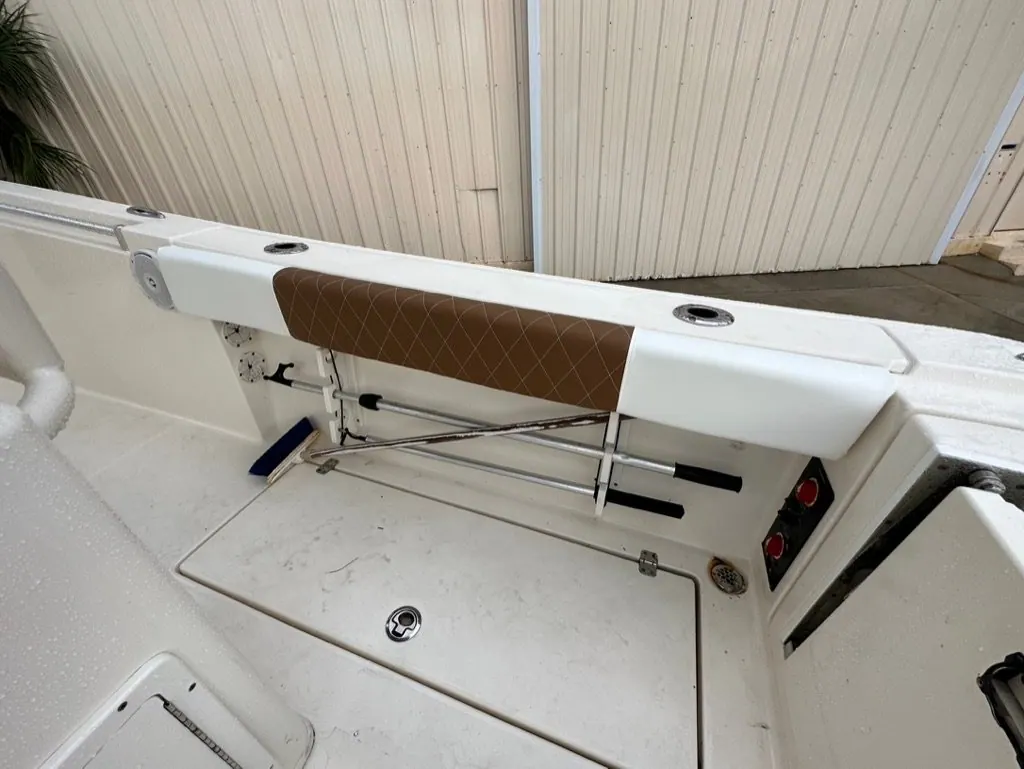
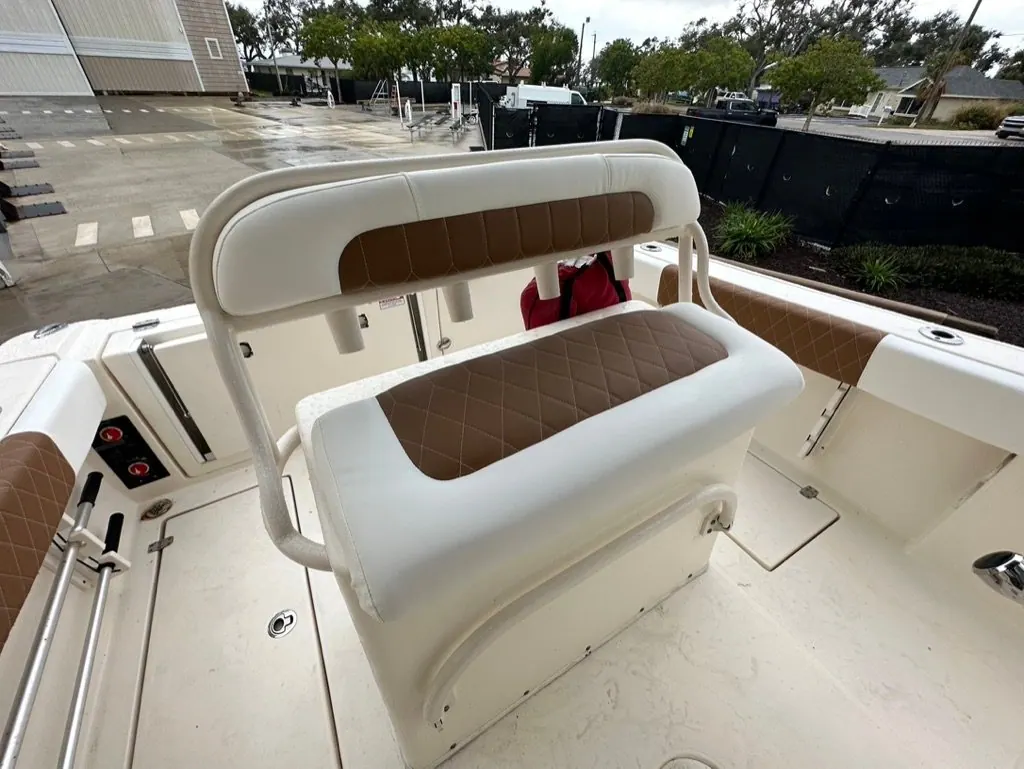
The owner of this center console wanted seating that was elevated but still practical, something that complemented the boat's clean lines and would stand up to the Southwest Florida climate. We designed and built a full set of custom marine seat cushions in color-matched tan and white vinyl with diamond-stitched inserts.
What the project included:
- Full replacement of the bow seating, the leaning post cushions and the bolsters
- Color-matched tan and white marine vinyl with UV and mildew resistance
- Diamond-pattern stitching on the inserts, seatbacks and bolsters
- Reinforced, high-resilience foam cores for long-term comfort and shape
- Custom panel shaping and edge piping for a factory-level fit and finish
The bow forms a U-shaped lounge in white and tan, the seatbacks and bolsters carry the diamond pattern, and the leaning post was built with clean stitch lines and a shape that supports whoever is standing at the helm. Together they give the deck a consistent, comfortable look that also adds value if the boat is ever sold or chartered.
What diamond stitching actually is
A diamond-stitched panel is not just vinyl with lines sewn across it. The vinyl is first laminated to a thin layer of foam with a fabric scrim on the back. That three-layer sandwich is then sewn in two sets of parallel lines running at opposing angles. Where the stitch lines cross, they compress the foam; between them, the foam stays full. The result is the raised, pillowed diamond you see and feel.
This is why diamond stitching feels soft and looks three-dimensional, and why it cannot be faked by sewing lines onto flat vinyl. Without the foam layer there is nothing to pillow. It is also why the technique takes real time: every line is a seam, and a single seat insert can carry dozens of them.
How we sew diamond stitch boat seats
Laminating the vinyl to foam
We start by bonding marine-grade vinyl to a thin foam backing with scrim. The thickness of that backing sets the depth of the diamonds. A thinner backing gives a flatter, more subtle pattern; a thicker one gives a deeper, more pronounced quilt. We match it to the look the owner wants and to the location on the boat.
Marking the grid
The diamond grid is laid out on the back of the laminated panel. The angle and spacing of the lines decide the size and shape of the diamonds, and they have to be consistent across every panel on the boat. On this project we planned the grid so the diamonds were centered on each insert and met the plain panels at a clean edge.
Sewing the lines
Each line is sewn individually with UV-resistant marine thread. Keeping the lines dead straight across a flexible, foam-backed panel is the skill in this work; any wander shows immediately because the pattern is so regular. After the grid is sewn, the panel is trimmed to its final shape.
Assembling the cushion
The diamond-stitched insert is then sewn to the plain panels, piping and borders that make up the rest of the cushion cover. This is where the two-tone layout comes together, with the tan and white meeting at seams that line up from cushion to cushion. Finally the cover goes over the foam core and onto the seat base.
Thread and foam: where diamond stitch jobs succeed or fail
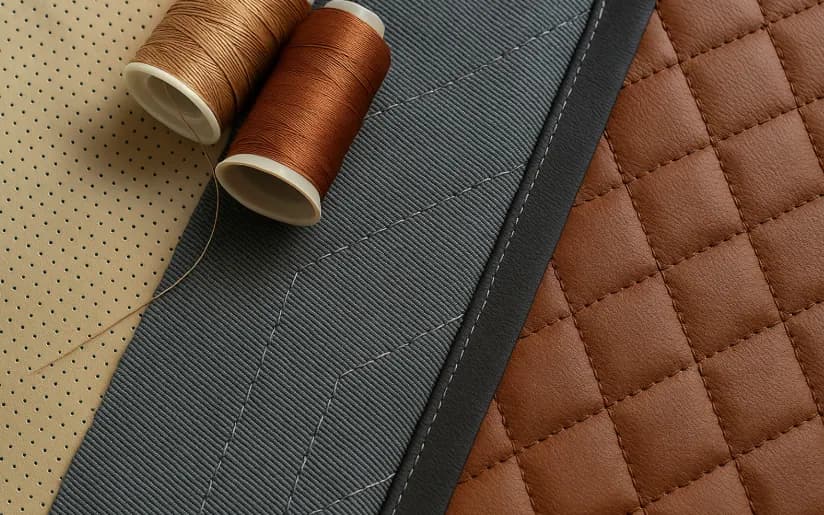
A diamond-stitched seat has far more seams than a plain one, and every seam is a line of needle holes. That makes the thread the most important material choice on the job. We use UV-resistant marine thread that does not break down in sun or salt. Ordinary thread goes brittle within a season on the Gulf Coast, and when it fails on a diamond-stitched panel, the whole grid starts to unravel.
The foam matters at two levels. The thin foam backing under the vinyl gives the pattern its loft. The thick foam core inside the cushion gives the seat its support. On this project we used reinforced, high-resilience foam cores that hold their shape and spring back after a long day of use. Old or cheap foam compresses, and a diamond-stitched cover over a collapsed core looks like a deflated quilt.
The vinyl itself has to be marine-grade: UV-resistant, mildew-resistant and flexible enough to stay soft through years of heat cycles. The materials we work with are described on our boat upholstery services page.
Two-tone layouts and where the diamond goes
Most diamond stitch boat seats combine a quilted insert with plain panels, and most of the best ones use two colors to do it. On this center console the diamonds sit on tan inserts framed by white panels. Keeping the diamond pattern on the inserts and the plain vinyl on the edges, bolsters and wear surfaces does three things:
- It puts the comfortable, textured surface where you sit and lean.
- It puts smooth, easy-to-clean vinyl where fish blood, sunscreen and salt land.
- It controls cost, because fewer panels need the full laminate-and-sew treatment.
The color break is a seam, and getting it to land at the same height and curve across the bow, the leaning post and every bolster is what makes a two-tone job look designed. Edge piping along those seams adds definition and protects the seam from abrasion. Our post on the upholstery tape edge finish explains another way we finish those edges.
What drives the cost of diamond stitch boat upholstery
We do not quote by the foot, because every boat is different, but these are the factors that move the number:
- Number of panels. Each diamond-stitched panel is laminated, marked, sewn and trimmed before assembly. More panels means more hours.
- Size of the diamonds. Smaller diamonds mean more lines per panel and more sewing time.
- Foam backing. The laminated backing is an extra material layer that plain panels do not need.
- Pattern alignment. Matching the grid across seat edges and between cushions takes planning and careful cutting.
- Number of colors. Two-tone work adds seams and layout time compared with a single color.
- Foam core condition. If the cushion cores are waterlogged or collapsed, they are replaced, which is true of any boat upholstery job.
We give free estimates after seeing the boat or your photos. Putting the diamond pattern on inserts rather than every surface is the most effective way to get the look while keeping the project reasonable.
Durability in Florida sun and salt
Done right, a diamond-stitched seat lasts as long as a plain one. The extra seams are only a weakness if the thread is wrong or the vinyl is not marine-grade. The pattern itself has an advantage on a fast boat: the quilted surface gives you some grip, so you slide less when the hull lands off a wave.
To keep it looking new:
- Rinse with fresh water after a salt day and let the cushions dry.
- Clean with mild soap and water. Bleach and solvents dry out vinyl and weaken thread.
- Brush along the stitch lines occasionally so grit does not collect in the channels.
- Keep the boat under a fitted cover when it is not in use. We build custom marine covers for center consoles and pontoons.
Custom boat seats beyond center consoles
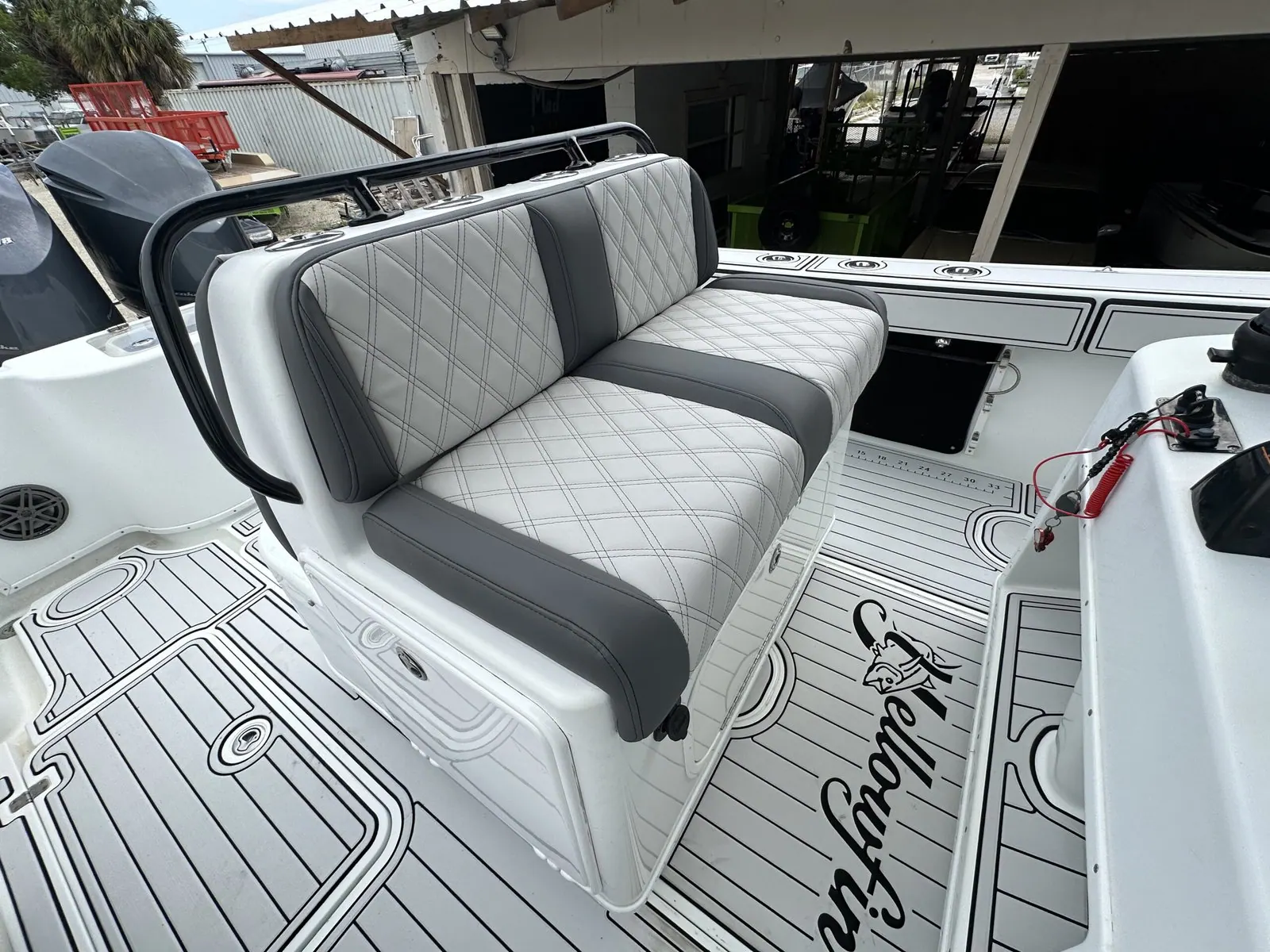
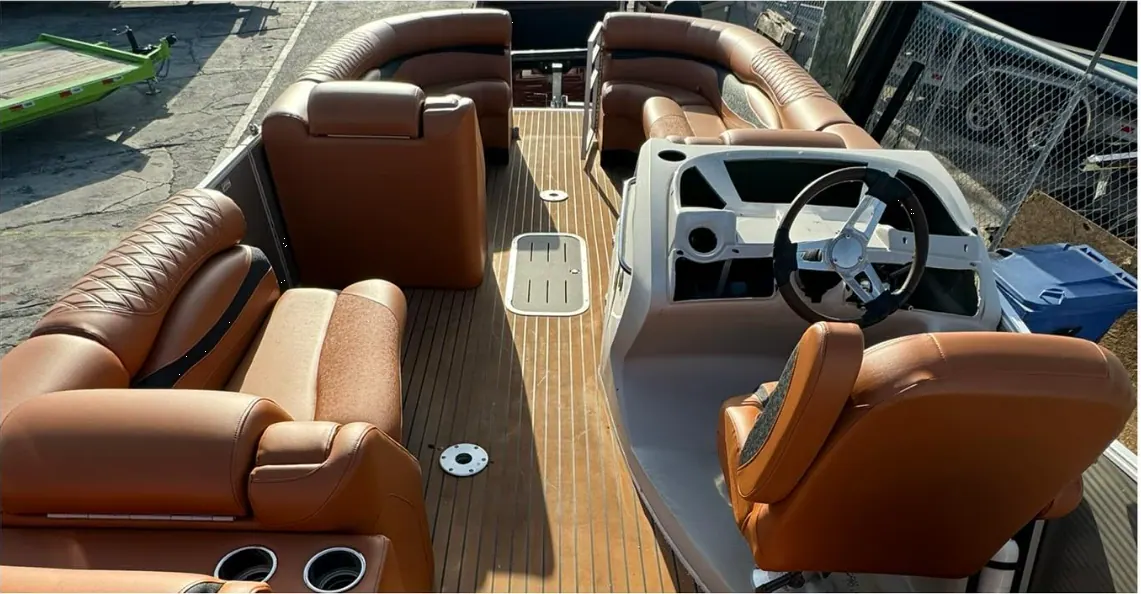
The same approach works on any boat. We have built diamond-stitched seating for an offshore Yellowfin in grey with a charcoal center panel, a Mako 214CC in white and tan, and a luxury pontoon in burnt orange. Custom sailboat cushions, cabin cruiser interiors and personalized boat cushions for a single bench all follow the same steps: pattern from the boat, choose the foam for the location, lay out the grid, sew with marine thread and assemble with care.
More finished projects are in our gallery.
Get a free quote in Venice, FL
Whether you want a full set of custom boat seats or a few diamond-stitched cushions to upgrade what you have, bring the boat or the old cushions to our shop at 420 E Venice Ave in Venice, FL. We are minutes from the Gulf, with a fenced lot next to the shop where your boat can stay during the work. Call (941) 786-4100 or use the contact page for a free estimate. We serve boat owners across Venice, Sarasota, Englewood, North Port and Port Charlotte.
Project Photos
- diamond stitch
- custom boat seats
- center console
- two-tone upholstery
- marine vinyl