Why Headliners Sag in Florida Heat (and How We Fix Them Right)
Sagging headliner repair explained: why the foam fails in Florida heat, why pins and glue are temporary, and how our Venice, FL shop replaces headliners right.
· 6 min read · Venice, FL
If the fabric over your head has started to droop, bubble or brush your hair every time you get in, you are not alone. A sagging headliner is one of the most common interior complaints we hear in Venice, FL, and the cause is almost never the fabric itself. It is the thin foam layer behind it, and Florida heat is what kills it.
This guide explains what a headliner is made of, why it fails here faster than in cooler climates, why the quick fixes you see online do not hold, and how we repair one so it stays up. Headliner replacement is part of our car upholstery services.
What a headliner is made of
A modern headliner is three layers. On the outside is the fabric you see, usually a knit cloth. Bonded to the back of that fabric is a thin layer of open-cell polyurethane foam, which gives the ceiling its soft feel and smooth look. That foam-backed fabric is glued to a rigid molded board, usually fiberglass or pressed fiber, shaped to your roof and held in place by the trim, grab handles, visors and pillar covers.
The fabric rarely fails. The board rarely fails. The foam in the middle is the weak link.
Why the foam turns to dust in Florida heat
Open-cell polyurethane foam breaks down over time through heat, humidity and UV exposure. A closed car in a Southwest Florida parking lot in August gets hot enough inside that the foam against the roof panel cooks a little more every day, and our humidity finishes the job.
Once that happens, the foam crumbles into a fine, sticky orange or tan dust. The fabric is still glued to the foam, but the foam is no longer attached to anything, so the fabric drops. You will usually see it start around the rear window, the dome light or the sunroof opening, where heat collects and where the board flexes most.
Gritty fabric or orange crumbs on your seats are that foam, and it cannot be re-glued because there is nothing solid left to glue to.
Why pins, spray glue and steam are temporary
- Pins and twist tacks. They hold the fabric to the board mechanically, which works for a few weeks until the fabric around each pin tears or the pin pulls out of the board.
- Spray adhesive through the fabric. The glue soaks into fabric and crumbling foam; you are gluing fabric to dust. In Florida heat most aerosol adhesives also soften again, and the sag returns with a stain where the glue bled through.
- Steam and a roller. Steam reactivates some old adhesives for a day or two, but it adds moisture to foam that is already breaking down and speeds up the collapse.
None of these address the foam, which is the actual failure, so the sag always comes back, usually worse.
How we fix a headliner right
There is one repair that lasts, and it starts with taking the headliner out of the vehicle.
The board comes out
We remove the visors, grab handles, dome lights, pillar trim and any seals that hold the board in place, then work the board out through a door opening. Forcing it cracks the board, so this step is done slowly, sometimes with a seat tilted or removed to make room.
The old foam is scraped clean
Every bit of the failed foam and old adhesive is scraped and brushed off the board down to a clean, sound surface. This is the step the quick fixes skip and the one that decides whether the new material stays up; any dust left behind is the spot that lets go first.
New foam-backed headliner material
We cover the board in new automotive headliner fabric with fresh foam already bonded to its back, color-matched to your interior as closely as the material allows. The fabric is laid out oversize, worked into the board's contours by hand, and trimmed at the edges and openings.
High-temperature adhesive
We bond the new material with a high-temperature contact adhesive made for headliners, not a general-purpose spray. The difference matters in Florida: an ordinary adhesive softens in cabin heat, while a headliner adhesive is formulated to hold at the temperatures a roof panel reaches in the sun.
Reassembly
The board goes back in, the trim, lights and visors are refitted, and we check that every edge is tucked and every opening is clean. The ceiling looks factory and stays up through the summers.
Sunroof cars
A headliner with a sunroof opening has more edges to fail and more heat coming through the glass, which is why sunroof cars tend to sag first. The new fabric has to be wrapped cleanly around the opening and secured so the sunroof shade and tracks still move freely. It is also worth checking the sunroof drains while the board is out; a clogged drain leaks onto the headliner and stains new material as readily as old.
Classic bow headliners
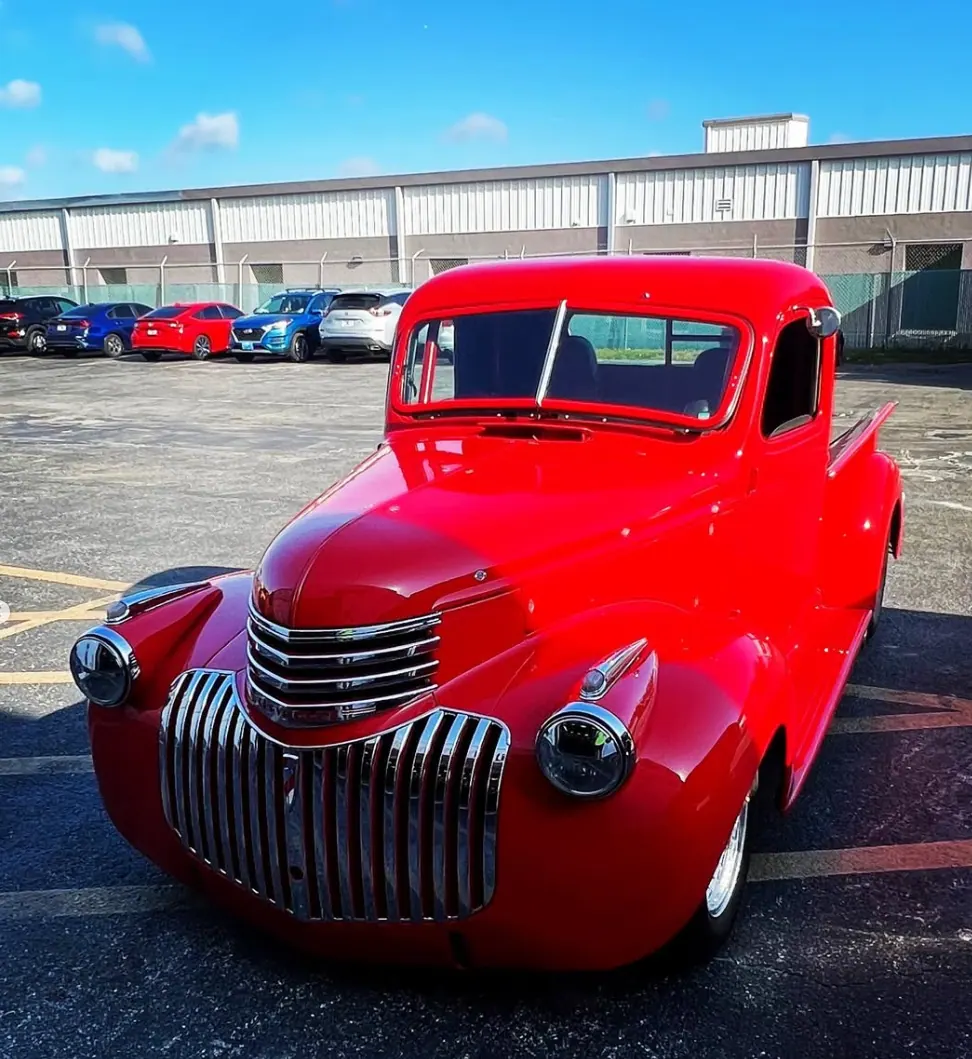
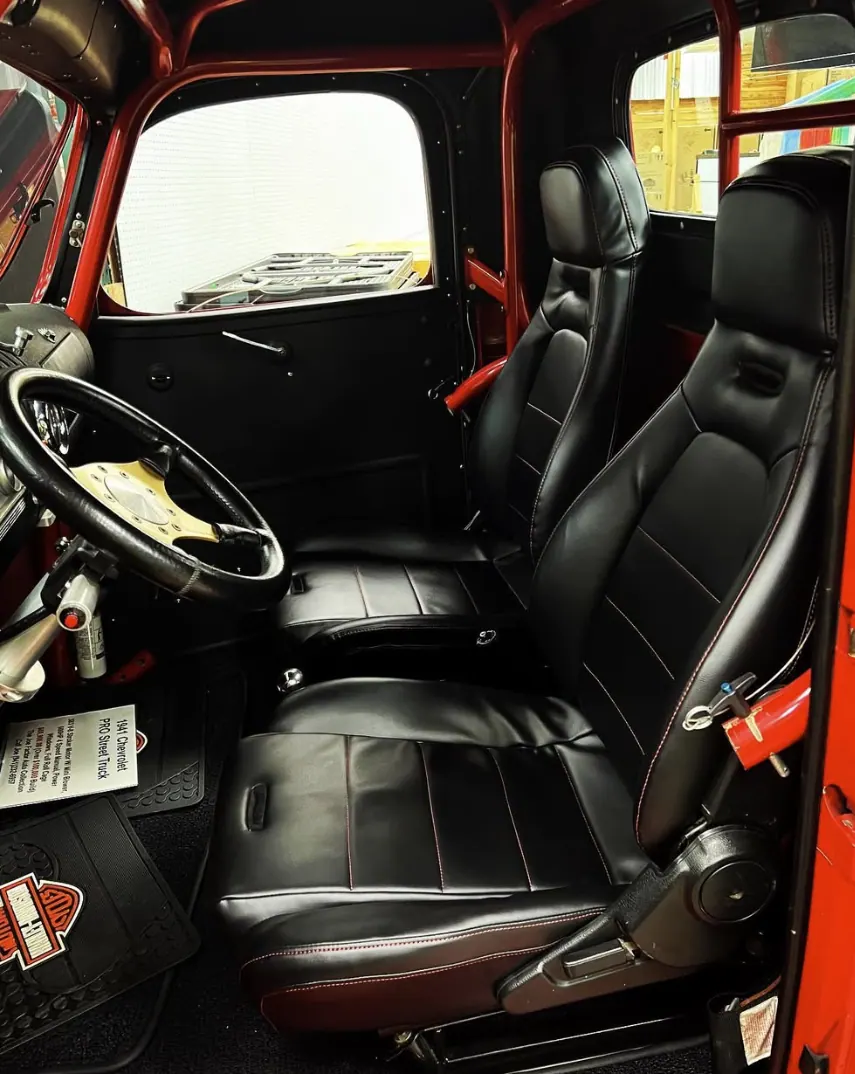
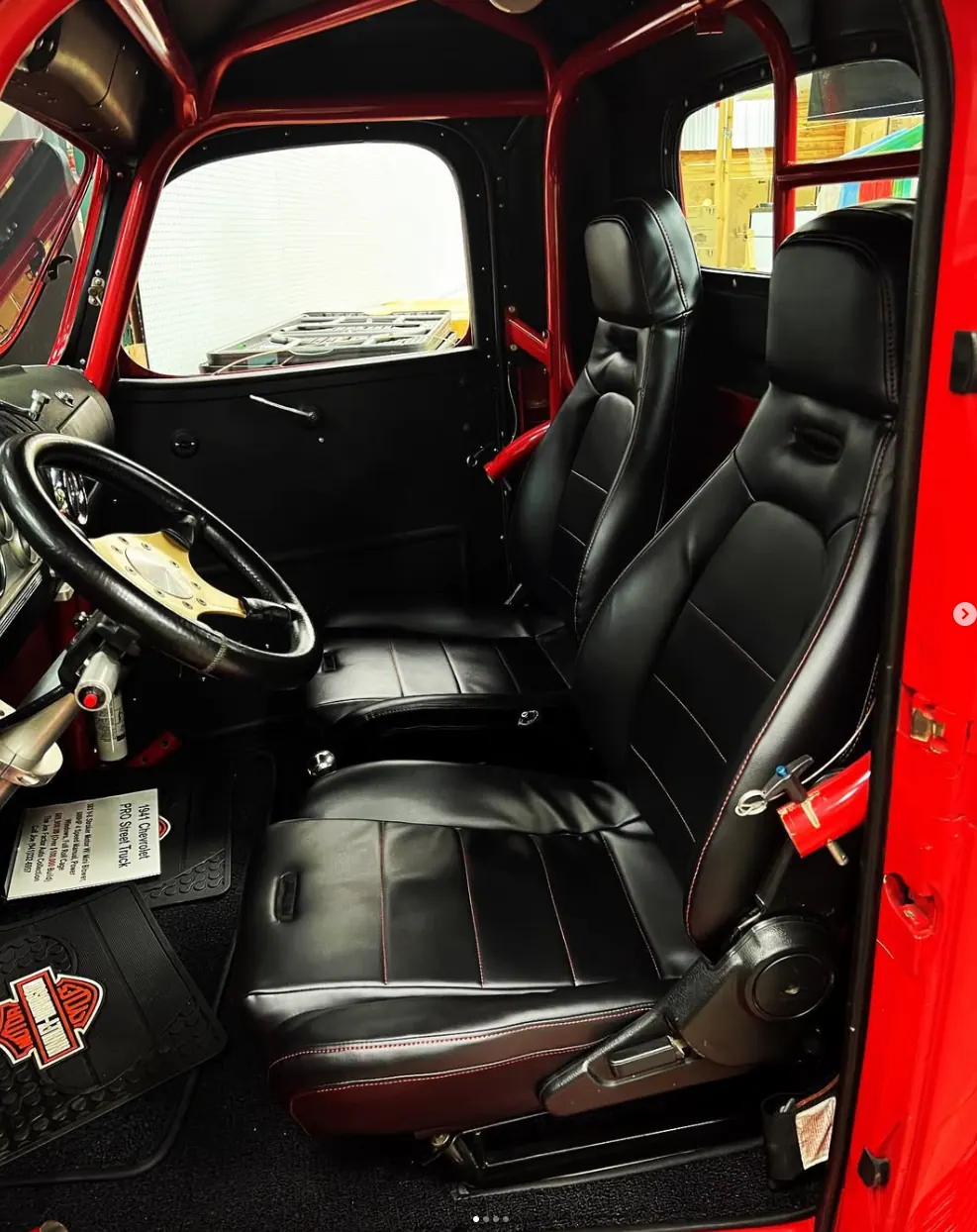
Classic trucks and cars from the 1960s and earlier do not use a molded board. The headliner is a sewn fabric or vinyl panel stretched across a series of metal bows and glued at the edges. Those are repaired by sewing a new headliner with listing pockets for the bows, fitting it bow by bow, and tensioning it until every panel is smooth. It is a different skill from a board headliner, and it is work we do alongside full classic interiors like the 1946 Chevrolet pickup.
Visors, pillars and the rest
The same foam-backed fabric covers the sun visors, the A-, B- and C-pillar trim, and often the sail panels in the rear. They fail the same way and at about the same time, so a sagging headliner often comes with visors peeling at the edges. We re-cover them in matching material while the headliner is out, so you are not left with a fresh ceiling next to tired pillars.
What you can check yourself
Before you call, a few things tell you what you are dealing with:
- Touch it. Gritty or sticky fabric means failed foam, which means replacement, not re-gluing.
- Look for stains. Water stains near the windshield or sunroof point to a leak that should be fixed before new material goes in.
- Check the board. Press gently near the sag; if the board flexes a lot or feels cracked, tell us so we can plan for a repair.
- Check the visors and pillars. If they are peeling too, it is more efficient to do everything in one visit.
- Note the color. Bring the vehicle rather than a photo so we can match the material in daylight.
If you are weighing whether the car is worth it, our post on custom interior repair and resale value is a useful read; a tight headliner is one of the first things a buyer notices.
Get a free quote in Venice, FL
Tell us the year, make and model, whether it has a sunroof, and whether the visors and pillars are going too. We will give you a free quote for headliner repair and anything else the interior needs. Call (941) 786-4100, email davidk@apogeeupholstery.com, or use the contact page. Our shop is at 420 E Venice Ave in Venice, FL, open Monday through Friday, 9 AM to 5 PM, and we do headliner work for owners from Sarasota, North Port, Englewood and Port Charlotte.
- headliner
- car interior
- auto upholstery
- florida heat