1946 Chevrolet Pickup Interior Restoration in Black Leather
Classic truck upholstery restoration of a red 1946 Chevrolet pickup in Venice, FL: rebuilt bench seat, new springs and foam, black leather and period stitching.
· Updated · 5 min read · Venice, FL
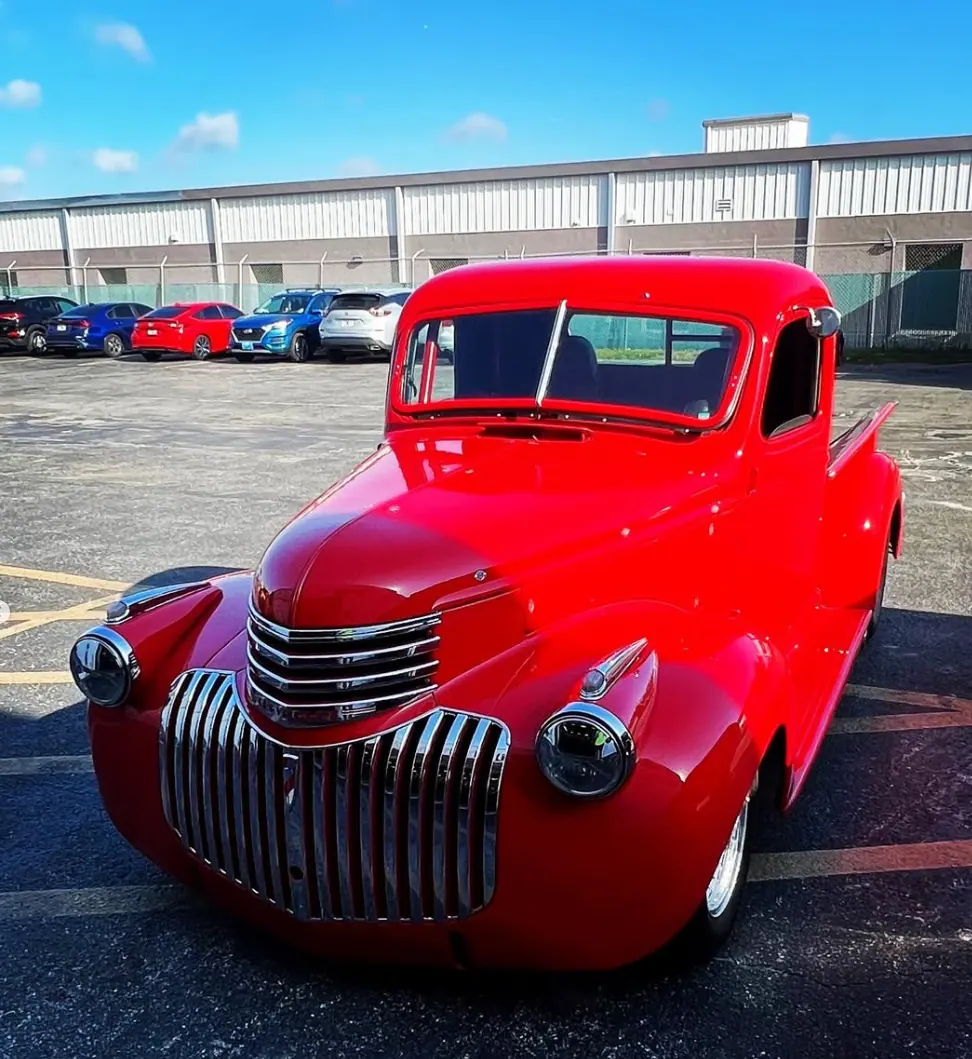
A 1946 Chevrolet pickup is one of the first trucks Chevrolet built after the war, and the owner of this red example wanted its cab to feel the part. The brief was simple to say and harder to do: keep the vintage character of the interior intact, but make it comfortable and durable enough to drive regularly. This is how we restored the truck interior at our shop in Venice, FL.
The truck and the goal
The exterior had already been brought back to a deep, glossy red, which raised the bar for everything inside the cab. A cracked seat and faded door panels would have undone the whole effect every time the door opened.
The owner did not want a modern-looking interior dropped into an old truck. They wanted the proportions, pattern and stitching of the period, with better support and materials that would last in Florida heat. That balance of authenticity and comfort shaped every decision that followed.
What we found during inspection
Before any material was ordered we went through the cab in detail: the seat structure, the existing upholstery, the dashboard area, the door panels and the flooring.
The original upholstery was heavily worn, cracked and faded, which is typical for a vehicle of this age. Under the cover the news was worse. The padding had broken down, several seat springs were broken, and the fabric that remained had weakened to the point where it tore when handled. None of it could be reused, but all of it was useful as a reference for the pattern.
This inspection stage is where a classic truck restoration is won or lost. If the frame and springs are not dealt with first, new upholstery will sag and wrinkle within a season no matter how well it is sewn.
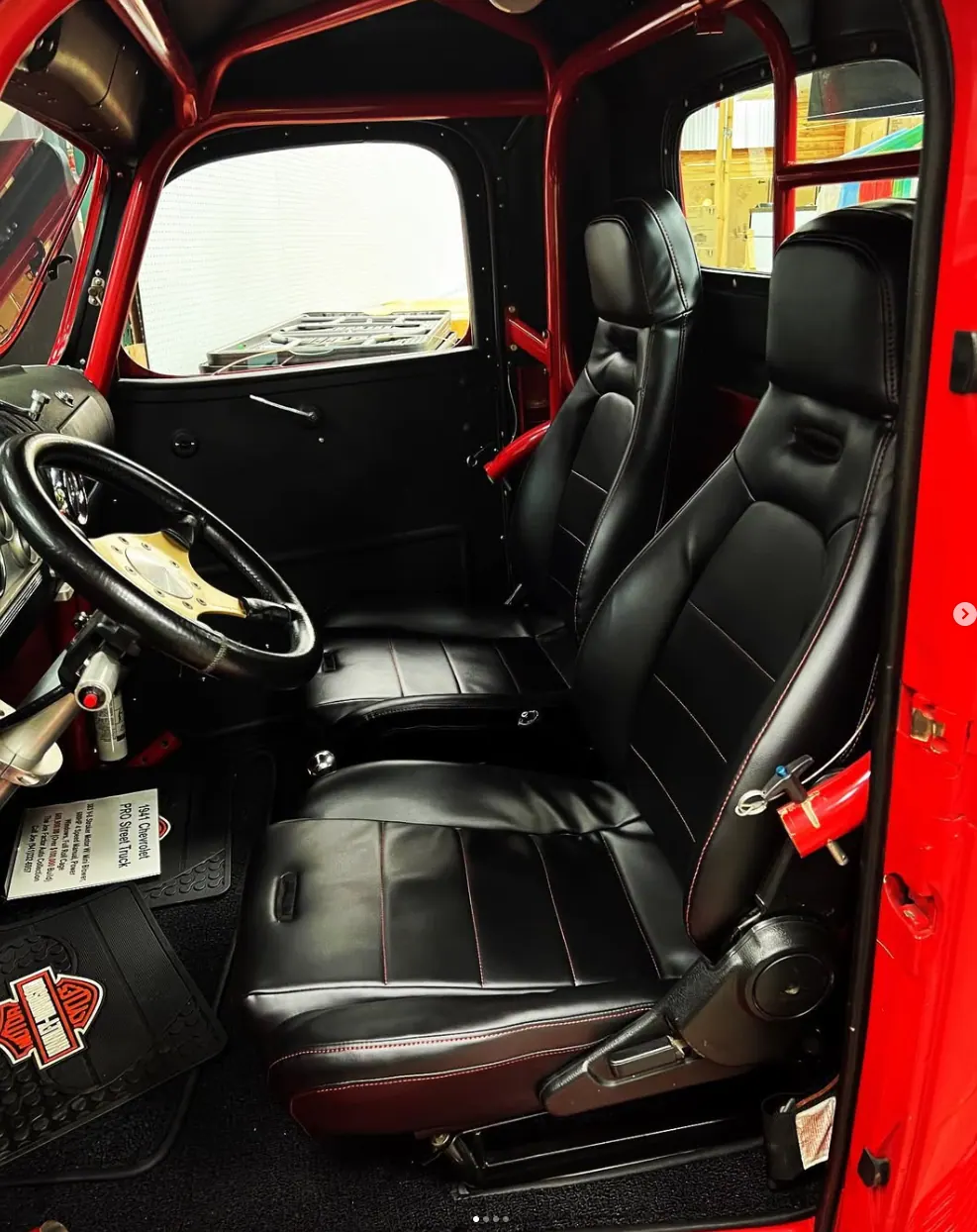
Rebuilding the bench seat from the frame up
The bench seat was stripped to bare metal. We reinforced the frame where it had weakened and addressed the broken springs so the seat base would support weight evenly across its full width.
On top of that we installed high-density foam padding. The original padding had lost its shape completely, so we rebuilt the contours by hand to match the period profile of the seat: a gently crowned cushion and an upright back with soft edges, not the deep bolsters of a modern seat. High-density foam holds that shape under daily use and does not pack down the way the original materials did.
The result is a seat that looks like a 1946 bench but supports you like a current one. That is the comfort upgrade the owner asked for, and it is invisible until you sit down.
Black leather with period-correct stitching
For the covering we used top-grain leather in black with contrast stitching. Against the red paint the black cab reads as classic and understated, and it hides the dust and wear a working truck picks up.
The stitching follows the original upholstery pattern. Every seam was laid out to recreate the lines of the factory trim, so the seat has the correct pleats and borders rather than a generic flat panel. The contrast thread picks out that pattern without shouting.
As a finishing touch, the Chevrolet logo was embossed into the headrest leather. It is a small custom detail that sits comfortably alongside the period styling and gives the interior an identity of its own.
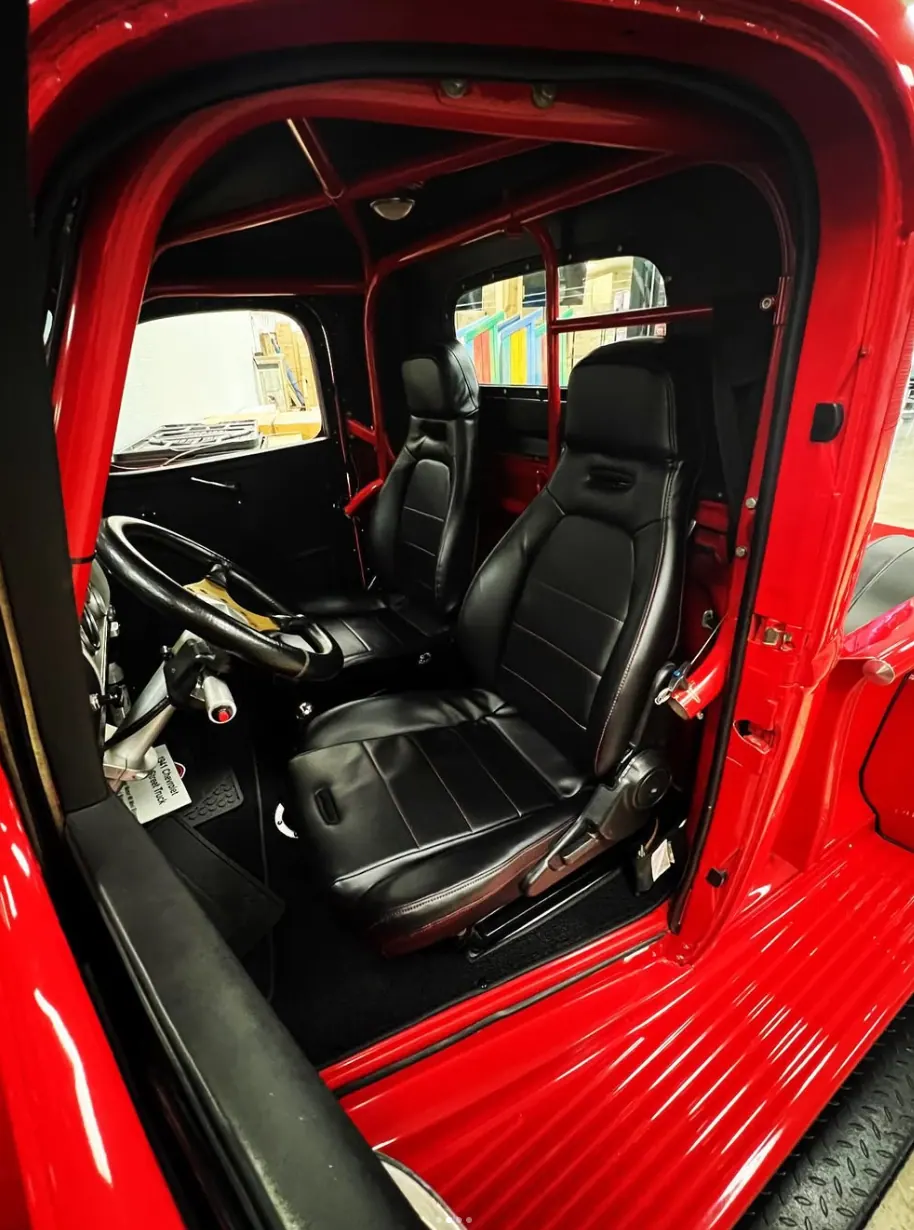
Door panels and the finished cab
The door panels were trimmed to match the seat so the cab reads as one piece when you open the door. Matching material and consistent stitching across the seat and panels is what makes a restored truck interior look intentional rather than pieced together over time.
With the seat reinstalled and the panels fitted, the cab now matches the standard set by the paintwork outside. You can see more of the truck in the photos at the end of this post and in our gallery.
Why a classic pickup interior is different from a modern one
Owners of newer trucks are used to leather kits that arrive pre-sewn for their exact model. For a 1946 Chevrolet there is no such kit. Every panel is patterned from the truck itself, which means the original pieces, however worn, are worth saving until the new ones are drafted.
The seat construction is different too. A spring base under layered padding behaves differently from a molded foam bucket, and it needs a trimmer who has worked on both. We do, which is one reason classic car and truck owners from Sarasota, Nokomis and Englewood bring their vehicles to Venice.
If you prefer a modern seat in a classic body, that is a legitimate choice, and we can trim it to suit. Our post on Katzkin leather seats covers that route for newer seat frames.
What a classic truck owner should know
- Decide on period or modern before materials are ordered. It affects the foam profile, the pattern and the trim details.
- Leather needs care in Florida. Park out of direct sun when possible and condition the leather a few times a year so it stays supple.
- Fix the structure first. Springs, frame and foam are the foundation. A cover over a bad foundation is money spent twice.
- Keep the old pieces. Even shredded original upholstery is a pattern reference we can use.
For a wider look at what interior work does for a vehicle, read why custom interior repair adds value to your car or see the full range of car upholstery services we offer.
Get a free quote in Venice, FL
Whether you own a vintage Chevrolet, Ford, Dodge or another classic truck, we can bring the interior back to the standard of the rest of the build. Call (941) 786-4100 or use the contact page for a free estimate. Our shop is at 420 E Venice Ave in Venice, FL, open Monday through Friday, 9 AM to 5 PM.
Project Photos
- classic truck
- pickup restoration
- leather interior
- custom truck interior