Center Console Enclosure Guide: Spray Shield, Side Curtains or Full Enclosure
Center console enclosure guide from Venice, FL: spray shield vs side curtains vs full enclosure, clear vinyl grades, canvas or mesh lowers, zippers and care.
· 6 min read · Venice, FL
A center console has one obvious weakness: there is nothing between the helm and the weather. A T-top or hardtop gives shade, but wind, spray and sideways rain come straight through the gap above the console. An enclosure closes that gap. The question is how much of it to close.
This guide covers the three levels of center console enclosure we build in Venice, FL, who each suits, and the details that decide whether an enclosure is a pleasure or a nuisance: clear vinyl grade, canvas versus mesh lowers, zipper layout, visibility and ventilation, care, and T-top versus hardtop.
The three levels of enclosure
Spray shield
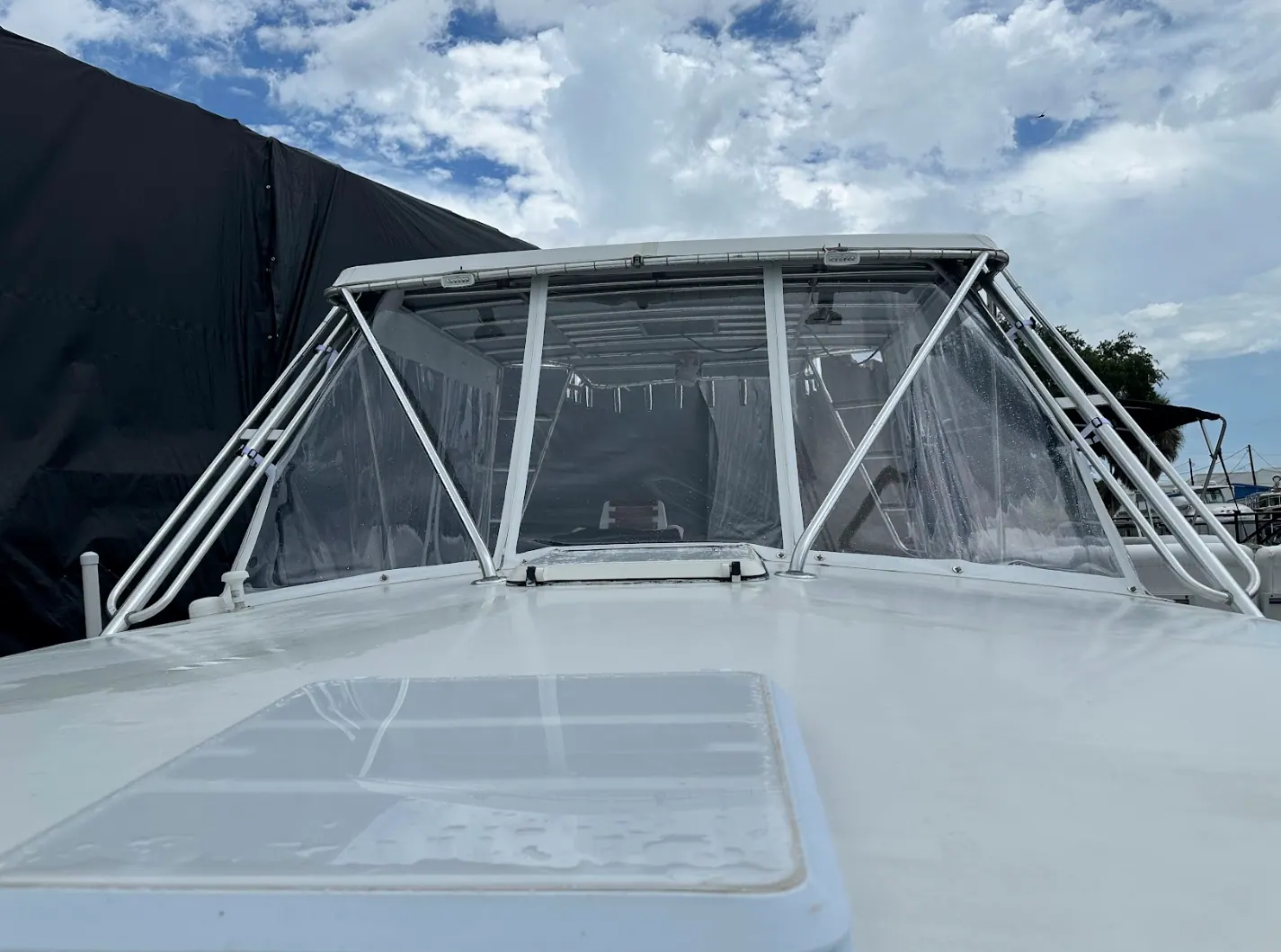
A single clear vinyl panel across the front of the T-top or hardtop, from the top edge down to the console or windshield. It stops the wind and spray that hit the captain and the electronics, and that is all it does.
It suits inshore anglers, early-morning runs and owners whose main complaint is a wet helm and salt on the screens, and it is a sensible first step the other levels can be added to later.
Spray shield with side curtains
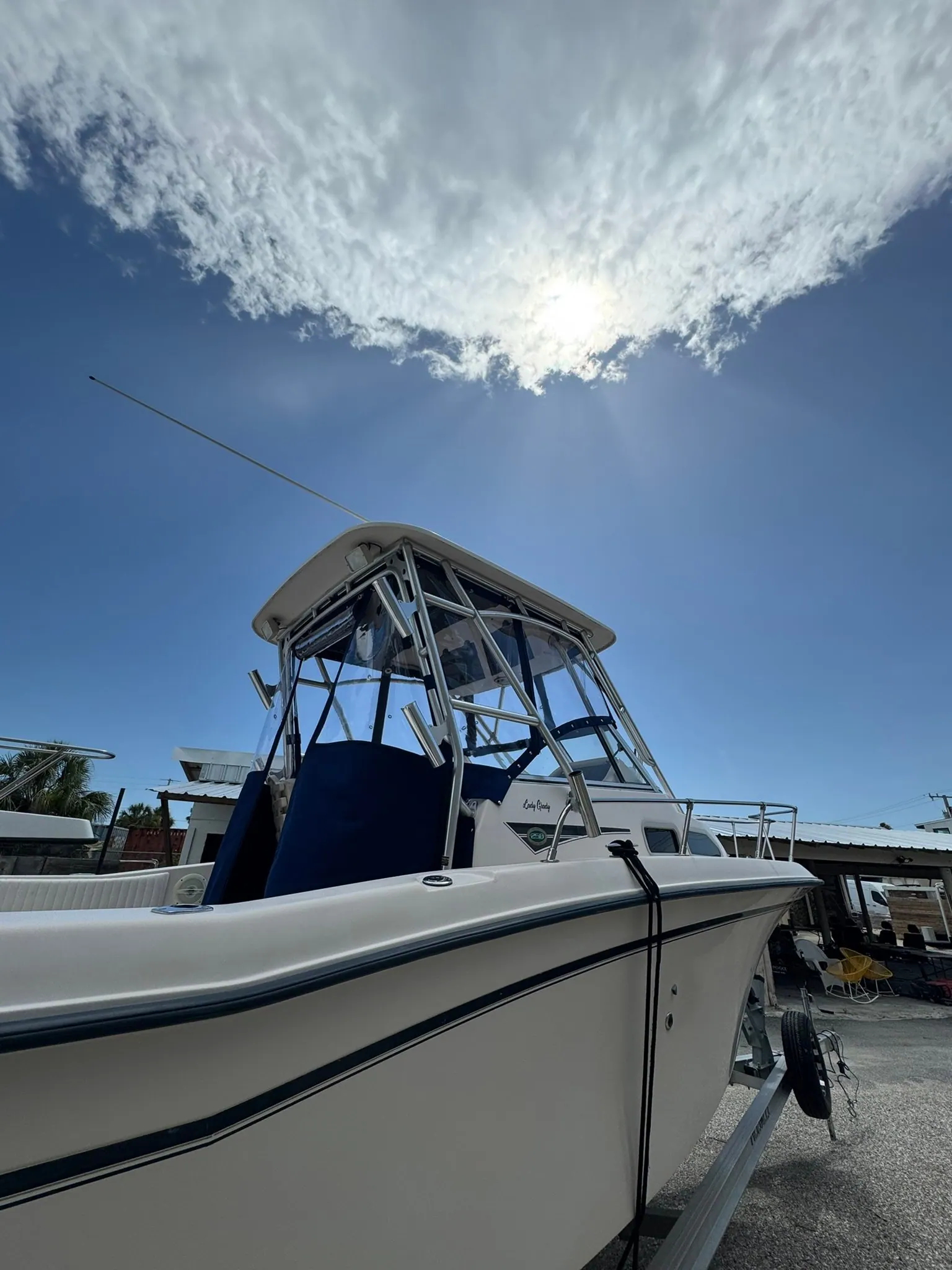
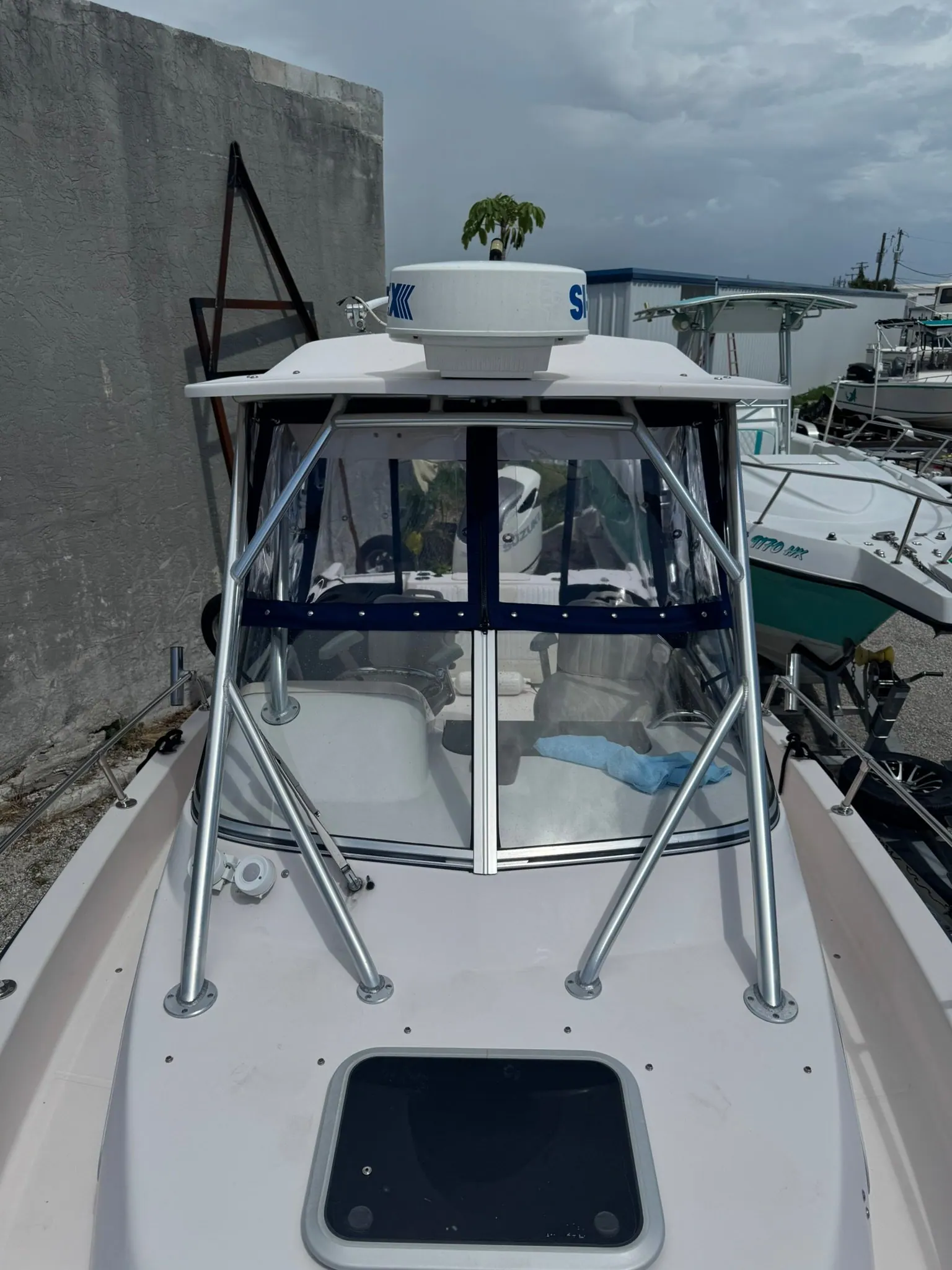
Add side panels from the front corners of the top back along the legs and the helm is protected on three sides, with the aft open for fishing and walking through to the cockpit. This is where most of our customers land. It takes the wind off the crew in winter, keeps spray off the leaning post and tackle station, and still feels like an open boat.
Full enclosure
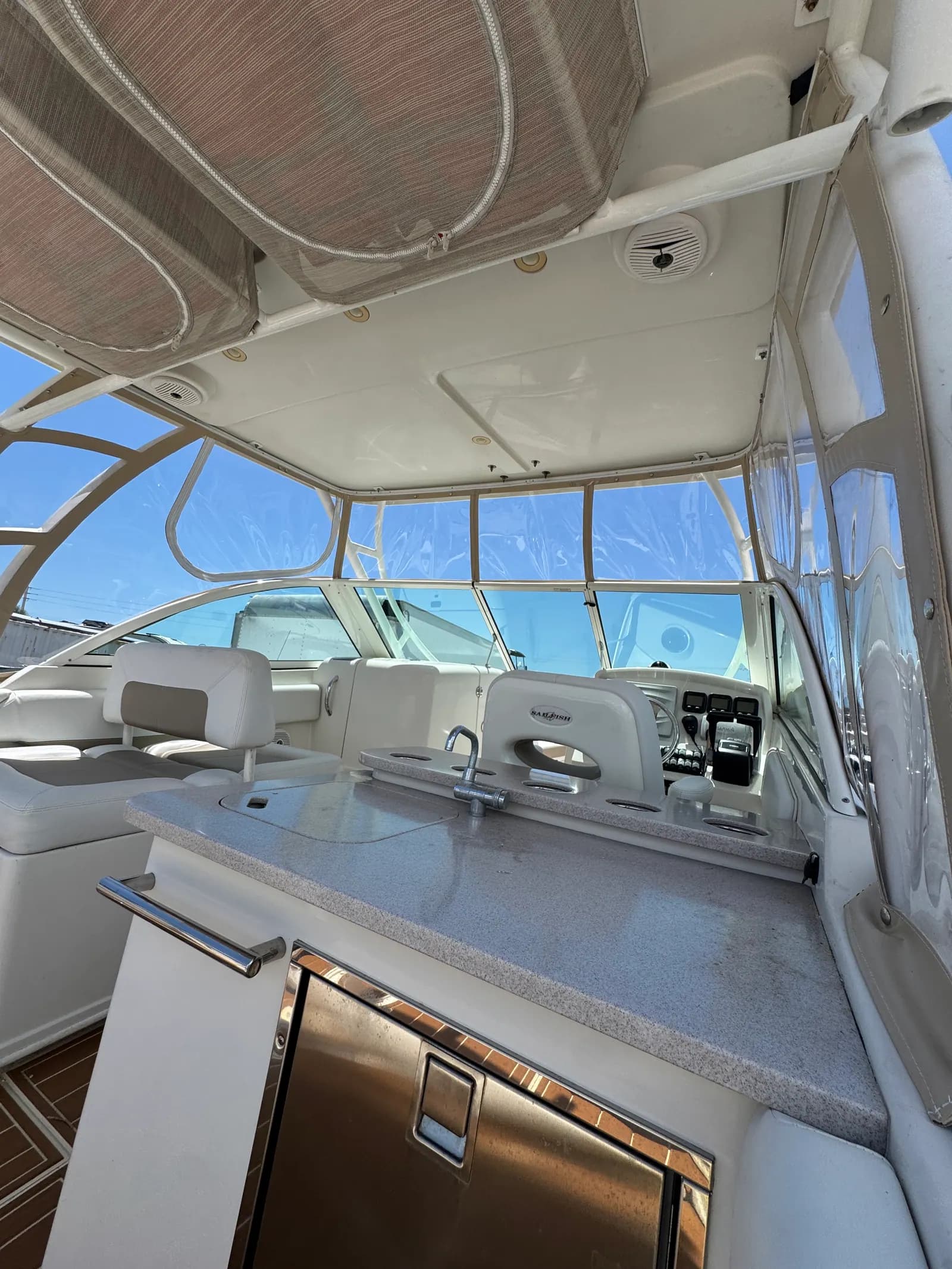
An aft panel, or a pair of aft drop curtains with a zippered doorway, closes the area under the top completely. It turns the helm into a small cabin for cold mornings, long offshore runs and families who want the kids out of the weather. It is also the level that most needs ventilation designed in, since a sealed enclosure in Florida humidity fogs and heats up fast.
Clear vinyl grades
Clear vinyl is not one product, and the grade matters more than any other material choice.
- Pressed polished sheet vinyl is made flat, polished and coated for scratch resistance. It gives the clearest view and holds its clarity longest with proper care, so we use it for the forward panel on nearly every enclosure.
- Rolled sheet vinyl is more flexible and forgiving of being rolled up and down. It is less clear and does not last as long in the sun, but it is reasonable for side curtains that live rolled most of the time.
- Gauge varies too. A heavier gauge holds its shape and reads clearer in the forward panel; a lighter gauge rolls more easily in the curtains.
Whatever the grade, every panel is bound in marine canvas so the vinyl is never stressed at the fasteners; our clear vinyl marine windows page covers the materials in more detail.
Canvas vs mesh lower panels
Below the sightline, a side or aft panel does not need to be clear, and there are two good choices for it.
Marine canvas in Sunbrella or similar solution-dyed acrylic blocks wind and water completely, protects the clear vinyl above it from knees, coolers and rod butts, and can match the T-top canvas or the boat's trim. It is the choice for cold-weather protection and a finished look.
Mesh lets air through and spray drain out, which keeps the enclosure cooler and cuts fogging, and takes the worst of the sun off without closing the boat in. Wind and rain do come through. Many of our enclosures combine the two: canvas lowers for winter, zip-in mesh for summer.
Zipper and fastener layout
Zipper layout decides how usable the enclosure is day to day. Our principles are simple:
- Every panel comes off on its own. The spray shield, side curtains and aft panel are separate pieces joined by zippers, so you can run with any combination.
- Heavy marine zippers, with molded plastic teeth that do not corrode, protected by a canvas flap that keeps UV off the zipper tape.
- Stainless snaps or twist fasteners where panels meet the console, hardtop and frame; plated hardware rust-streaks canvas within a season on the Gulf Coast.
- Straps and buckles at the bottom of the side curtains so they can be rolled and secured in a few seconds.
Think about how you fish before patterning starts. If you gaff over the starboard gunwale, that curtain needs to roll from the aft edge.
Visibility and ventilation
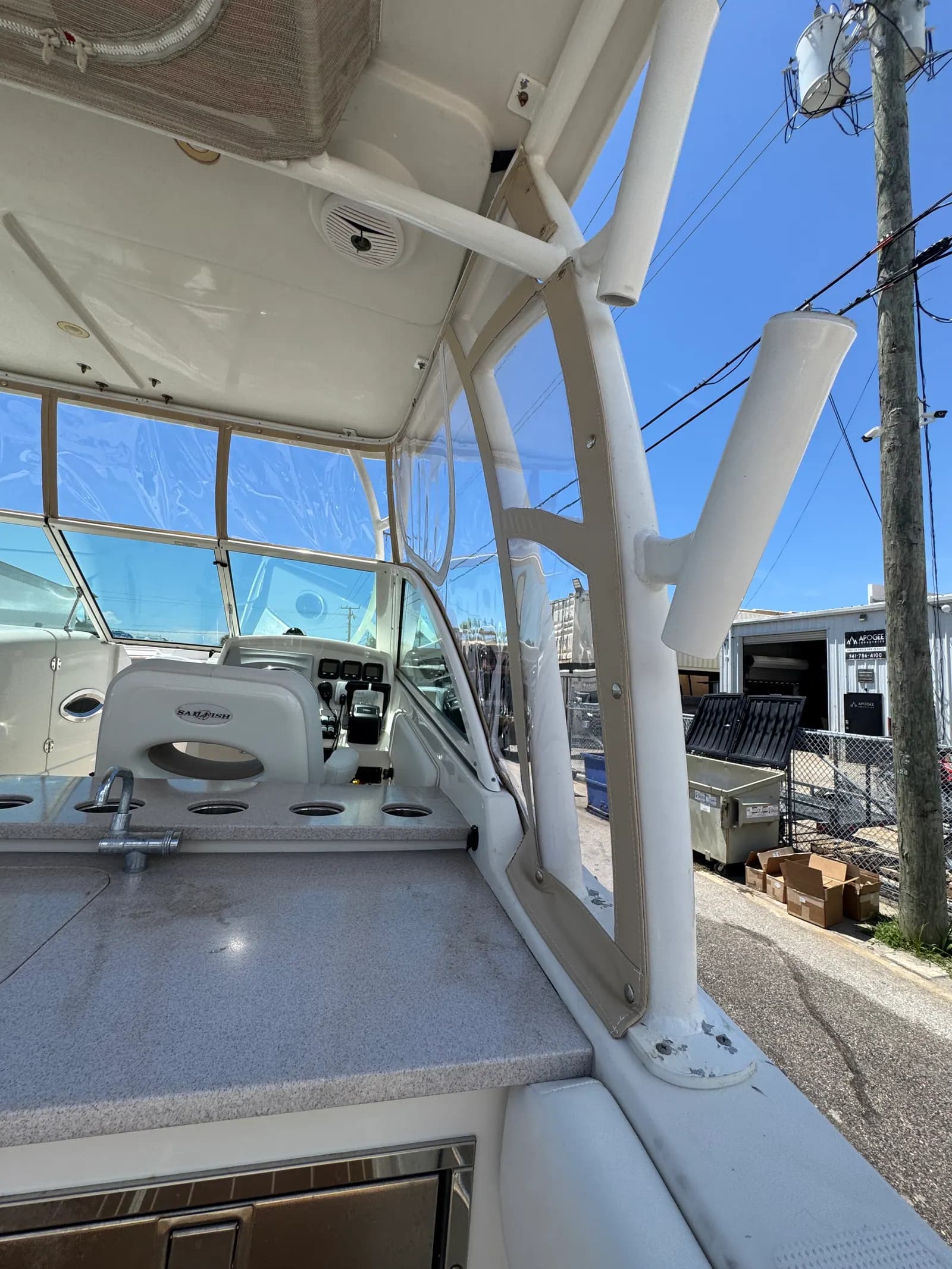
Panels are laid out so the captain's sightline passes through the flattest, clearest part of the forward panel, with seams and zippers kept out of it. On a boat with a windshield, the enclosure meets the top of the windshield frame so you look through glass, not vinyl.
Ventilation is the counterpart. A closed enclosure fogs on a humid morning, so the fix is designed in: a roll-up aft panel, mesh lowers, zip-open sections in the curtains, or a small gap at the top edge. Underway, airflow clears fog on its own; at the dock, unzip a panel before departure.
Hardtop vs T-top
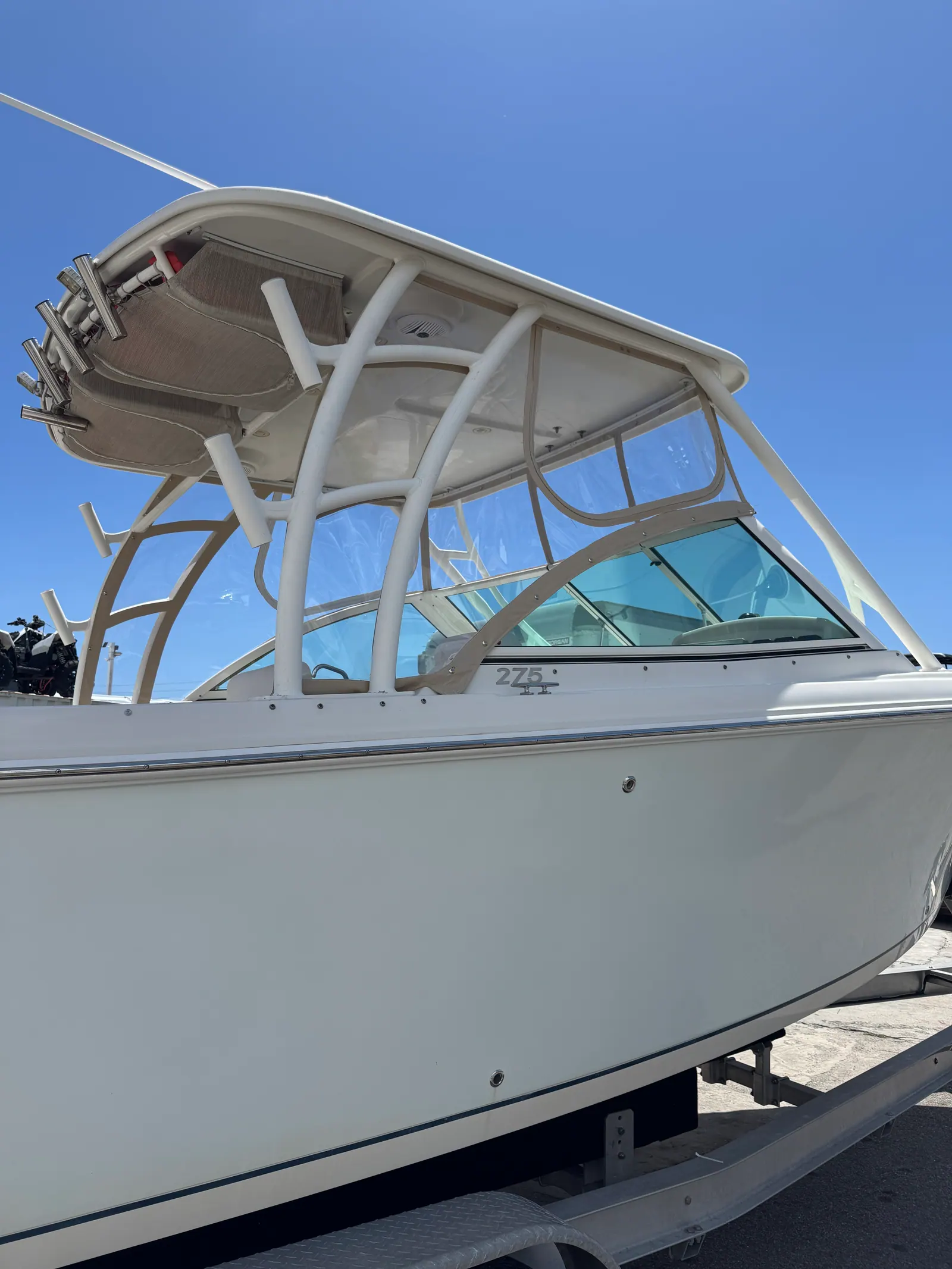
A hardtop is rigid fiberglass with a defined edge. Panels attach along it with track or a straight row of snaps, which seals tightly and lets the overhang shield the top of the panels from rain. Hardtops are larger, so the panels are larger, and the boats under them carry more electronics. The clear vinyl hardtop enclosure we built for a large offshore center console shows panels fitted along a hardtop edge.
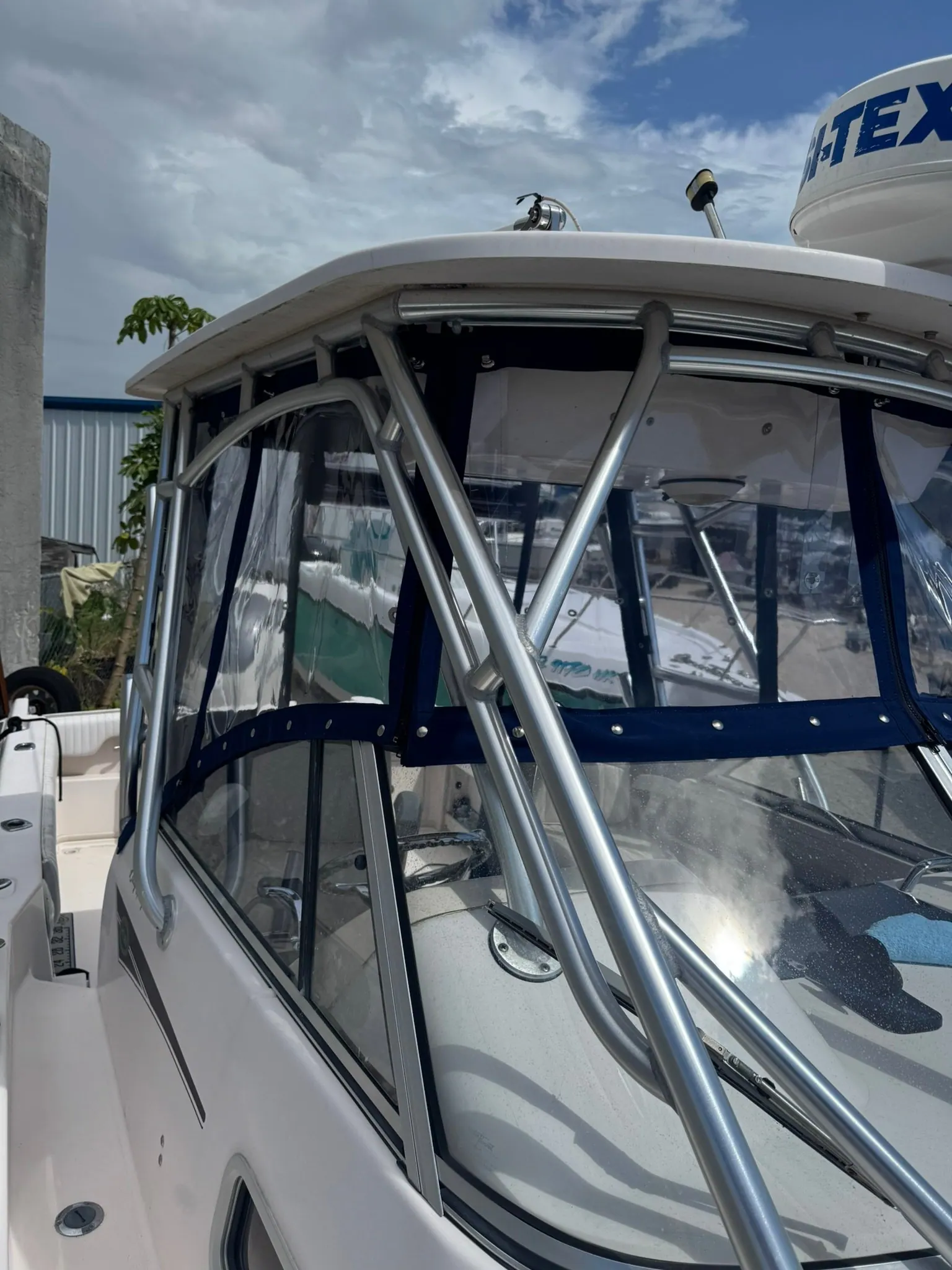
A T-top is canvas or fiberglass over an aluminum pipe frame. The enclosure attaches to the frame legs and the edge of the top canvas, so the two are best built together, and worn T-top canvas is usually replaced at the same time. The frame flexes underway, so the panels need some give in how they are fastened. Our custom T-top enclosure for a center console fishing boat is a complete T-top system.
Storage and care
Clear vinyl is the most delicate material on the boat; care decides whether it stays clear for years or hazes in a season.
- Rinse with fresh water to float off salt and grit, then wash with mild soap and a soft, clean cloth. No ammonia glass cleaners, paper towels or abrasives.
- Dry with microfiber and apply a cleaner and polish made for clear marine vinyl.
- Roll panels only when fully dry, with soft fleece or a towel inside the roll. Never fold them; a crease is permanent.
- Store rolled panels cool and out of the sun, and take the enclosure off in the hottest months and before any named storm.
The canvas parts get the same care as a custom marine cover: fresh water, mild soap and a thorough dry.
Get a free quote in Venice, FL
Start with a spray shield if you want a dry helm on the run out, add side curtains if you fish through the winter or carry family, and go to a full enclosure if you run offshore in all weather. Whichever level, insist on zip-off panels, stainless hardware, UV-resistant thread and the clearest vinyl in front of the wheel. We pattern each enclosure on the boat, on the trailer at 420 E Venice Ave. Call (941) 786-4100 or use the contact page with a few photos of your T-top or hardtop for a free quote.
- center console enclosure
- t-top enclosure
- spray shield
- clear vinyl boat enclosure
- boat enclosure venice fl