Boat Cover vs Boat Lift Canopy vs Bimini Top: What Protects Your Boat Best
Boat cover vs boat lift canopy vs bimini top: UV, rain, bird droppings, convenience and hurricane prep compared, plus what we recommend in Venice, FL.
· 6 min read · Venice, FL
Owners ask us some version of this every week: boat cover, boat lift canopy or bimini top? They are not alternatives to each other. Each protects a different part of the boat at a different time, and most boats on the Gulf Coast need two of the three. Which two depends on how the boat is kept.
Here is how they compare on what actually damages a boat in Venice, FL, followed by the combinations we recommend for canal lifts, trailered boats and marina slips.
What each one is
Boat cover
Fitted canvas that closes the boat up between trips. A mooring cover is cut for a boat sitting still at a dock or on a lift; a trailer cover does the same job on land and also has to survive the highway. One cover rarely does both well, and we explain why below.
Boat lift canopy
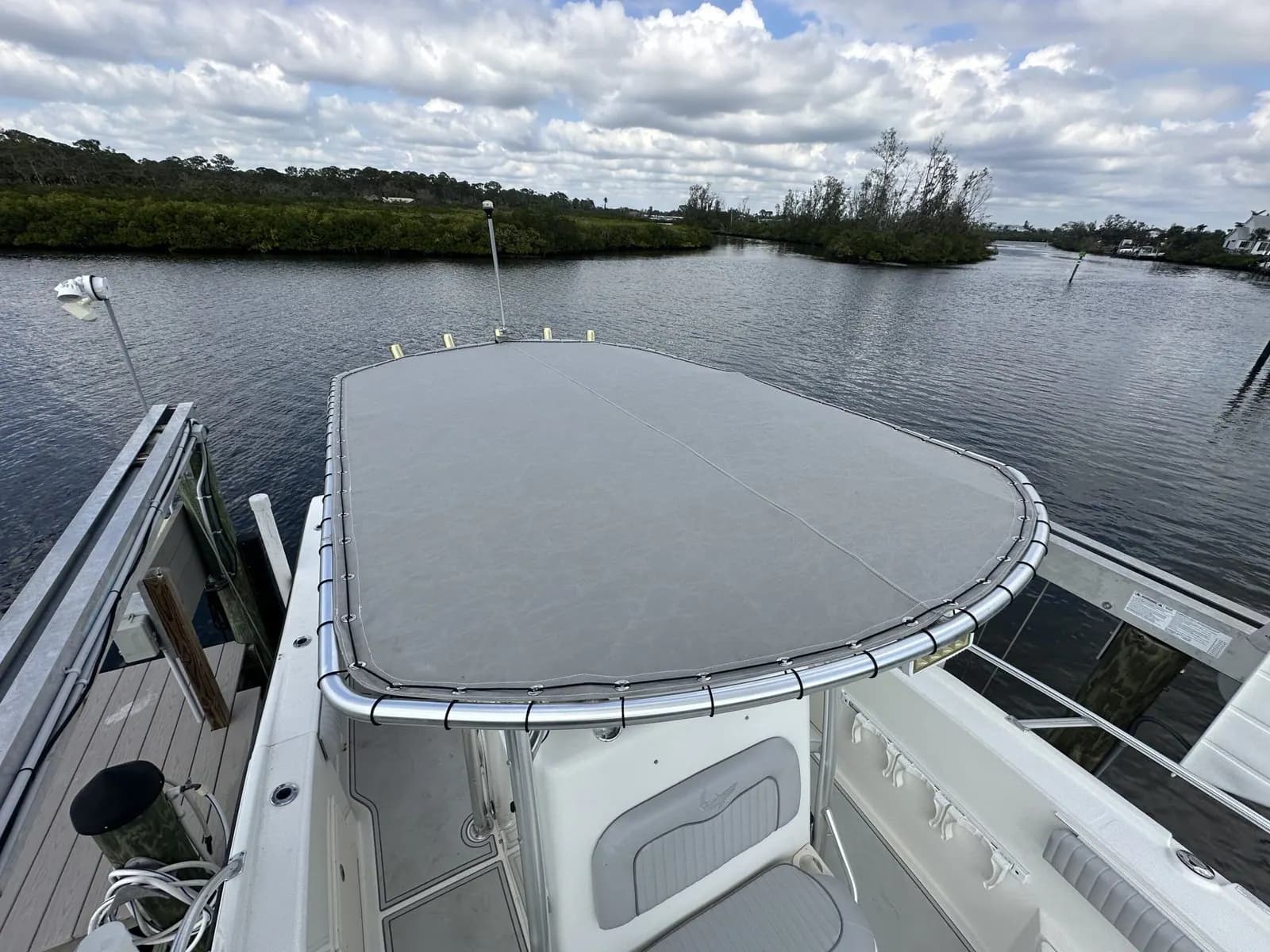
A roof of marine canvas on an aluminum frame mounted to the boat lift, with the boat sitting under it out of the water. It protects from above without touching the boat, and it is the only one of the three that needs no handling between trips.
Bimini top
A folding frame with a canvas top over the helm or seating area. It gives shade and some relief from a passing shower underway, and folds into a boot when not needed. It is the most convenient of the three and the least protective for a parked boat.
Boat cover vs canopy vs bimini: the comparison
| Boat cover | Boat lift canopy | Bimini top | |
|---|---|---|---|
| UV protection | Complete for everything under it whenever it is on | Strong at midday; low morning and evening sun gets under the edges | Shade directly beneath it while it is up; bow and stern stay in full sun |
| Rain | Sheds rain and keeps the cockpit dry when poled and vented | Keeps most rain off; wind-blown rain enters from the open sides | Very little; rain blows under it and pools on a flat top |
| Bird droppings, pollen, leaves | Land on the cover, not the upholstery; hose it off | Mostly land on the canopy; some blows in from the sides | Land on the bimini and on everything else |
| Convenience | Takes time to fit and remove every trip | Nothing to do between trips; drive on, drive off | Up or down in a minute and it stays on the boat |
| Cost factors | Boat size, fabric, patterning, poles, vents and zipper openings | Frame size and height, fabric area, wind-load design, installation on the lift | Frame material and number of bows, fabric, boot, mounting hardware |
| Lifespan factors | Fabric quality, chafe at rails and cleats, support so water never pools, dry storage when off | Constant sun on one surface, wind flogging, frame corrosion; canvas is replaceable on the frame | Fabric and thread, frame corrosion, whether it is booted when not in use |
| Hurricane prep | Remove and store indoors; it becomes a sail in storm wind | Remove the canvas before a named storm; the frame stays | Fold and boot or remove entirely; lower the frame |
Mooring cover vs trailer cover
A mooring cover is built for a boat that is not moving: room for support poles, generous overlaps at the windshield and rails, fastenings that are quick at the dock. Run it down the interstate and it balloons, flogs, wears through at every edge and tears out its snaps.
A trailer cover sits lower and tighter, with reinforcement where it touches rod holders, cleats and the windshield frame, and tie-down straps that cross under the hull. It survives the road and works well as a storage cover in a driveway or under a carport, but it is slow to put on and take off at a dock.
If the boat lives on a trailer, buy the trailer cut. If it lives in the water or on a lift, buy the mooring cut. If you do both, the trailer cut is the compromise that works.
Why a bimini top is not a boat cover
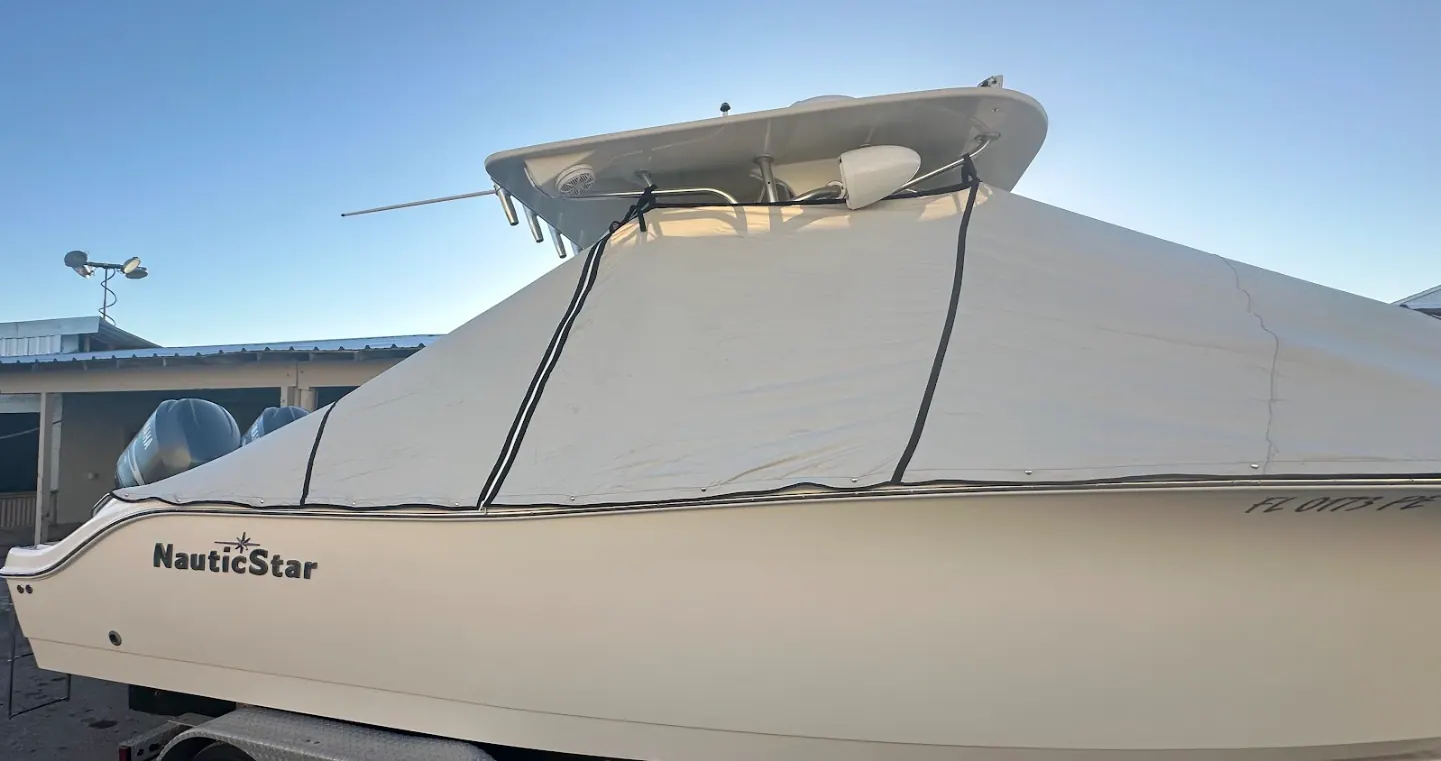
The two are often bought in place of each other, and that is a mistake in both directions. The bimini is for people: it shades the helm and the seats while you are running. The cover is for the boat: it closes everything up between trips, which is when UV, rain and mildew do their work. T-top canvas on a center console is the same story, shade underway and a mounting point for an enclosure, not storage protection.
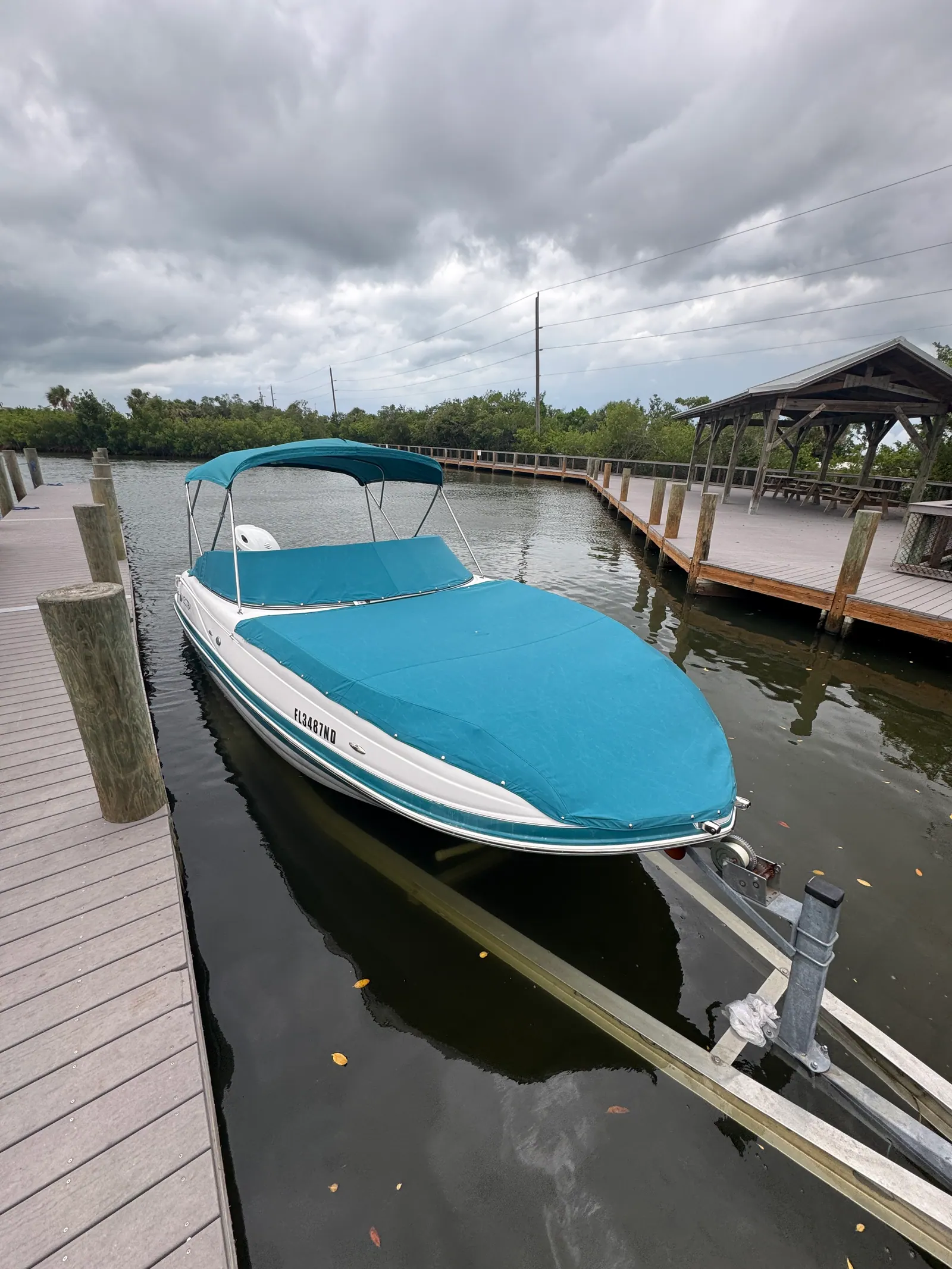
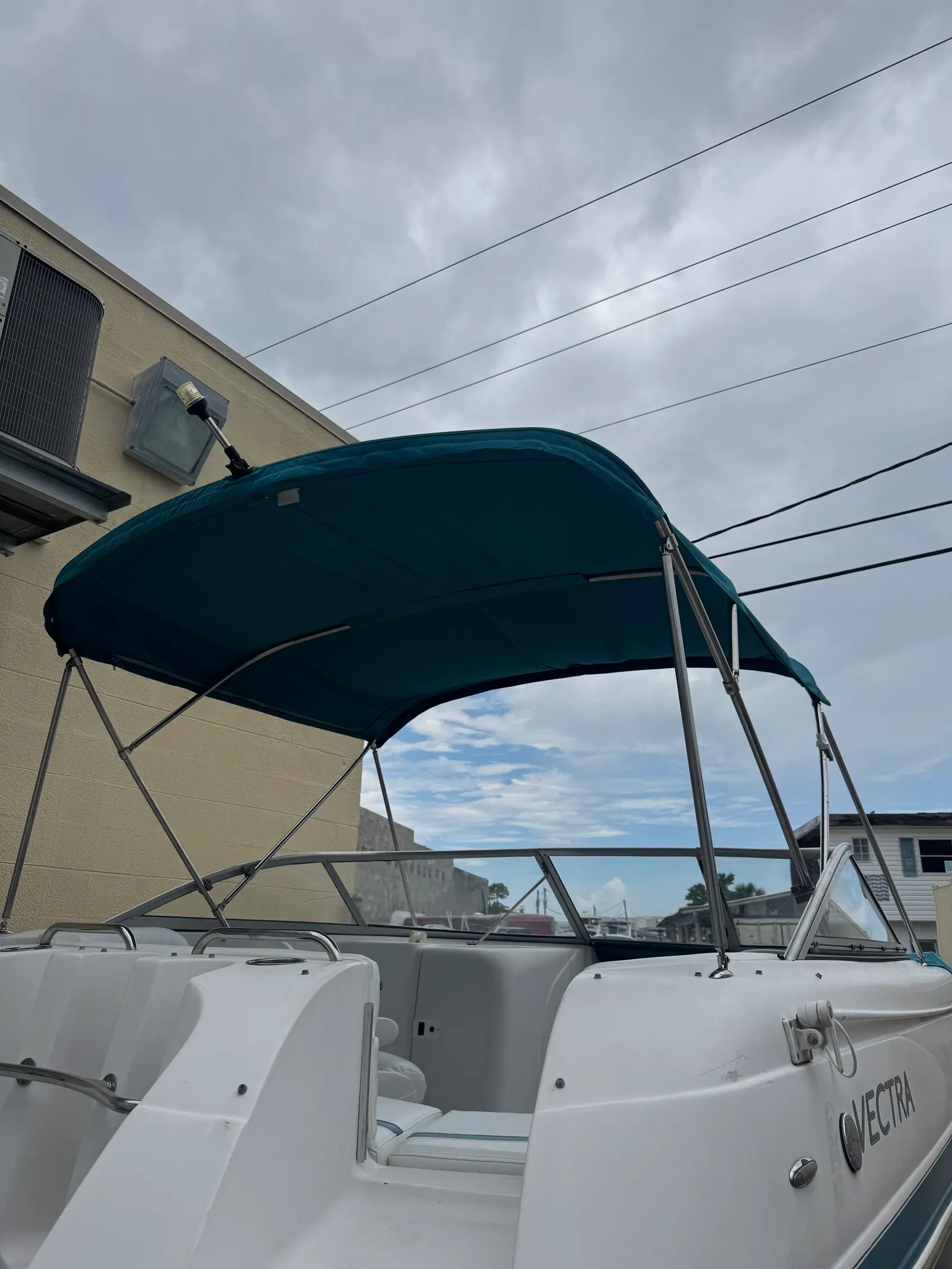
The two should be designed together. On the Vectra deck boat we fitted with a teal bimini and matching mooring cover, the cover was patterned to fit with the bimini folded, so the owner closes the boat in minutes without touching the frame.
What we recommend by how the boat is kept
Canal lift
The most common setup in Venice, Nokomis and Englewood: a boat on a lift behind the house. A lift canopy is the foundation; it takes the midday sun and most of the rain with no daily effort. Add a mooring cover for the low-angle sun and blown rain the roof misses, or at least console and cushion covers. Keep the bimini booted on the lift. Our boat lift canopy covers are patterned to the frame and sewn in solution-dyed acrylic.
Trailered boat
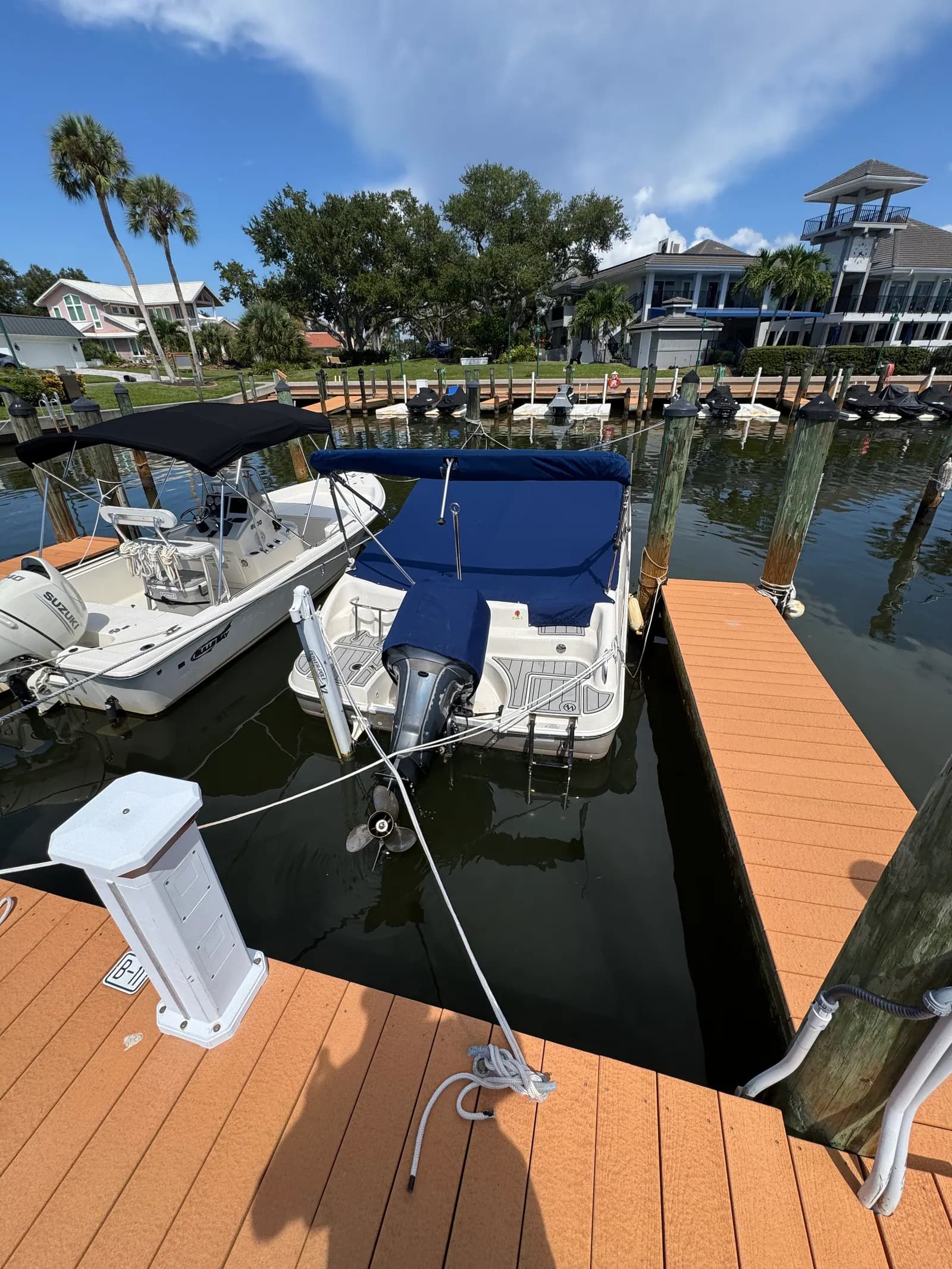
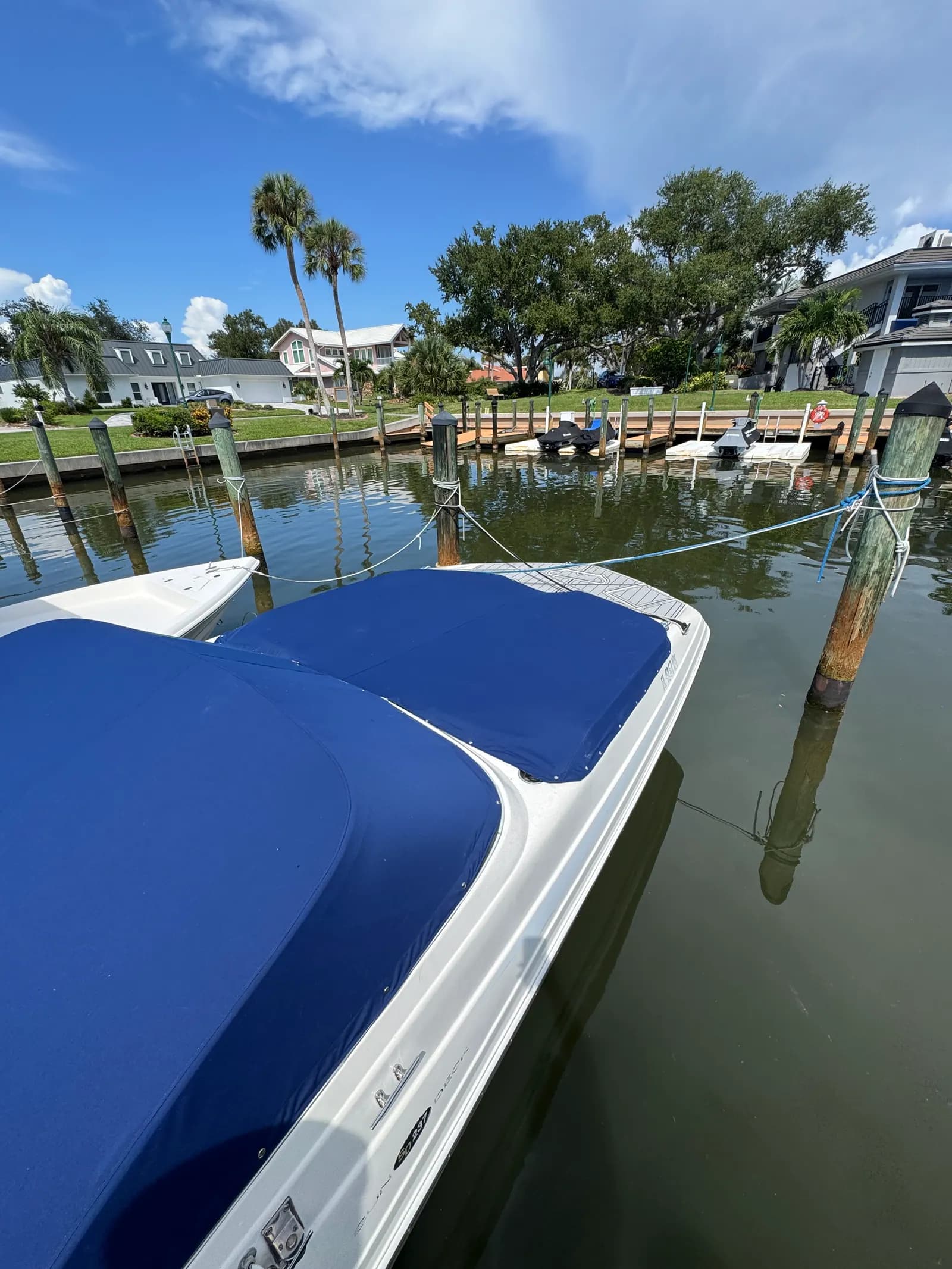
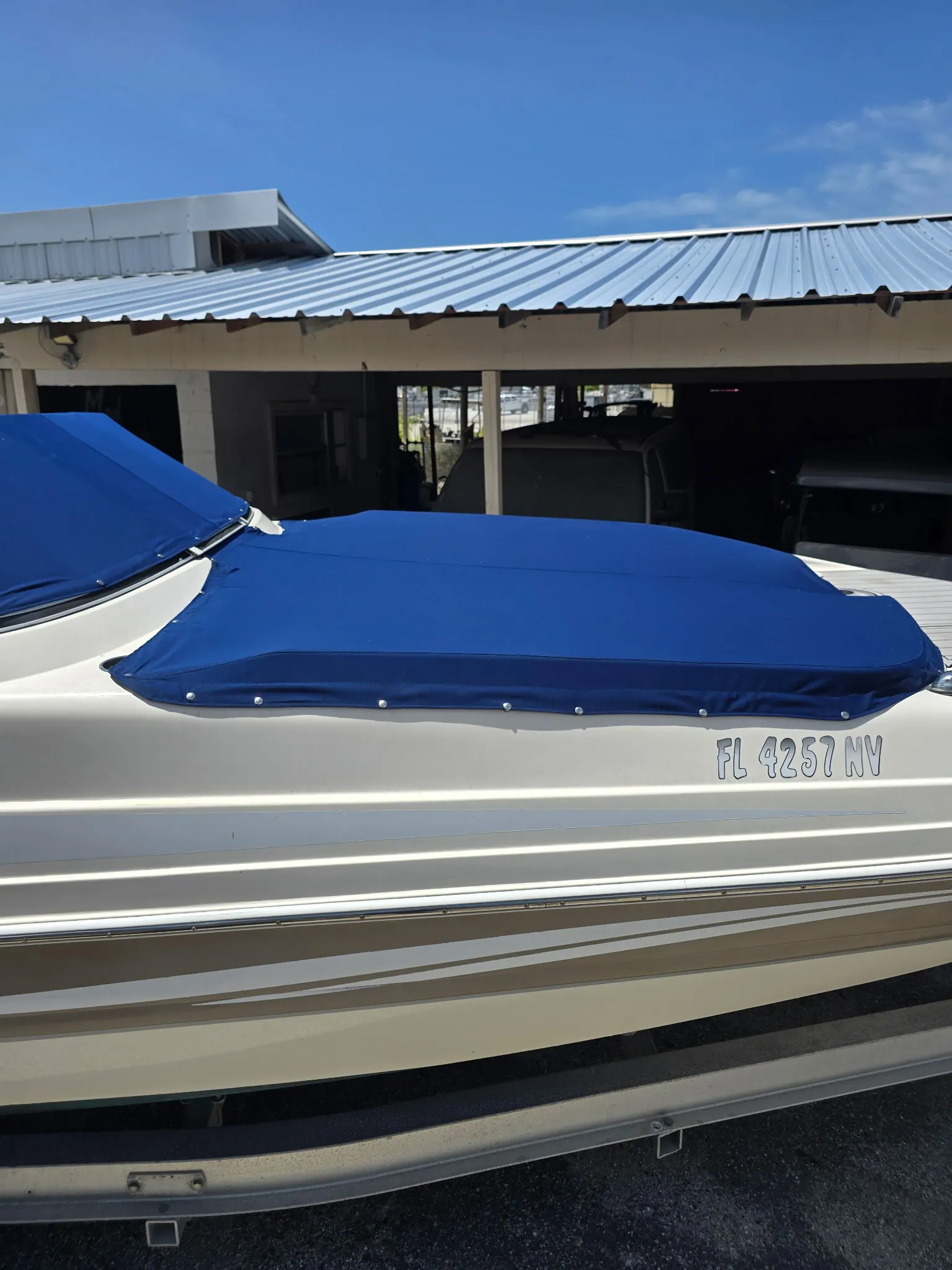
A boat in a driveway, under a carport or in a storage lot needs a trailer cover first. A carport roof helps the way a canopy does but leaves the sides open to low sun and blown rain. The royal blue trailerable cover we built for a deck boat under a carport shows the cut. Boot the bimini for storage; near trees, the cover is the only thing keeping sap and droppings off the vinyl.
Marina slip or dock with no lift
A boat in the water with no roof is exposed on every side, and a mooring cover is not optional. Pole it so water sheds, vent it so the interior dries, and keep the bimini for shade underway. For boats used often, a two-piece cockpit and bow cover is quicker to handle than one large cover.
Hurricane season prep
Every piece of canvas comes off before a named storm. A cover, a canopy or an open bimini turns into a sail that can bend the frame, tear out fasteners or work the boat against the lift bunks. Remove the canopy fabric, take the cover off, boot or remove the bimini, and store everything dry and indoors, starting when the watch is posted rather than the warning.
Get a free quote in Venice, FL
Whatever the combination, we build it in Sunbrella or similar marine-grade acrylic with UV-resistant thread and stainless hardware, patterned on the boat rather than from a chart; see our custom marine covers page for examples. Tell us how and where the boat is kept and we will recommend what makes sense, not the most canvas we can sell you. Call (941) 786-4100 or use the contact page. Trailered boats can be dropped at 420 E Venice Ave, where there is trailer parking and a fenced storage lot; for a boat on a lift, send photos of the boat and the lift frame.
- boat cover vs canopy
- boat lift canopy venice fl
- bimini top vs boat cover
- mooring cover vs trailer cover
- sunbrella