Custom Marine Covers Venice, FL: Bennington Pontoon Cover Case Study
Custom marine cover for a Bennington pontoon in Venice, FL: why the old cover failed, how we measured and built the new one, and how to make a boat cover last.
· Updated · 7 min read · Venice, FL
In Florida a boat cover is not an accessory. It is the one thing standing between your upholstery and a climate that is actively trying to destroy it. Sun, heat, humidity and salt air work on an uncovered pontoon every single day, and a pontoon has more exposed vinyl, more open deck and more horizontal surface for water to collect on than almost any other boat its size.
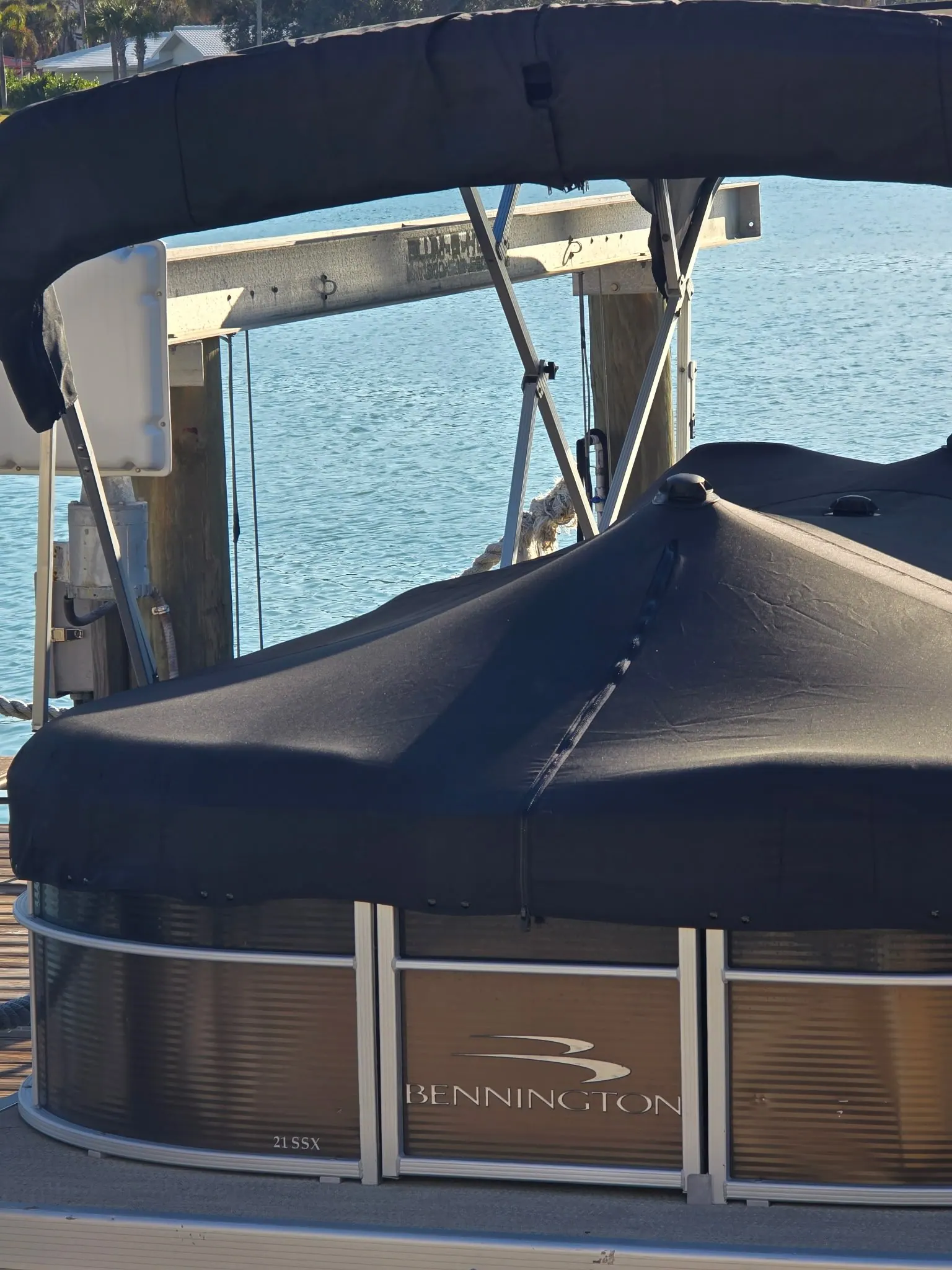
This project was a custom marine cover for a Bennington pontoon kept at a dock here in Venice, FL. The owner did not want another off-the-shelf cover. The goal was maximum protection, a clean fit and a cover that would still be doing its job several seasons from now.
The problem: an old cover that was doing more harm than good
The old cover had the usual Florida problems. Years of sun had fatigued the fabric. The fit had never been right, so there were loose areas where the cover lifted in the wind and let moisture and dirt in underneath. Key sections had no real tension, which meant water pooled instead of running off.
A loose, worn cover can actually do more damage than no cover at all. Every gust moves the fabric against the rails and the bimini frame, chafing both. Trapped moisture under a cover that does not breathe or drain becomes mildew on the seats. And a cover that lets sunlight through thin, tired fabric is not stopping UV damage; it is just hiding it until you pull the cover off in the spring.
Replacing the cover before the interior started to suffer was the right call. Reupholstering a pontoon is a much bigger job than a new cover.
Why boat covers fail fast on the Gulf Coast
Covers in Venice, Nokomis and Englewood are exposed to about the hardest conditions a piece of fabric can see.
Intense UV
Ultraviolet light breaks down fabric fibers. The cover fades first, then thins, then cracks along the folds and high points. Thread goes the same way, and a cover with failed thread falls apart along its seams even when the fabric itself looks fine.
Moisture and salt air
Salt and humidity get into stitching and seams. Salt crystals abrade fibers as the cover moves, and constant dampness feeds mildew on the underside of the cover and on everything beneath it.
Wind stress
A poorly fitted cover flaps. Flapping fabric wears through at the rails, pulls out snaps and straps, and loads the bimini frame in ways it was never meant to take. Most of the damage we see on failed covers is from movement, not from age.
That is why a custom marine cover performs so much better than a universal one on the coast. Fit is not cosmetic. Fit is what stops the movement that destroys the cover.
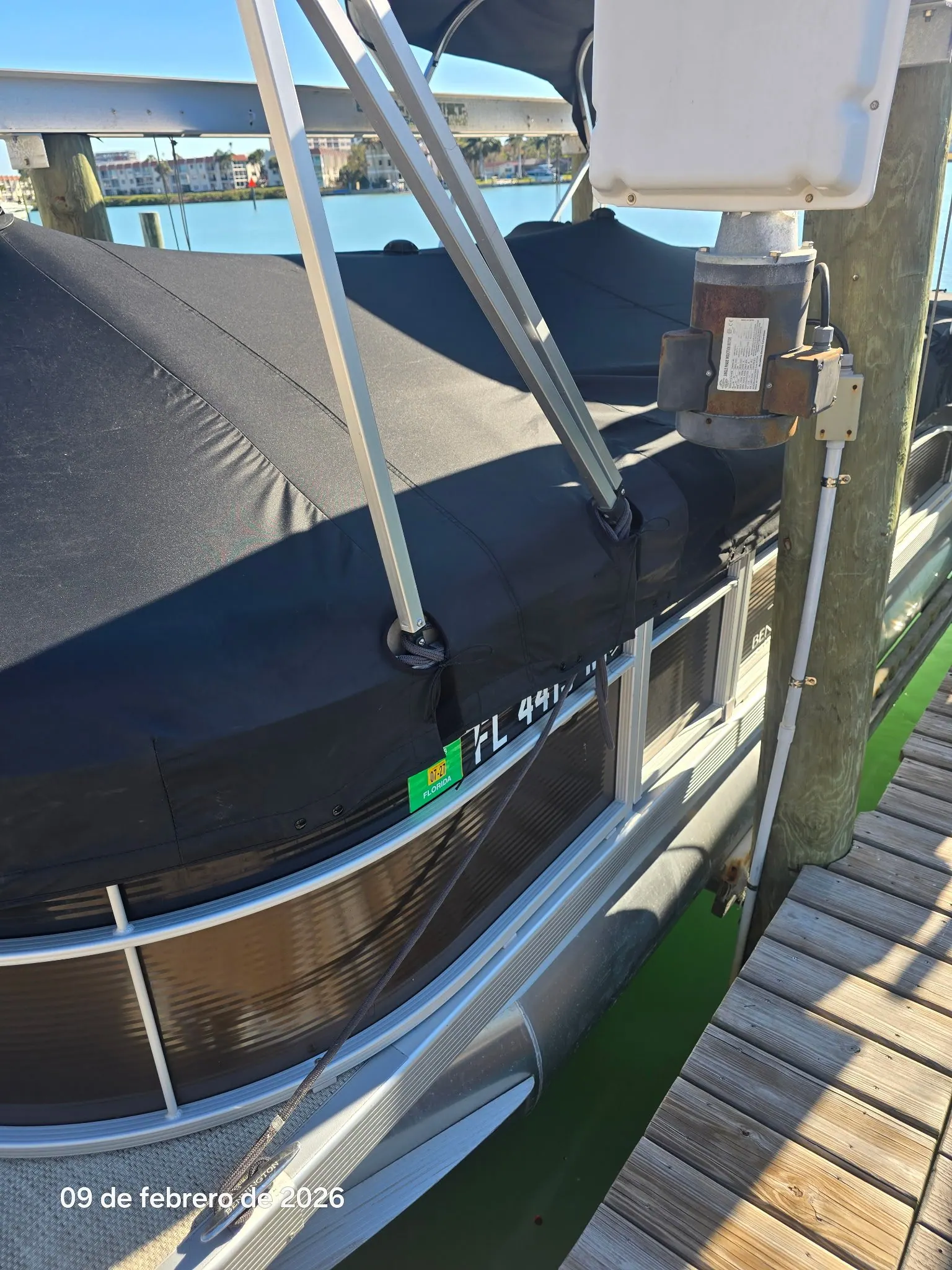
What we built for this Bennington pontoon
Step one: measurements taken from the boat
We measured the Bennington directly: the length and beam of the deck, the height and position of the bimini and its bows, the rail and fence profile, the gate locations, the console and the motor. From those measurements we established where the cover needed support so it would not sag between high points, where the tension points had to be, and how the cover would wrap the rails and tie off without touching the pontoon tubes.
Every boat is different, and pontoons vary more than most. Two boats from the same builder can have different bimini positions, different seating layouts and different rail hardware. There is no substitute for measuring the actual boat.
Step two: marine-grade fabric chosen for Florida
We selected a marine-grade fabric designed for this climate, with the properties that matter most on a pontoon that lives outdoors:
- UV resistance, so the fabric keeps its strength and color under daily sun
- Water resistance, so rain runs off instead of soaking through
- Breathability, so heat and humidity do not build up under the cover and feed mildew
- Long-term color stability, so the cover still looks right after a few summers
The owner chose a black finish. Black gives the pontoon a clean, professional look at the dock, and this fabric holds its color well, so it will not fade to grey the way a lesser black cover does.
Step three: fabrication and fit
The cover was fabricated to follow the pontoon's contours, with the bimini and rails as the structure that carries it. A few details make the difference between a cover that works and one that merely covers:
- Reinforced stress areas wherever the cover bears on a frame bow, a rail corner or a tie-down point
- Clean seam alignment, so seams run where they shed water rather than collect it
- Proper support around the bimini frame, so the top of the cover stays pitched and water runs off
- Secure attachment points with straps that pull the cover down evenly and keep it from moving in the wind
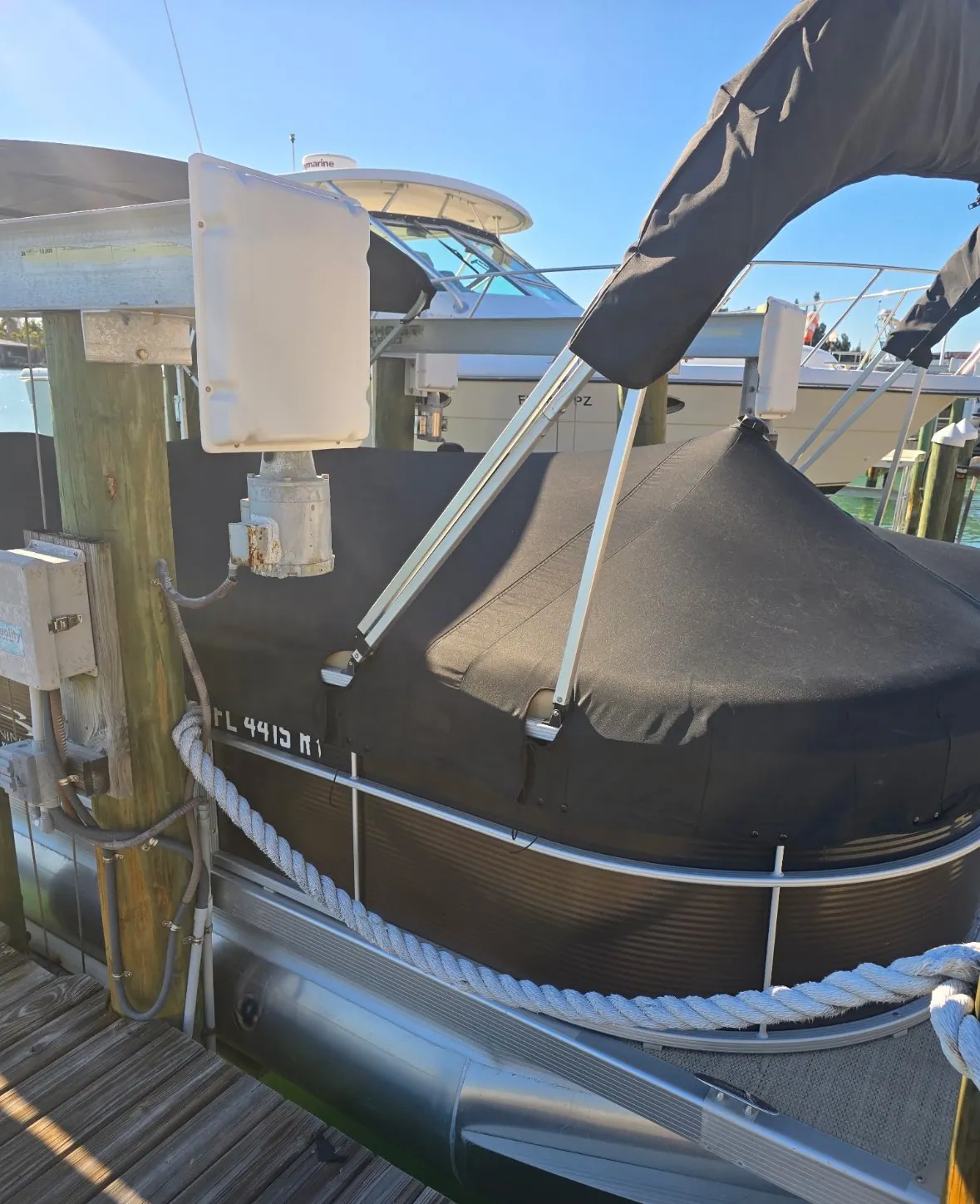
What makes a pontoon cover different
A pontoon is a large, flat deck with a lot of seating and a bimini in the middle. A cover for it has to span long distances between support points, and any span that is not pitched will hold water. That is why we pay so much attention to how the cover sits over the bimini and where the support falls. A pontoon cover also has to deal with rails, gates, cleats and a motor at the stern, and it has to be something the owner can put on alone after a day on the water without a wrestling match.
Those are the reasons a universal pontoon cover so often disappoints. It is sized to a length range, not to your boat, and it has no idea where your bimini is. Ours is built around the structure that is actually there.
Why a custom boat cover is worth it
Universal covers look cheaper at the register. On the Gulf Coast they usually cost more in the long run, because they are replaced sooner and because of what they let happen to the upholstery underneath. A custom cover:
- lasts longer, because it does not move and chafe
- protects the upholstery better, because it seals the boat up and sheds water
- fits tighter and looks cleaner at the dock
- reduces moisture and the mildew that comes with it
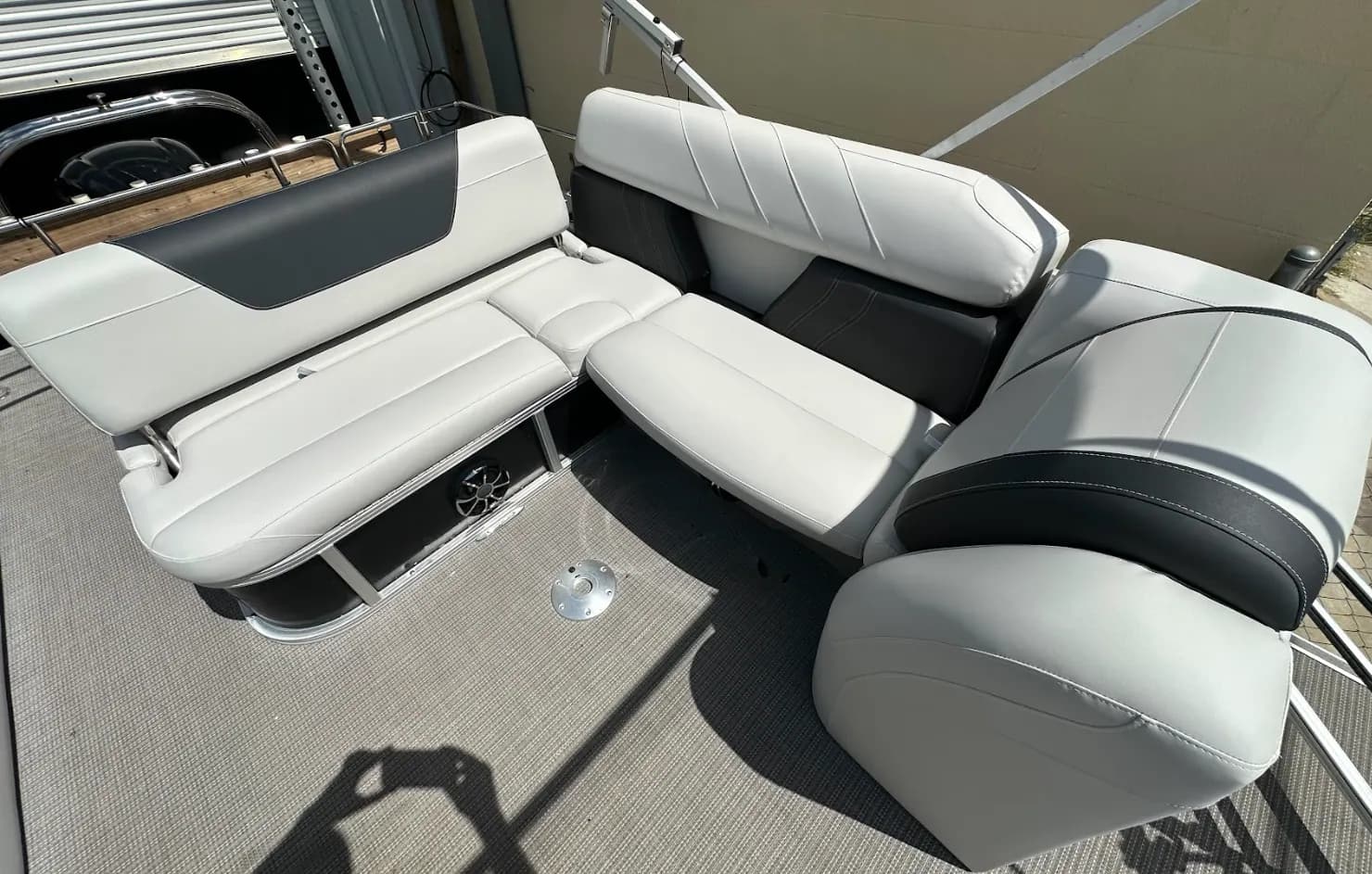
Pontoon seating is expensive to replace. A good cover is the cheapest insurance you can buy for it. If your seats are already past saving, our pontoon boat upholstery restoration project shows what a full reupholstery involves.
The result: clean look and real protection
With the new cover installed, this Bennington gained full coverage from sun and debris, a tight fit with no sagging or pooling, and much better protection for the seats, the helm and the interior. It also simply looks better at the dock. The cover is now doing what a cover is supposed to do: protecting the boat instead of slowly wearing it out.
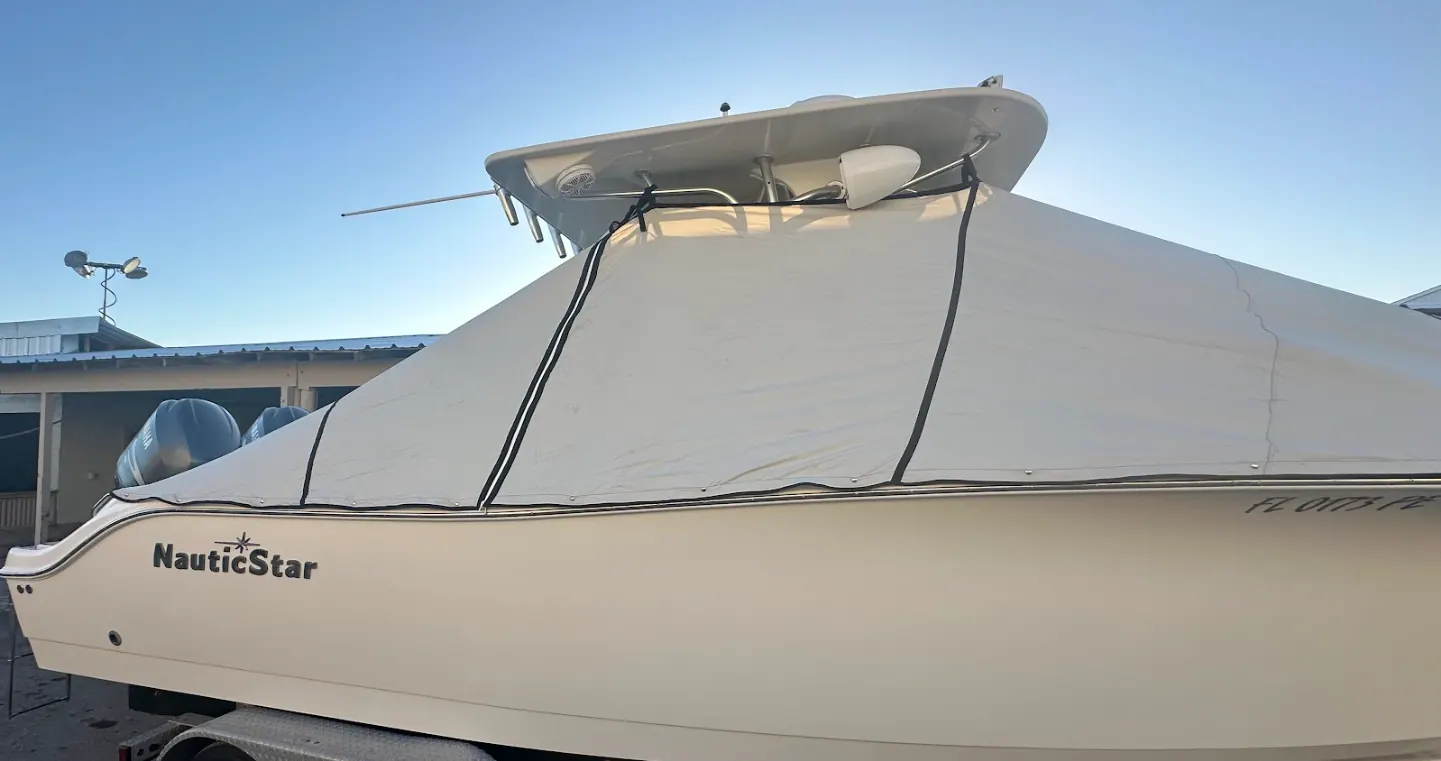
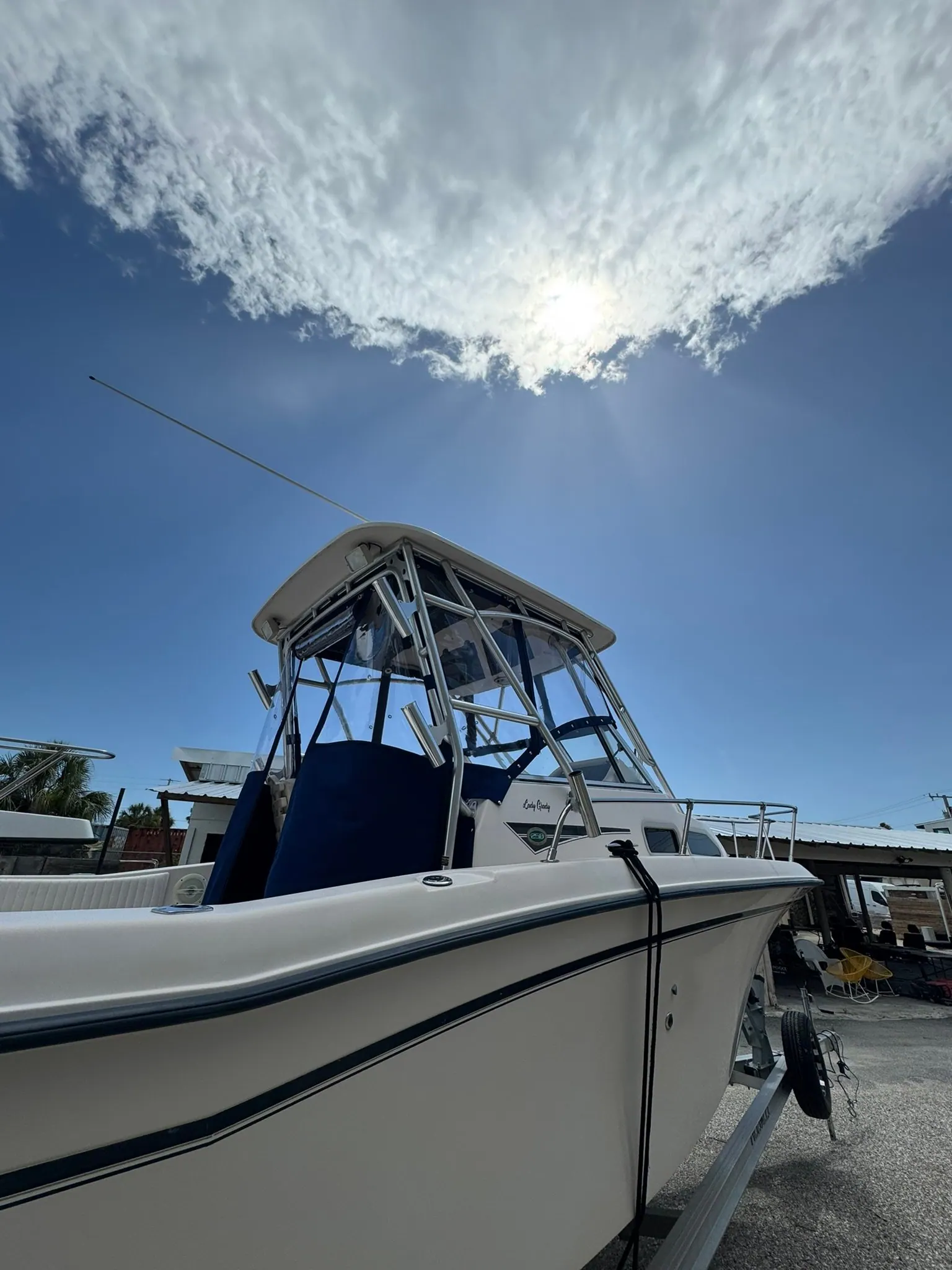
You can see more of our custom marine covers, including a NauticStar center console cover and a T-top enclosure for a center console fishing boat, in the gallery.
How long does a boat cover last in Florida?
With the right materials and fit, a marine-grade cover lasts several years on the coast. UV-resistant fabric slows degradation significantly, and proper tension prevents the premature wear that comes from flapping. Storage habits and maintenance matter too, but quality fabrication makes the biggest difference.
Boat cover maintenance tips
A few simple habits add years to a quality cover:
- Rinse the cover with fresh water after salt exposure, especially after a windy week on the dock.
- Let the cover dry completely before you fold it for long storage.
- Avoid dragging the fabric over cleats, rod holders or sharp rail fittings.
- Inspect the seams and the strap attachment points periodically, and bring the cover in at the first sign of a loose stitch.
- Keep the bimini frame clean and tight, since the cover depends on it for support.
Get a free quote in Venice, FL
If your pontoon or any other boat sits in the sun, the weather and the salt air, a proper cover makes all the difference. Call (941) 786-4100 or use the contact page for a free estimate. We serve Venice, Sarasota, Englewood, Port Charlotte and the surrounding Gulf Coast, and we can measure at our shop or at your dock. Protect the boat before the Florida sun does the damage.
Project Photos
- pontoon boat cover
- bennington
- custom marine covers
- boat cover venice fl