StarCraft 2000 Full Upholstery Restoration: Deck Boat Interior Rebuilt
StarCraft 2000 deck boat upholstery restoration in Venice, FL: closed-cell marine foam, two-tone tan and white vinyl, UV thread and a rebuilt helm seat.
· Updated · 8 min read · Venice, FL
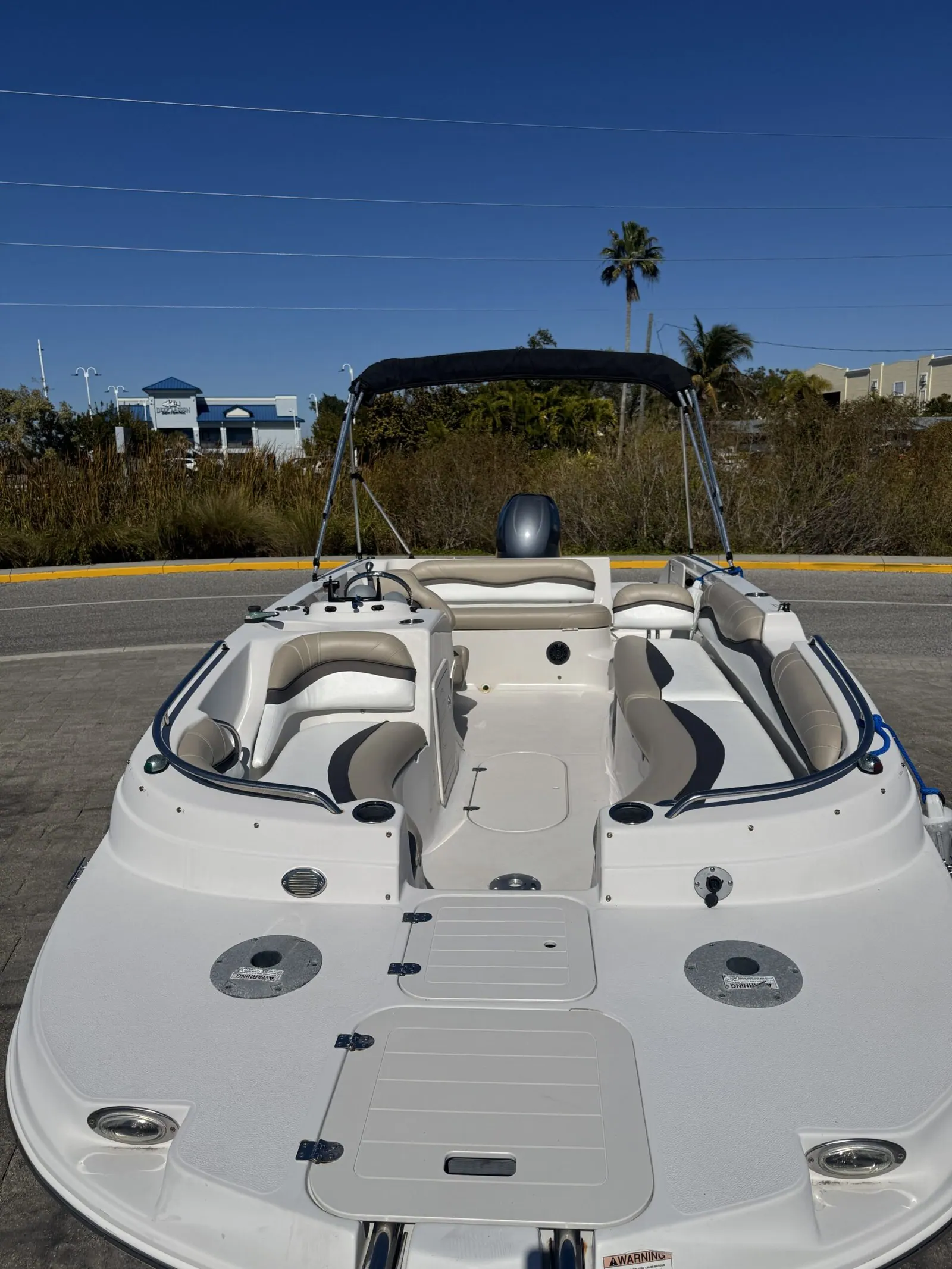
The StarCraft 2000 is a true deck boat: an open cockpit, seating for a crowd, and enough room to spend a full day on the water without anyone feeling cramped. That layout is exactly what makes it a good family boat, and it is also what makes it a big upholstery job. Wrap-around bench seating at the stern, bow seating up front, individual cockpit seats on both sides and a captain's chair at the helm add up to a lot of vinyl.
This StarCraft came into our shop in Venice, FL with every one of those surfaces worn out. The owner did not want a patch job. He wanted the whole interior rebuilt in materials that would actually survive Southwest Florida sun, salt and humidity. Here is how we approached it, what we used, and what any deck boat owner should know before taking on the same project.
A classic deck boat with a lot of vinyl to protect
Florida sun is relentless on marine upholstery. Within a few seasons, original factory vinyl begins cracking along the seams, the foam underneath compresses and loses its shape, and an interior that once looked sharp starts to look tired. On a deck boat the damage is more obvious than on a center console simply because there is more seating surface for the sun to work on.
By the time this boat reached us, the seams had split in several places, the cushions had gone flat, and the color had faded unevenly across the cockpit. None of that is unusual for a boat that has lived outdoors on the Gulf Coast. It is the normal end of life for original upholstery, and it is the point at which a full restoration makes more sense than chasing individual repairs.
What a full deck boat upholstery restoration involves
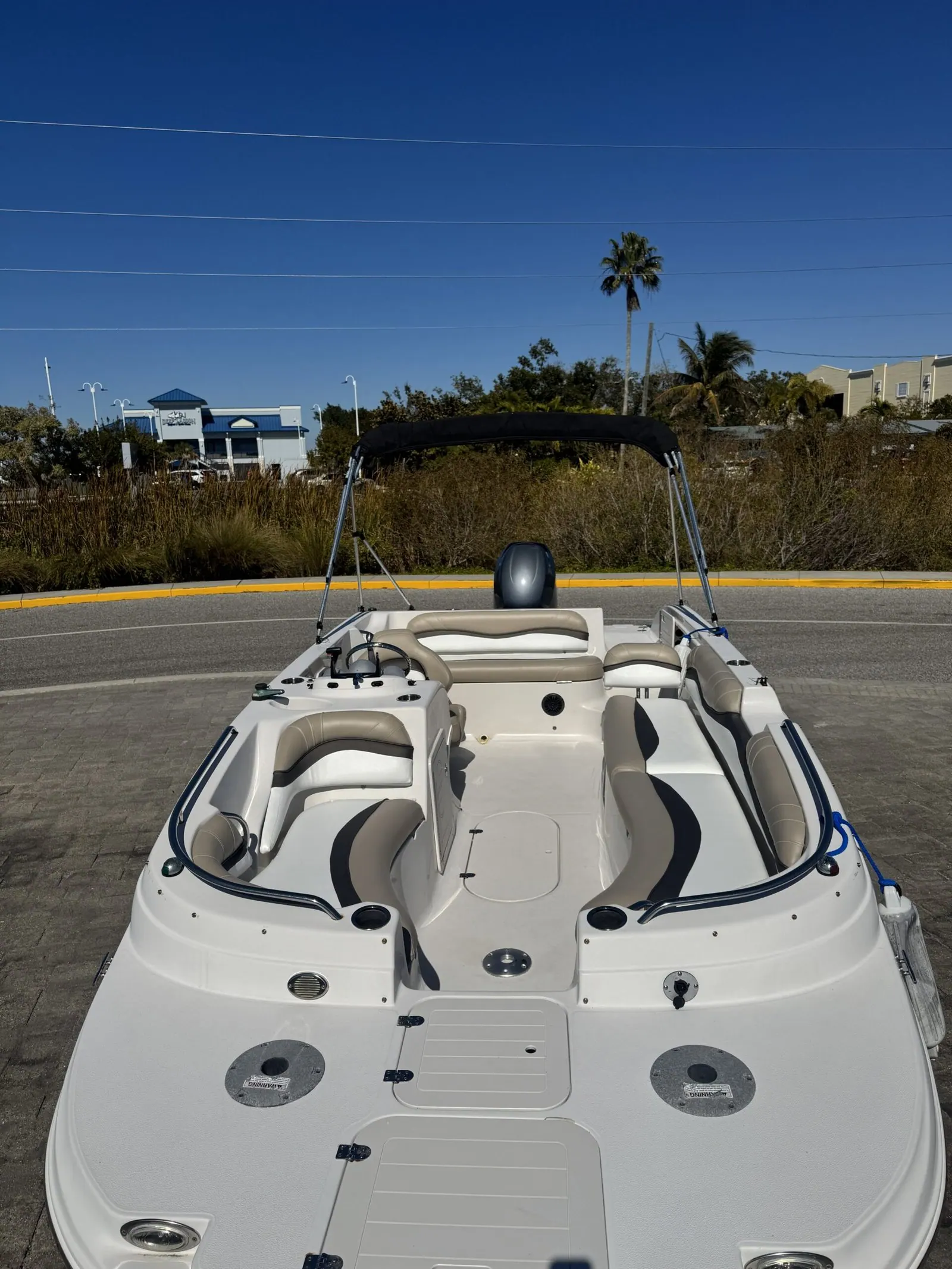
Deck boats have more seating than most owners realize until they see a quote. This is not a two-cushion job. The StarCraft 2000 has a stern wrap-around bench, bow seating, individual cockpit seats on each side and a helm station, and every section needs its own pattern work, foam assessment, material cutting and assembly. Done properly, it takes time.
Pattern assessment before any material is cut
We start by documenting the original geometry of every seat. On a boat this size nothing is identical: the stern wrap curves differently from the bow sections, and the cockpit seats have their own contours. Each panel is treated as its own pattern so the new vinyl follows the shape of the seat instead of fighting it.
Full foam replacement
Old foam in Florida boats is almost always compromised, whether it shows or not. It absorbs moisture, compresses and develops soft spots that new vinyl will telegraph immediately. We replaced the foam throughout this restoration with closed-cell marine foam cut to restore the original seat profile.
Two-tone marine vinyl
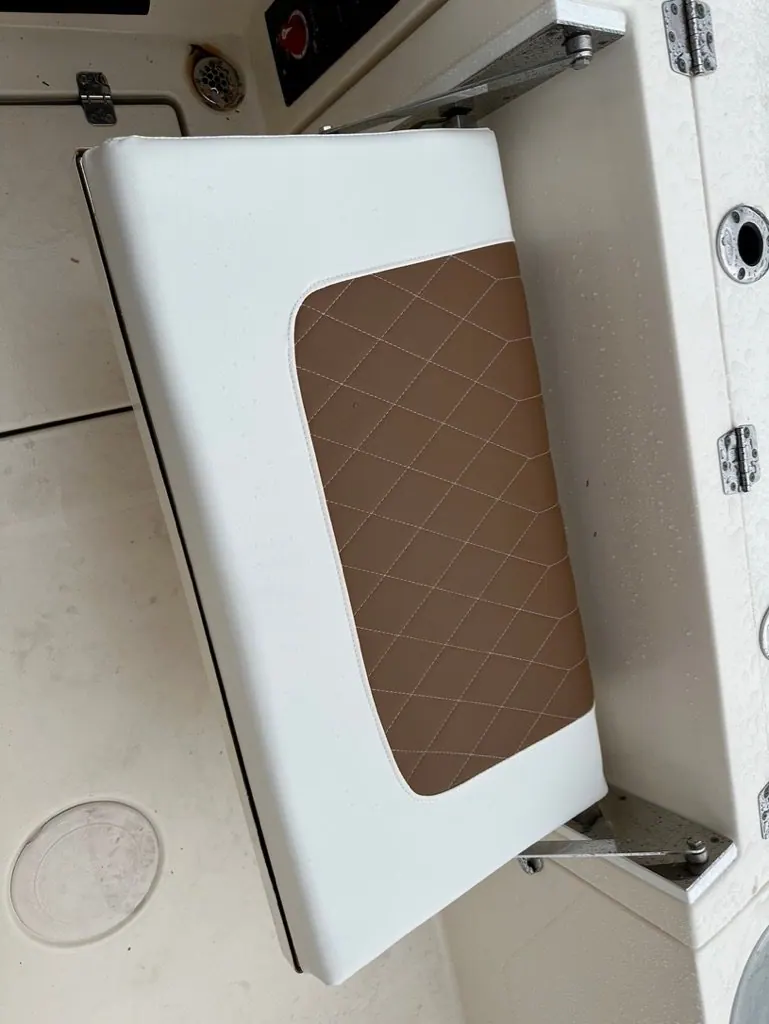
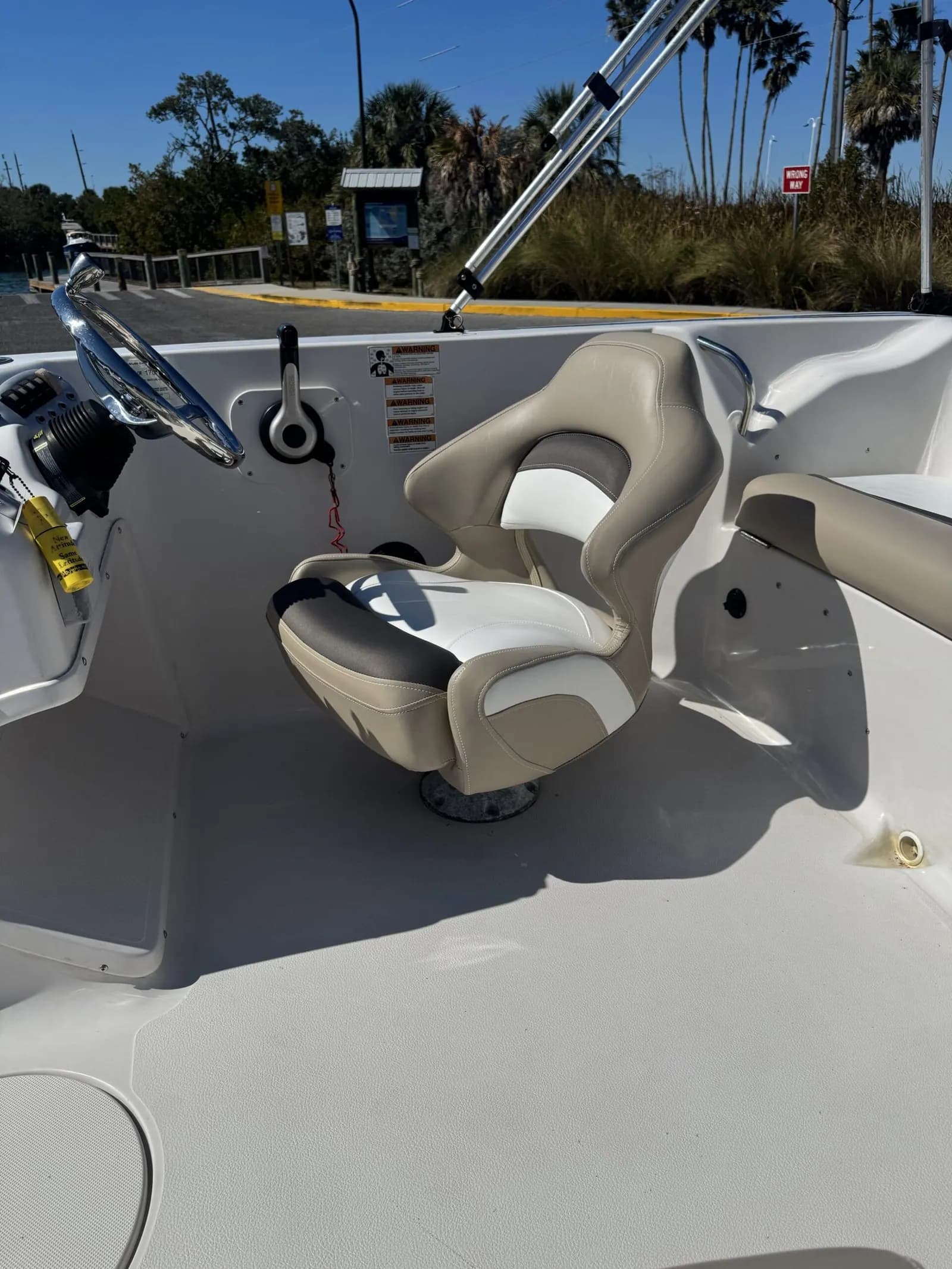
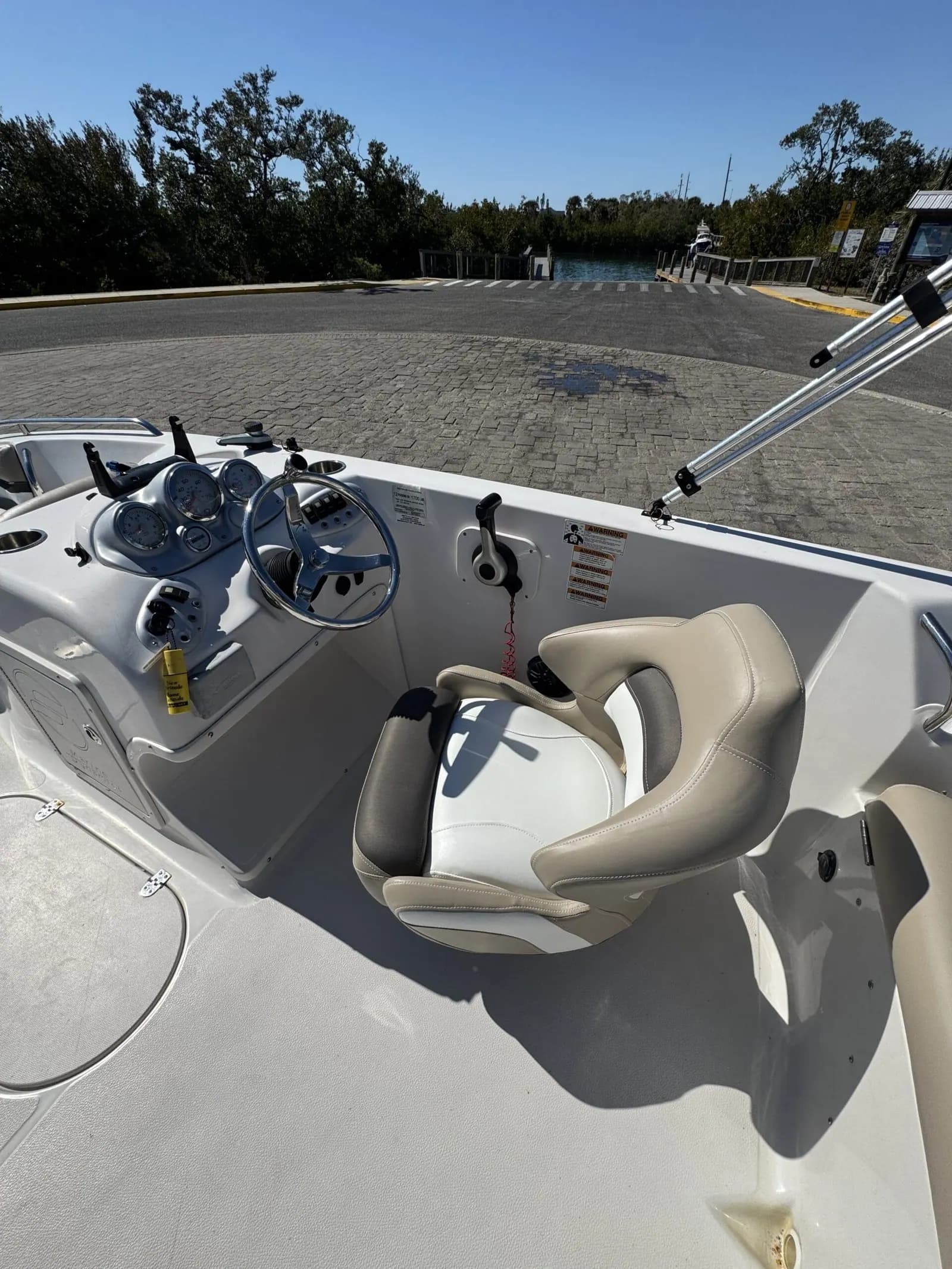
The owner chose tan body panels with white bolsters. The combination complements the white hull and keeps the interior looking light rather than heavy. Two-tone work demands precise seam alignment, because the color break has to land at the same point on every seat for the result to look intentional.
UV-resistant thread on every seam
The seam, not the vinyl, is usually the first thing to fail on marine upholstery. Standard thread breaks down in a single Florida season. We sew with UV-resistant marine thread throughout so the stitching outlasts the material around it.
Captain's chair rebuild
The helm seat gets more use than any other seat on the boat, so it wears fastest. The captain's chair on this StarCraft received a full rebuild: new foam, new vinyl in the matching two-tone, and a reinforced base attachment.
Hardware and attachment inspection
Every snap, base fitting and piece of seat hardware was checked. Corroded or failing hardware was replaced before the new vinyl went on. Good upholstery attached to failing hardware is a short-lived combination, and skipping this step undoes the rest of the work.
Why the foam matters as much as the vinyl
Boat owners naturally focus on the vinyl because it is what they see. The foam underneath is doing just as much work. It decides whether a seat feels supportive or flat, whether the vinyl wraps cleanly or puckers at the edges, and whether moisture has a place to collect and grow mildew under the surface.
On older Florida boats the foam is usually degraded even when the vinyl still looks acceptable. UV exposure does not stop at the surface; heat conducts through the vinyl and slowly breaks down the foam beneath it. New vinyl over old foam looks good on pickup day and disappoints a few months later. Replacing both is what makes the restoration last.
For this StarCraft we used closed-cell marine foam throughout. It is the same type used in new boat construction because it resists water absorption and holds its density over time. It is not the cheapest option, but it is the one that keeps the seats feeling right season after season. We also inspected the base boards and cushion contour support on every piece and reinforced the internal structure where it was needed to prevent premature sagging. We cover the material choices in more depth in our guide to waterproof boat upholstery that works in Florida.
The two-tone approach: tan body, white bolsters
A single-color interior is clean and easy to execute. On a deck boat with this much seating, though, one color can feel heavy and dated. A two-tone layout solves that in a way that reads as a design decision rather than decoration.
- Tan marine vinyl: warm and neutral, hides UV aging longer than bright white, and matches the gelcoat on most white-hull boats.
- White marine vinyl: ties into the hull, brightens the cockpit and gives each seat panel a clear visual structure.
The transition between the two colors is a seam, and seams either look deliberate or they look like a mistake. The job is keeping the color break at the same height and the same curve on every seat so the lines flow across the whole cockpit as one continuous choice. Along with the seam curves, we aligned the edge piping and kept the stitch spacing symmetrical from seat to seat. That consistency is what separates a good two-tone job from one that simply has two colors in it.
Marine vinyl is a different product from standard vinyl
People sometimes ask whether automotive vinyl would work on a boat. It would last about one season before it started fading, cracking at the seams, going stiff in the cold and soft in the heat. Marine-grade vinyl is built differently, and we explain the differences on our boat upholstery services page.
The vinyl we selected for this StarCraft carries UV resistance suited to Gulf Coast sun, a mildew-inhibiting backing, and enough dimensional stability to hold seam alignment through daily temperature swings. It also cleans easily, which matters on a deck boat where a full day out means sunscreen, bait, drinks and a busy cockpit.
The stern bench and bow seating
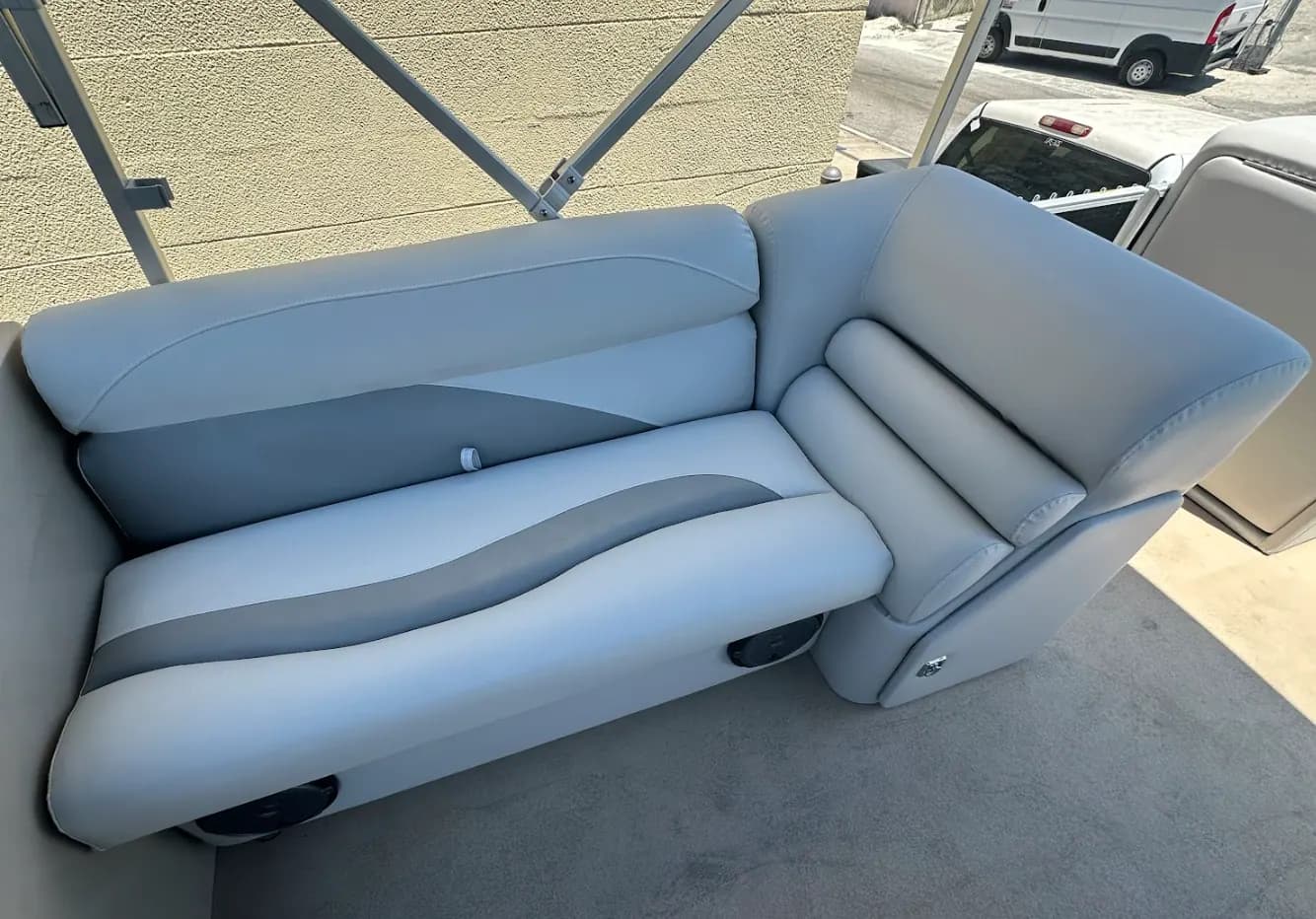
The stern wrap-around bench is the largest single piece of upholstery on the boat and the one that takes the most abuse from swimmers climbing aboard and wet towels piling up. We rebuilt it with new foam and new vinyl, carrying the tan-and-white break around the full curve so it reads as one continuous piece.
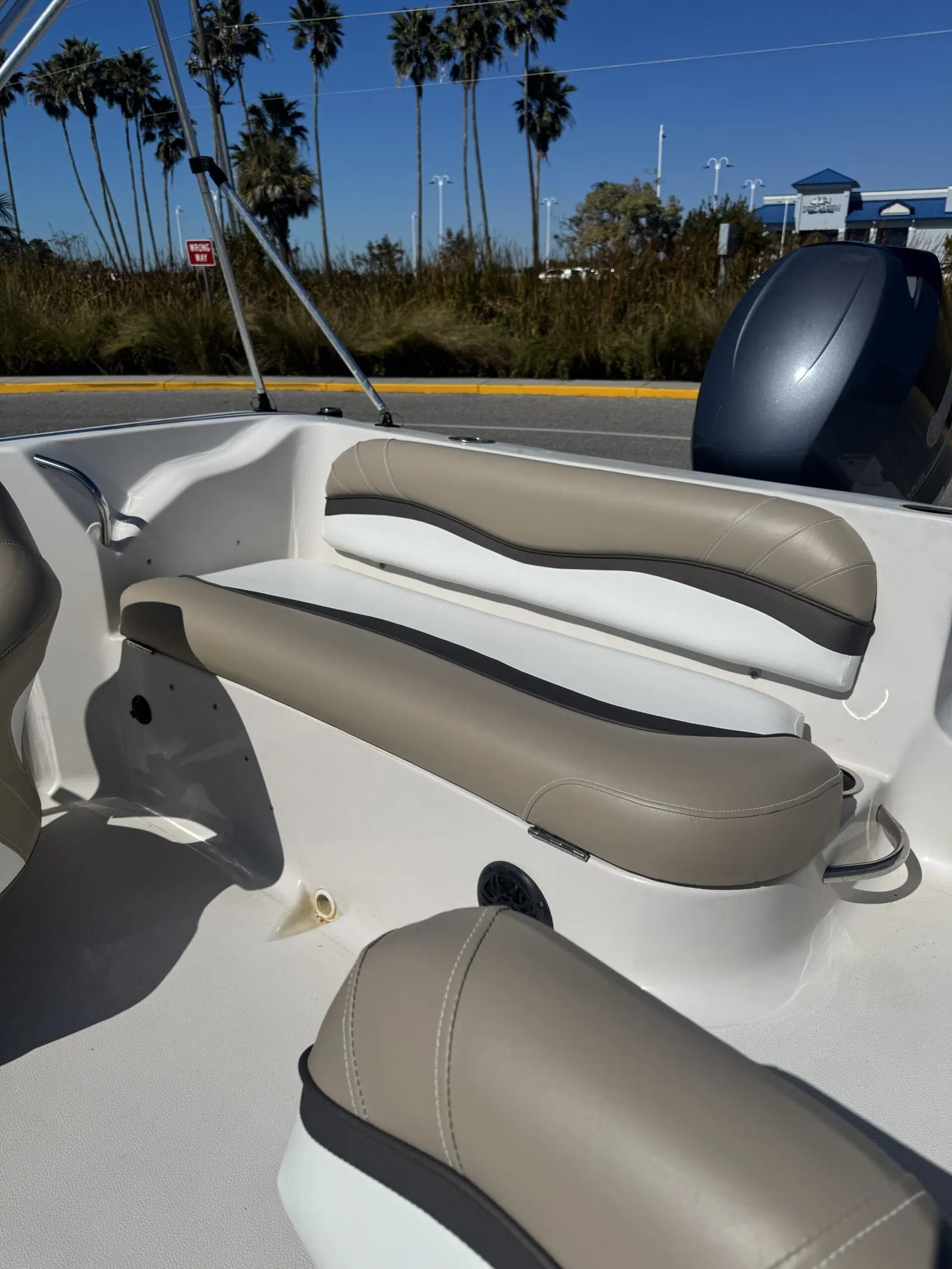
The bow seating and side cushions received the same treatment. Bow cushions on a deck boat see the most spray, so we paid particular attention to seam placement and to using foam that will not hold water if a wave comes over the front.
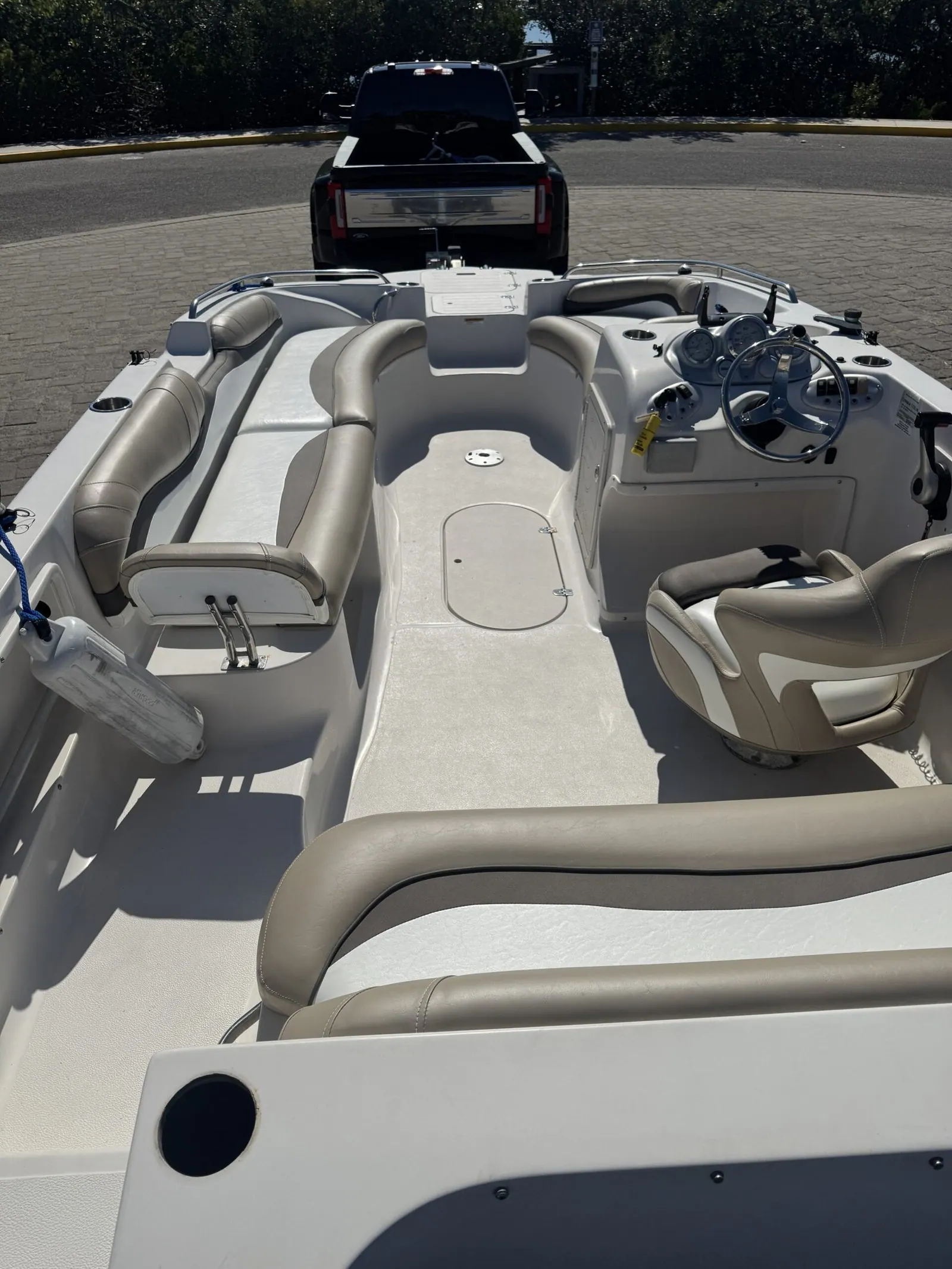
The finished result
When this StarCraft 2000 was ready for pickup, it looked like a different boat. We did not change the layout or add anything; the interior simply reads as intentional now. Every seat fits cleanly, the two-tone alignment is consistent across the full cockpit, the foam sits properly and the vinyl lies flat without pulling at the seams.
The owner had been using the boat for years with deteriorating upholstery and told us he had been avoiding bringing guests aboard because of how the seats looked. That is a common story. A full deck boat restoration does more than change the interior; it changes how often the boat gets used.
What deck boat owners should know
A few things we tell every deck boat owner who is weighing a full restoration:
- Count the seats before you compare quotes. A deck boat interior is a multi-seat project, and the number of panels drives the time and material more than anything else.
- Ask about foam, not just vinyl. If a quote does not mention foam, the quote is for a cosmetic job.
- Check the hardware. Snaps, hinges and seat bases corrode in salt air, and replacing them during the restoration is far easier than doing it later.
- Keep it covered. New upholstery lasts far longer under a fitted cover, and we build custom marine covers in the same shop.
- Rinse and dry. Fresh water after a salt day and a quick wipe-down keep the vinyl and seams in good condition.
We work on all deck boat brands and layouts across Venice, Sarasota and Charlotte counties. See more marine projects in our gallery, or read how a similar full interior came together on a Mako 214CC. If you are still deciding whether to restore or replace, our post on restoring versus replacing boat seats walks through the decision.
Get a free quote in Venice, FL
Whether your deck boat needs a full interior rebuild or just a few seats, we can look at it in person or from photos and give you a free estimate. Call (941) 786-4100 or use the contact page to send us a few pictures of your boat. We are at 420 E Venice Ave in Venice, FL, with a fenced lot next to the shop for trailer drop-offs.
Project Photos
- StarCraft
- deck boat
- marine vinyl
- two-tone upholstery
- foam replacement